Agenda Consultation Slide Deck
15 July 2021 www.endorsement-board.uk/third-agenda-consultation
Email: [email protected]
The views expressed in this presentation are those of the presenter and not necessarily those of the UK Endorsement Board, nor are they necessarily reflective of any official policy or position.
Today's panellists

Liz Murrall (Chair) Board member UK Endorsement Board
Nick Anderson Board member IASB
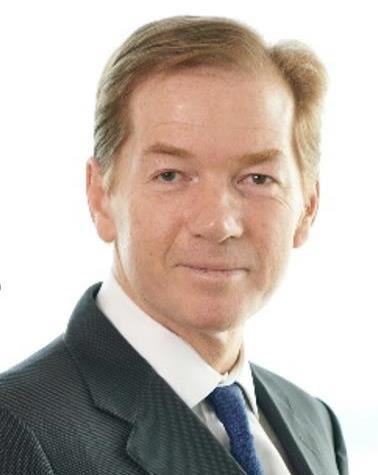
Headshot of Rick Lacaille, a man with light brown hair, wearing a dark suit.
Rick Lacaille Global head of ESG State Street

Pamela Taylor Associate Partner KPMG Department of Professional Practice

Michelle O'Mara Group Technical Accounting Director Smith & Nephew
The views expressed in this presentation are those of the panellists and not necessarily those of their employer, nor are they necessarily reflective of any official policy or position.
Third Agenda Consultation: Objective and overview
IFRS® Foundation

The views expressed in this presentation are those of the presenter, not necessarily those of the International Accounting Standards Board or the IFRS Foundation. Copyright © 2021 IFRS Foundation. All rights reserved.
Objective and timeline of the consultation
Objective To seek feedback on:
- the strategic direction and balance of the Board's activities
- the criteria for assessing the priority of financial reporting issues
- the priority of financial reporting issues that could be added to the work plan
Timeline
March 2021 Published Request for Information for public comment
September 2021 End of comment period (27 September) New IASB Chair joins
Q4 2021 Start of Board deliberations
Q2 2022 Publication of the Feedback Statement
2022–2026 Board execution of activities and work plan
How this consultation compares with the Trustees' strategy review
Third Agenda Consultation Undertaken by the Board
- To seek feedback that helps the Board prioritise activities within the current scope of the Board's work
- The current scope of the Board's work is financial statements and management commentary for profit-oriented companies
- Final decisions to be made by Q2 2022
Strategy Review Undertaken by the IFRS Foundation Trustees
- To explore a potential expansion of the Foundation's role through the creation of a new Board to set sustainability reporting Standards
- Final decisions to be made before the November 2021 United Nations COP26 conference
Trustees' decisions that affect the scope of the Board's work will be considered in finalising the Board's priorities and work plan
Overview of the Request for Information
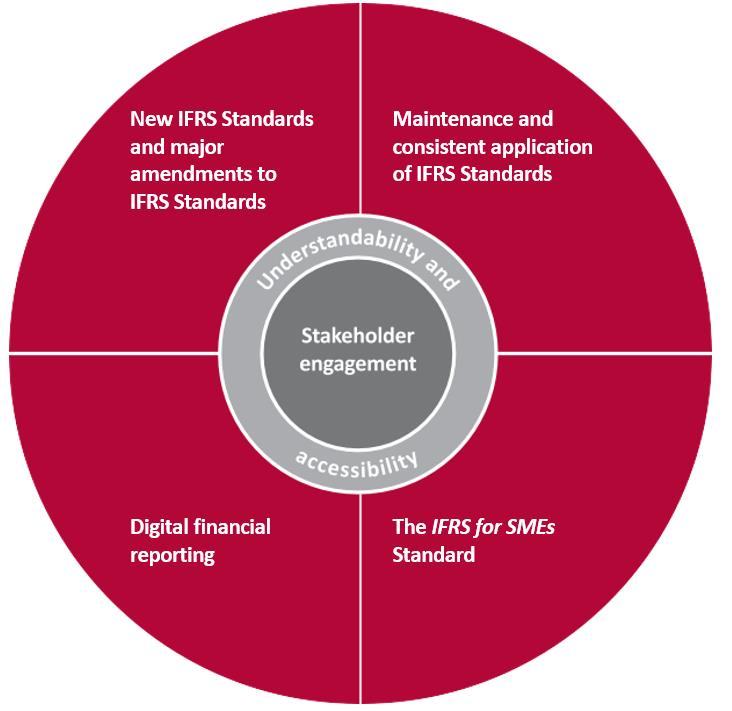
Elements for consideration:
- Criteria for assessing the priority of financial reporting issues
- Priority of financial reporting issues that could be added to the work plan
- Strategic direction and balance of the Board's activities
Chart is not drawn to scale
Helping stakeholders respond on the balance of activities
Current level of focus on each activity
| Activity | Percentage |
|---|---|
| New IFRS Standards and major amendments to IFRS Standards | 40%-45% |
| Maintenance and consistent application of IFRS Standards | 15%-20% |
| The IFRS for SMEs Standard | 5% |
| Digital financial reporting | 5% |
| Understandability and accessibility | 5% |
| Stakeholder engagement | 20%-25% |
Resources
The overall level of resources available to the Board will remain substantially unchanged.
Increasing the resource allocation to one activity will mean fewer resources are available for other activities.
New IFRS Standards & major amendments to IFRS Standards—future capacity
2022-2026 work plan priorities
Continue projects already on the work plan
- Stakeholders have previously identified them as priorities
- Re-prioritising could lead to inefficient starts and stops
Conduct required post-implementation reviews
- IFRS 10, 11 and 12
- IFRS 9
- IFRS 15
- IFRS 16
Undertake any time-sensitive projects
- Urgent projects that may arise after this consultation
- For example, the IBOR Reform projects that arose after the 2015 Agenda Consultation
Add new projects to the work plan
- The IASB expects to add 2-3 large projects, or 4–5 medium-sized projects, or 7–8 small projects, if the IASB continues to spend 40%-45% of its resources on this activity
Described projects
What priority would you give each potential project—high, medium or low—and why?
Described projects*
| Climate-related risks | Commodity transactions | Cryptocurrencies and related transactions | Discontinued operations and disposal groups | |
|---|---|---|---|---|
| Borrowing costs | ||||
| Discount rates | Employee benefits | Expenses (Inventory and cost of sales) | Foreign currencies | Going concern |
| Government grants | Income taxes | Inflation | Intangible assets | Interim financial reporting |
| Negative interest rates | Operating segments | Other comprehensive income | Pollutant pricing mechanisms | Separate financial statements |
| Statement of cash flows and related matters | Variable and contingent consideration |
- You can read the description of a potential project by clicking on the project title.
Find us online
- www.ifrs.org
- IFRS Foundation | International Accounting Standards Board
- @IFRSFoundation
- IFRS Foundation
- IFRS Foundation
Join our team: go.ifrs.org/careers
UK Endorsement Board Draft Comment Letter: Recommendations
Open for comment until 31 August 2021
- Retain flexibility to address the interaction between IFRS and any future international sustainability standards from the ISSB
- Allocate more resource to digital financial reporting
- Anticipate and address emerging issues through a structured and cohesive research programme
- Add three large-scope high-priority projects:
- Climate-related risk
- Intangibles
- Statement of cash flows
- Take a cross-standard approach
- Consider whether any projects on the current work plan could be paused
High-priority projects
The high-priority projects include:
- Climate-related risk
- Intangible Assets
- Cryptocurrencies & related transactions
- Pollutant Pricing Mechanisms
- Statement of cash flows and related matters
Cross-standard approach
| IAS 1 | IFRS 8 | IAS 2 | IAS 16 | IAS 36 | IAS 38 | New Standard | IAS 37 | IFRS 9 | IFRS 10 | |
|---|---|---|---|---|---|---|---|---|---|---|
| Climate-related risk | • | • | • | • | • | • | • | • | • | • |
| Intangibles | • | • | • | • |
IASB's current workplan
- Targeted Standards-level Review of Disclosures
- PIR of IFRS 9—Classification & Measurement
- Goodwill and Impairment
- Business Combinations under Common Control
- Primary Financial Statements
- Lack of exchangeability
- Dynamic Risk Management
- Post-implementation review of IFRS 10, 11 and 12
- Extractive Activities
- Rate-regulated Activities
- Deferred Tax: Assets & Liabilities from one transaction
- Second Comprehensive Review of the IFRS for SMEs
- Provisions—Targeted Improvements
- Disclosure Initiative—Subsidiaries that are SMEs
- Equity Method
- Financial Instruments with Characteristics of Equity
- Management Commentary
- Lease Liability in a Sale and Leaseback
- Pension Benefits that Depend on Asset Returns
- Availability of a Refund (IFRIC 14)
Respond to the UK Endorsement Board's Draft Comment Letter
https://www.endorsement-board.uk/third-agenda-consultation
Email: [email protected]
Respond to draft comment letter
Email [email protected]
UK Endorsement Board
8th Floor | 125 London Wall | London | EC2Y 5AS | United Kingdom