UKEB Annual Board Effectiveness Review 2023
I. Introduction
The UK Accounting Standards Endorsement Board (‘UKEB') was established to perform certain functions relating to the adoption of International Financial Reporting Standards as developed by the International Accounting Standards Board, for use in the UK, and to contribute on behalf of the UK to the development of a single set of international accounting standards.
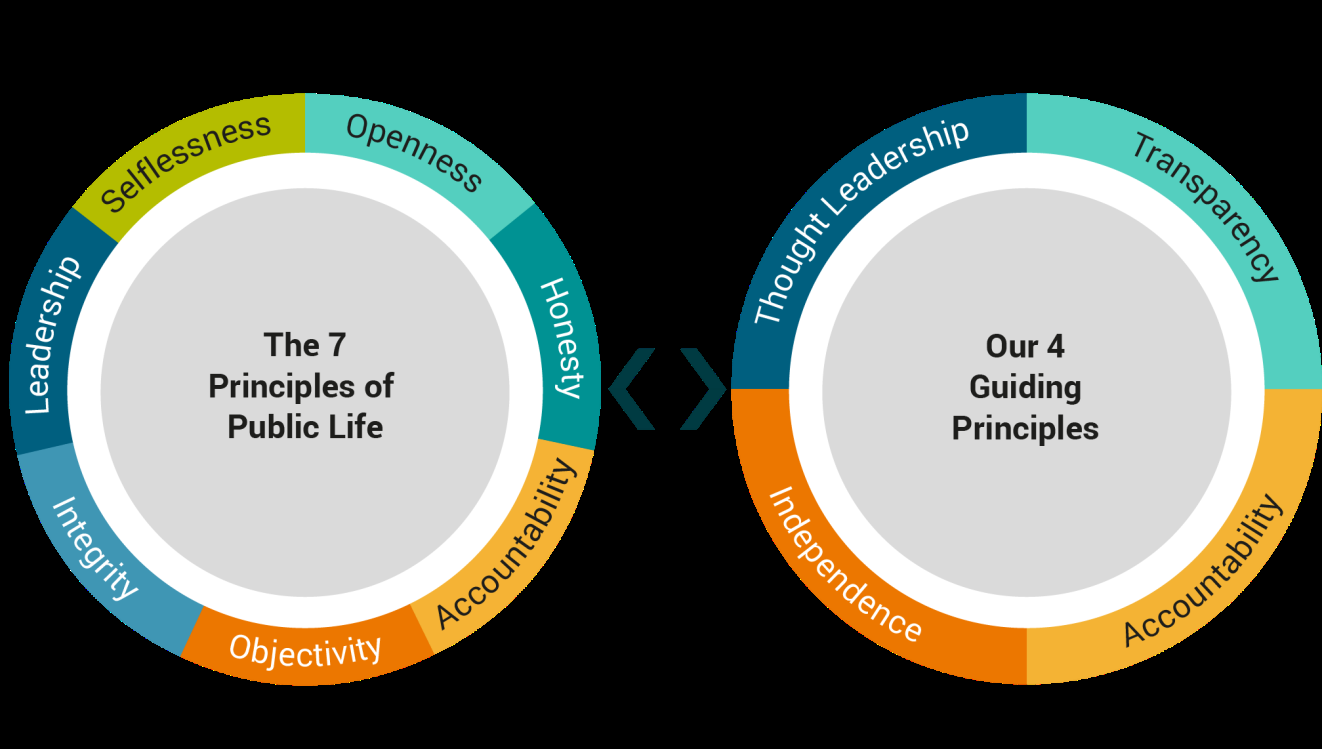
The UKEB's mission is to serve the UK public good by leading the development and synthesis of UK views on financial reporting and representing them in the international arena, ensuring that the UK's voice is influential in the development of high-quality international accounting standards that are suitable for adoption in the UK. The UKEB is committed to performing its functions, and acting at all times, in accordance with its four guiding principles and the seven principles of public life. These core values are intrinsic to all of UKEB's activities.
The UKEB Board completed its first board effectiveness review in 2022, at the end of its first year of operation, and committed to completing a review annually thereafter. The positive findings coming out of this year's review are consistent with the positive feedback received in 2022 and send a strong message that the Board has, in this past year, focused successfully on achieving its strategic objectives, underpinned by its core values and a continuous improvement ethos. Key achievements in the past year include the Board's first adoption decision (IFRS 17 Insurance Contracts), completion of the Due Process Handbook and the setting up of a number of stakeholder advisory and working groups to support the Board's stakeholder engagement and influencing objectives.
2. Review Process
The Board's strong start in 2021 has been maintained through 2022 and into 2023, however, in the spirit of continuous improvement, key areas have been identified as requiring further focus and development. These areas are set out in the summary findings below and an action plan has been developed. The Board is committed to ensuring effective and timely delivery of the plan.
The objective of the review was to allow the Board an opportunity to consider, and obtain feedback on, what is working well and which areas require further focus and development. The Board is committed to ensuring that it achieves its strategic objectives with a clear focus on its core values, best practice and continuous improvement.
The review began in May 2023 and the final report was submitted for approval at the June Board meeting. The principal output is an action plan, approved by the Board, and an agreed process for tracking and execution to ensure timely completion.
The review focused on the four core areas of: Board governance and accountability; culture and composition; Secretariat support; and leadership. Feedback was received from Board Members, the Secretariat and Official Observers via a questionnaire which incorporated a combination of open and closed questions. Each of the Members also attended two 1-1 meetings: one with the Chair for a broad discussion across all areas except Board leadership and another with a Member to whom the Chair had delegated responsibility for leading the review of Board leadership. Both the UKEB Operations Director and Technical Director also attended a 1-1 meeting with that Member.
In addition to the Members, both the UKEB Secretariat and Official Observers were key participants in the review. The UKEB Secretariat provides the day-to-day technical and operational support required by the Board as it works to achieve its objectives. The Official Observers attend UKEB's public Board meetings where they have speaking rights and may offer technical and policy insight on the implications of new or amended IFRS relevant to their area of expertise. Official Observers come from five relevant public sector organisations: The Department for Business and Trade (‘DBT'); Financial Reporting Council ('FRC'); Her Majesty's Revenue and Customs (‘HMRC'); Bank of England (‘BoE') and Financial Conduct Authority ('FCA').
3. Summary of Findings
Throughout this past year, the Board has maintained its focus on reinforcing and building on the strong foundations laid during UKEB's initial set-up phase. The ongoing focus on continuous improvement is evident in the positive findings of this 2023 Board effectiveness review.
The detailed analysis of questionnaire feedback is positive across each of the four areas: Board governance and accountability, culture and composition, Secretariat support and leadership. Further detail obtained from the questionnaires' open-ended questions and 1-1 discussions supports this positive position whilst also highlighting specific areas requiring additional focus and further development in the upcoming year. These specific areas highlighted for further action are set out in Section 4.
3.1 Board Governance and Accountability
The review feedback was overwhelmingly positive in respect of the extent to which the Board is considered to be acting in accordance with its core values and statutory responsibilities. Participants also voiced their satisfaction with the Board's adherence to its Terms of Reference and robust due process and its level of oversight of key areas. There was general agreement that the Board is achieving the right balance between public and private discussions and on the distinction between technical and operational matters, albeit acknowledging the importance of continuing to monitor this on an ongoing basis.
The Board has submitted its annual report to the FRC, for the year to 31 March 2023, confirming that it has fulfilled its governance and due process responsibilities in all respects. The feedback from this Board effectiveness review supports the positive outcomes articulated in the annual report.
3.2 Board Culture and Composition
Respondents felt that the Board has settled in after a very busy and challenging set-up phase and is now in steady state. The two new Members who joined in September 2022 have fitted in well and have brought additional economics and investor expertise to the Board. It is recognised that the Board is comprised of a diverse membership, with different backgrounds and expertise, each of whom contributes to discussions in a robust but collegiate manner which ensures that the Board's decision-making process is supported by high-quality and informed debate and independent thought. As the Board continues to evolve it is proposed that it works with the Official Observers to consider if there are areas in which levels of interaction could be increased, in areas of common interest.
As the Board, and the organisation as a whole, continues to mature, both research and sustainability have been highlighted as key areas requiring greater strategic direction. The Board needs to further develop and articulate its strategy in both of these areas so that objectives are clear and the appropriate level of resource and prioritisation is applied. Ensuring that stakeholder engagement activity continues to be focused in the right areas, therefore making optimal use of available resource, was also noted as an area of key importance.
The Board is mindful that ten of the thirteen Members reach the end of their first 3-year term in March 2024 and there is, therefore, a need to prioritise succession planning to ensure continuity.
3.3 Board Secretariat Support
The Board's feedback in terms of the level of service and support it receives from the Secretariat was positive in all respects. The Board voiced its ongoing appreciation for the work that the Secretariat does to support it in achieving its strategic objectives and acknowledged the high-quality Board papers that it receives.
Participants' feedback suggests that as the Board and Secretariat continue to mature and working practices continue to evolve, it is appropriate to take the opportunity to further consider the approach to prioritisation, resource allocation and how the Board and Secretariat work together to ensure the most effective and efficient outcomes for all, with due consideration of resource availability.
3.4 Board Leadership
The Chair is considered to have performed her role to a consistently high standard. She has succeeded in embedding effective Board practices and a strong culture of mutual respect where differing views can be voiced and contributions valued. She has also contributed significantly to UKEB's stakeholder engagement activities by forging strong relationships with key stakeholders both in the UK and internationally.
A key priority for the Chair is ensuring a smooth Board transition up to and beyond March 2024 when the majority of Members' first 3-year term ends.
4. Key Areas of Focus and Action
The review findings identified four key areas of focus for further Board consideration, as follows:
- Board succession planning;
- Strategy development;
- Stakeholder engagement;
- Prioritisation and resource management.
An action plan, summarising the deliverables to address specific review findings, has been developed. The action plan will incorporate action owners and delivery timelines and will be monitored, by the Board, through to completion.