Feedback Statement - Due Process Handbook
Foreword

"The UK Endorsement Board is pleased to present a summary of the feedback received from stakeholders on the UKEB Due Process Handbook (Handbook).
The Handbook sets out the due process the Board applies to its activities, enabling it to uphold its guiding principles of accountability, independence, transparency and thought leadership when fulfilling its statutory functions.
We are grateful for the constructive and insightful views from UK stakeholders in the development of this Handbook".
Pauline Wallace, Chair, UK Endorsement Board
Function of the UK Endorsement Board
The UKEB is responsible for endorsement and adoption of IFRS for use in the UK and is therefore the UK's National Standard Setter for IFRS. The UKEB also leads the UK's engagement with the IFRS Foundation on the development of new standards, amendments and interpretations.
Purpose
-
This feedback statement summarises the main issues raised by respondents during the UKEB's public consultation of the draft Due Process Handbook (Handbook) and explains how those issues have been addressed.
-
The Handbook sets out the due process that the UKEB follows in carrying out its statutory functions, which consist of:
Cover of the UK Endorsement Board's Due Process Handbook, December 2022.
- The Handbook also describes additional due process steps that the UKEB follows for carrying out its other activities (thought leadership, research programme, post-implementation reviews (PIR); and setting up and operating advisory groups).
Background
The draft Handbook was published for public consultation on 21 February 2022 and was open for comment until 6 June 2022 (for 105 days).
During the consultation period, the UKEB and its Secretariat promoted awareness of the Handbook and encouraged stakeholders to respond through News Alerts and advertising through the usual channels.
All stakeholder comments were considered in finalising the Handbook.
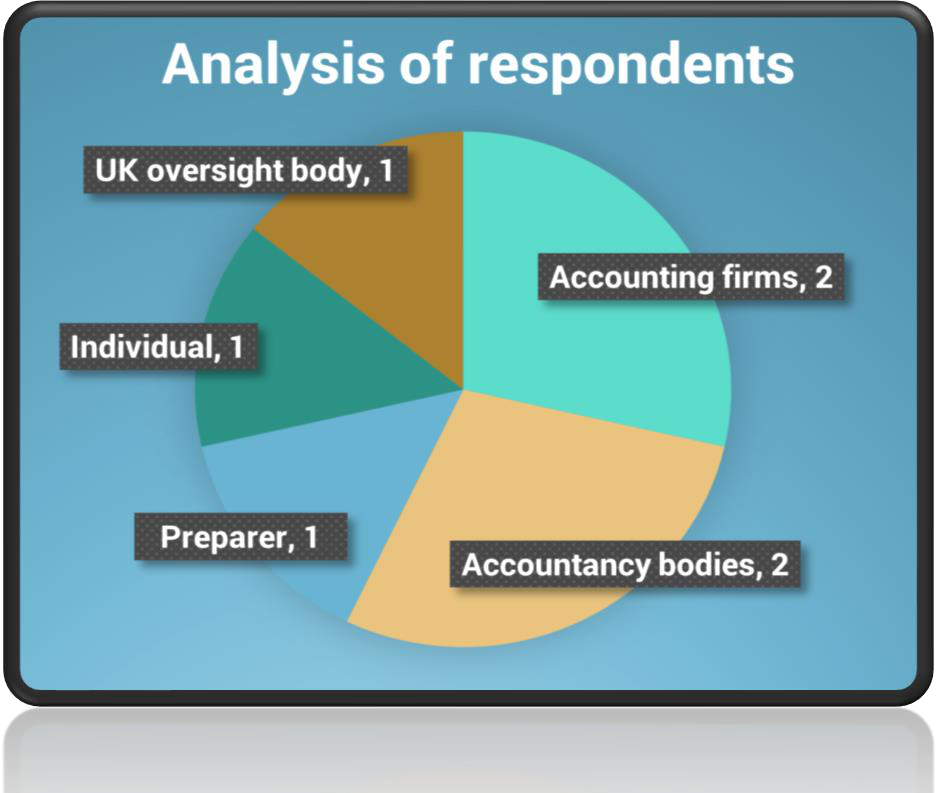
The Board received six comment letters.
Stakeholder submissions received were made public on the UKEB website.
The UK oversight body (FRC) provided additional feedback.
Overall assessment
Respondents thought that the processes described in the Handbook provide an adequate framework for the UKEB's due process activities and were generally supportive of these processes.
The FRC's feedback was similar in nature to the other respondents' comments and was addressed as part of the Secretariat's analysis.
The Board subsequently discussed and approved a revised version of the Handbook at its October 2022 meeting.
At its July and September 2022 meetings, the Board reviewed and provided comments on the Secretariat's preliminary assessment of the comments received and planned drafting amendments on the issues identified by respondents.
The next sections in this feedback statement summarise the main issues raised by respondents during the UKEB's public consultation of the Handbook and explain how those issues were addressed.
Respondents raised detailed comments and suggestions.
Substantive issues identified
Diagram illustrating substantive issues identified, categorised by sections of the Handbook and specific topics within them. A teal rounded rectangle shape is used to denote each specific topic.
Section 3: Terms of Reference and Guiding Principles
- Application of the proportionate approach
- Review of the quality and effectiveness of the UKEB's activities and "lessons learnt"
Section 4: Governance activities
- Voting process for reviewing the Handbook and request to add the UKEB complaints policy
- Process regarding the UKEB's ability not to adopt a standard in full
- Process for prioritising projects in the UKEB workplan
Section 5: Influencing process
- Process for monitoring activities
- Milestones
- Shortening the comment period of a draft comment letter
Section 6: Endorsement process
- Minimum outreach activities
- DECA content and situations for shortening the comment period of a DECA
Section 7: Thought leadership and research programme
- Timing and frequency of engagement with UK stakeholders
- Milestones for research projects and situations for shortening the comment period of a research document that invites comments
- Whether the UKEB will issue interpretive guidance
Section 8: Post-implementation reviews (PIRs)
- Objective and process for carrying out PIRs
- Definition of "significant change in accounting practice"
Comments by respondents and final revisions
Section 3—Terms of Reference (ToR) and Guiding Principles
| Draft Handbook requirements | Stakeholder views | UKEB final revisions to the Handbook |
|---|---|---|
| Application of the proportionate approach | ||
| Specified that non-mandatory milestones may also be considered, as appropriate, to achieve an overall approach to the project that is proportionate to the significance and complexity (i.e. nature or scope) of the project (i.e. relevant standard or amendment), size of the issue and the expected timeline. | One respondent observed that considering whether to pursue a non-mandatory milestone should not be optional and the Board should explain why an optional milestone will not be pursued. In addition, this respondent observed that 'nature or scope' can be related to the significance of the project but not to its complexity and suggested additional edits to clarify the application of the proportionate approach. |
The Board confirmed its view that non-mandatory milestones may only be considered as appropriate and if undertaken, will be reflected in the project initiation plan. Some revisions were made to indicate that the Board may decide not to undertake a 'mandatory milestone' for a particular project and to explain the application of a proportionate approach (i.e. the activities undertaken should be proportionate to the significance, urgency, complexity (nature or scope), size, expected timeline and expected interest or controversy attached to the project. |
| Review of the quality and effectiveness of the UKEB's activities and “lessons learnt” | ||
| Did not include a requirement to undertake a review of the quality and effectiveness of the UKEB's influencing and endorsement activities. | Many respondents observed that the Handbook should include a new requirement to undertake a review of the quality and effectiveness of the UKEB's influencing and endorsement activities and that this review could assess, for example, whether there are “lessons to be learned” from projects and other engagements. | A new paragraph was included in the Handbook to highlight that the UKEB may decide to undertake a review of a project after its completion so that any "lessons learnt” can be incorporated into the process for future projects. |
Section 4—Governance activities
| Draft Handbook requirements | Stakeholder views | UKEB final revisions to the Handbook |
|---|---|---|
| Voting process for reviewing the Handbook and request to add the UKEB complaints policy | ||
| Did not include requirements for approving or reviewing the Handbook or described the UKEB complaints process. | Respondents suggested clarifying:
|
The following was added in response to the comments received:
|
| Process regarding the UKEB's ability not to adopt a standard in full | ||
| Described the voting process requirements for adopting a new or amended standard in line with the UKEB ToR. | Some respondents suggested creating additional steps to ensure standards are always endorsed in full by the UKEB. | The Board observed that the UKEB has a statutory obligation to consider whether adoption is appropriate, not to ensure there is always full adoption. Consequently, no revisions were made to the Handbook in this respect. |
| Process for adding and prioritising projects in the UKEB Workplan that are important to UK stakeholders | ||
| Explained that the UKEB's technical workplan is driven by the IASB's workplan. The UKEB then prioritises and allocates resources to projects based on their priority in the UK. | One respondent suggested the UKEB to be proactive in identifying UK-specific issues either by bringing them to the IASB's attention or by adding them to its work plan. Two respondents suggested adding "the need to align with the IASB effective date of a new or amended standard” or the "size of UK entities affected" as factors for prioritising technical projects. |
The Board observed that individual projects that are important to UK stakeholders and that impact on UK entities are already being prioritised, so no revisions were made to the Handbook in this respect. The following paragraphs were added in response to the respondents' suggestions:
|
Section 5—Influencing process
| Draft Handbook requirements | Stakeholder views | UKEB final revisions to the Handbook |
|---|---|---|
| Process for monitoring activities | ||
| Did not include references to the UKEB's monitoring activities. | One respondent suggested the inclusion of a "monitoring" stage of influencing projects in Section 5 ("Influencing processes") of the Handbook. | In response to the comments received, a reference was included in Section 5 of the Handbook that the Secretariat will be proactively monitoring projects being undertaken by the IASB and IFRS Interpretations Committee and will be providing the Board with regular updates. |
| Milestones | ||
| The following milestones were not considered mandatory: a draft comment letter (DCL) outreach activities and a feedback statement. | Some respondents observed that following milestones should be made mandatory: a 'draft comment letter' (DCL), 'outreach activities' and a 'feedback statement' (if the UKEB issues a DCL for public comment). | In response to the comments received the Handbook now clarifies that:
|
| Situations for shortening the comment period of a draft comment letter | ||
| The consultation period of a DCL could be shortened to a period of less than 30 days where amendments are minor and meet the criteria for annual improvements or for narrow-scope amendments and where there is limited time to consult. | Respondents observed that:
|
The length of the shortened comment period of a DCL was not modified. The only situation where the comment period for a DCL can be shortened is when there is limited time to consult. |
Section 6—Endorsement process
| Draft Handbook requirements | Stakeholder views | UKEB final revisions to the Handbook |
|---|---|---|