6 Intangible Assets
21 May 2026 Agenda Paper 6
Executive Summary
| Body | Stage 1 | Stage 2 | Stage 3 | Stage 4 | Stage 5 | Stage 6 | Stage 7 | Stage 8 |
|---|---|---|---|---|---|---|---|---|
| IASB | Research / Pipeline | Discussion Paper | Redeliberation | Exposure Draft | Redeliberation | Final Standard | Post Implementation Review | |
| UKEB | Research / Influencing | Research / Influencing | Monitoring | Influencing | Monitoring | Endorsement | Influencing | UKEB Post Implementation Review |
Project Type Research Project
Project Scope Significant
Purpose of the paper This paper:
- Summarises stakeholder feedback received to date from the four UKEB case studies on training costs, research and development costs, carbon credits, and data.
- Identifies cross‑cutting themes and overarching questions that are starting to emerge from stakeholder feedback that may inform the development of principles for accounting for intangible items.
Summary of the Issue The Board agreed to undertake a proactive research project on accounting for intangible assets. At the October 2025 Board meeting, the Board approved a twin-track approach to this research:
- a ‘top-down’ stream, focused on conceptual analysis grounded in the 2018 Conceptual Framework to identify the key elements that could support the development of a principle-based standard for intangibles; and
- a ‘bottom-up’ stream, which focuses on stakeholder engagement and evidence‑gathering.
This paper focuses on the ‘bottom-up’ approach, providing a summary and analysis of stakeholder feedback received on four UKEB case studies—training costs, research and development costs, carbon credits, and data. These case studies were designed to explore how stakeholder views on underlying economics, recognition, measurement, and disclosure for the relevant fact patterns could inform the development of principles for accounting for intangible items.
Decisions for the Board The Board is not asked to make any decisions at this meeting. The Board is asked for feedback on the following questions: 1. Do Board Members have any comments on the feedback received on the case studies? 2. Do Board Members have any comments on the cross‑cutting themes and overarching questions arising from this feedback?
Recommendation N/A
Appendices Appendix A: Preliminary stakeholder feedback received on the case studies
Background
1 In developing the intangibles research project, the UKEB set out a research strategy that reflects its thought leadership mandate1 and responds to longstanding challenges in accounting for intangible items.
2 Accordingly, the Project Initiation Plan (PIP)2 for the project (approved by the Board at its October 2025 meeting), established a combination of ‘top‑down’3 and ‘bottom‑up’ approaches.
3 As discussed in the PIP4, the insights gathered from both approaches will help influence the development of and test future IASB proposals on accounting for intangibles, including those related to recognition, measurement, and disclosure.
Objective
4 This paper focuses on the ‘bottom-up approach’. This approach helps ensure the project is based on practical evidence from a range of informed stakeholders by using case studies to explore their perspectives on the economics of intangible items and related accounting issues.
5 This paper:
- Summarises stakeholder feedback received to date from the four UKEB case studies on training costs, research and development costs, carbon credits, and data.
- Identifies cross‑cutting themes and overarching questions arising from stakeholder feedback that may inform the development of principles for accounting for intangible items.
Development of case studies
6 During late 2025, the Secretariat developed a set of three case studies in consultation with members of the UKEB’s advisory groups5 and using feedback from the Board at its June 2025 meeting6. These case studies were subsequently approved by the Board at its January 20267 meeting. These are:
- Training costs. This case study focuses on reimbursable training costs incurred by an entity to fulfil a contract with a customer.
- Research and development costs (R&D). This case study examines the development of a drug through various clinical phases by a pharmaceutical company.
- Carbon credits. This case study focuses on the generation, sale and purchase of carbon credits.
Additional case study: data
7 The Board also supported at its January 2026 meeting the Secretariat’s proposal to develop an additional data‑focused case study, which focuses on a data company that sources raw health‑related data and processes it to develop analytical outputs and insights, which are then used internally or sold to customers.
8 As this is the newest case study, it remains under development and subject to refinement based on stakeholder feedback.
Outreach activities
9 In September 2025 and March 2026, the Secretariat discussed the four case studies at a series of workshops involving almost 100 stakeholders. Participants included preparers and users of financial statements as well as academics.
10 The events held were as follows:
- 19 September 2025 – Workshop with the UKEB Academic Advisory Group (AAG)8 (academics)
- 2 March 2026 – Combined workshop of the UKEB Preparer Advisory Group (PAG) and Investor Advisory Group (IAG)9 (users and preparers).
- 4 March 2026 – Workshop with the Corporate Reporting Users Forum (CRUF) (users).
- 19 March 2026 – Workshop with CFA UK (users).
- 25 March 2026 – Workshop with the Chartered Accountants Australia & New Zealand (CAANZ) (a mix of preparers, users, accounting firms and other users).
11 Workshops varied in terms of numbers of participants and time available. As a result, only selected case studies were discussed in each workshop, as shown in the table below:
| Workshop | Training costs | R&D | Carbon credits | Data |
|---|---|---|---|---|
| Joint PAG/IAG | ✓ | ✓ | ✓ | ☒ |
| AAG | ✓ | ✓ | ✓ | ☒ |
| CRUF | ✓ | ☒ | ☒ | ☒ |
| CFA UK | ☒ | ✓ | ✓ | ☒ |
| CAANZ | ☒ | ✓ | ✓ | ✓✓ |
12 The workshops were exploratory and were not focused on determining the ‘right’ accounting for the specific items addressed in the case studies. Instead, the discussions were qualitative in nature addressing various key aspects of the scenarios, and related accounting questions. These aspects included the underlying economics, recognition, measurement, and disclosure.
13 The Secretariat analysed the feedback using a thematic approach, identifying common views, areas of divergence, and recurring issues across the case studies. Given the qualitative approach, and as not all case studies were discussed at every workshop, the analysis does not attempt to quantify views or assess the prevalence of specific opinions.
14 Feedback is presented by case study and by topic. Differences in perspectives between stakeholder groups are highlighted where relevant.
15 As explained in paragraphs 7–8, the data case study was developed after the other three and remains under development. Initial workshop feedback suggested that the original version was overly specific, constraining discussion and limiting exploration of key issues. This case study has since been revised to adopt a less constrained approach and will be tested further in upcoming workshops10.
Overview of preliminary findings
16 A high-level overview of the feedback received from the case studies is included below. For more details on each case study, refer to Appendix A.
Case study 1: Training costs
17 Participants broadly agreed on the economics of the training costs, viewing them as upfront, contract‑specific costs incurred to facilitate an outsourced service contract and recovered through future contract revenues. However, views differed on how these costs should be reflected in the financial statements.
18 Differences focused on whether the entity controls the trained workforce and how employee attrition affects recognition. Those supporting capitalisation noted that the costs could meet the asset criteria under IFRS 15 Revenue from Contracts with Customers and argued that expensing upfront makes it harder to analyse contract‑level margins, performance, and growth. Others opposed capitalisation due to perceived lack of control over employees, uncertainty over future benefits, and concerns about recognising people‑related costs as assets.
19 Where capitalisation was supported in principle, users generally preferred a contract‑level unit of account and cost‑based measurement, with attrition reflected in useful life and impairment rather than in initial recognition.
20 Regardless of the recognition outcome, users consistently stressed the importance of clear disclosure to explain contract economics, risks, and returns.
Case study 2: Research and Development
21 Participants described R&D as an economically rational investment with high upfront costs and significant uncertainty, especially in early stages, making asset recognition a difficult issue.
22 They questioned the clarity and usefulness of the research/development distinction and did not reach a consensus on expensing versus capitalisation. While some saw capitalisation as improving discipline and accountability, others highlighted risks around recognition thresholds, timing, and balance‑sheet volatility, particularly before regulatory approval. Discussions emphasised that recognition should consider the entity’s business model and the ability to generate cash flows.
23 Measurement was seen as a trade‑off between objective but limited cost information and more informative approaches based on probability‑weighted future value, which raise reliability concerns. Participants stressed the importance of assessing R&D at a portfolio level and noted that track record and external evidence could help support judgements under uncertainty.
24 Disclosure was the area of strongest agreement. Participants called for more disaggregated and consistent information on R&D activity and outcomes, with broad support for improved disclosure over changes to recognition.
Case study 3: Carbon credits
25 Participants emphasised that accounting issues for carbon credits depend on an entity’s role in the carbon‑credit lifecycle, with different roles giving rise to different economics and accounting considerations.
26 Project developers were seen as undertaking long‑term, capital‑intensive activities, with land or restored assets as the main source of value and carbon credits arising only after verification and certification. This led to debate about when to recognise related intangible assets, how to treat costs, and whether certified credits should be recognised separately. Cost‑based measurement was generally preferred, supported by disclosures explaining progress and uncertainty.
27 Brokers and traders were considered to operate only once certified credits exist, with broad agreement on recognition on acquisition and greater support for fair‑value measurement, subject to concerns about immature and volatile markets.
28 Investors holding credits for capital appreciation were generally viewed as holding recognised assets, with measurement driven by purpose (e.g. held for trading or speculation) and market conditions (e.g. maturity and liquidity). Participants highlighted the importance of explaining judgement and volatility where fair value is used.
29 End users were consistently seen as consumers rather than investors. Carbon credits were viewed as consumables, recognised while held and derecognised on use. Cost‑based measurement on consumption was preferred, along with clear financial‑statement disclosure of purchasing, use, and retirement.
30 Overall, trading and holding certified credits were seen as relatively straightforward under existing standards, while credit generation (by project developers) and end‑use raised more complex issues, particularly around timing of recognition, volatility, and the usefulness of reported information.
Case study 4: Data
31 Participants observed that the value of data depends on how a company uses data as part of its business model to generate future economic benefits. Participants focused on how value arises from how the entity processes and enhances data through systems, models and intellectual property11.
32 Participants think that recognising data as an asset might be possible but will depend on the means by which company controls the data, how it uses it to generate future benefits, and whether those benefits can be demonstrated.
33 Some participants pointed out that capitalising data may lead to profit volatility, as values can build up over time but later be written down suddenly through impairment if they are reassessed as overstated.
34 Control was a key area of debate. Some participants thought data cannot be controlled if others can also use it, while others believed control may still exist if contracts give the company rights to use the data and benefit from it. Overall, views suggested that control depends heavily on the specific contract terms.
35 Participants noted that determining useful life and amortisation may be challenging due to the evolving nature of data and uncertainty over how long it remains useful.
36 For measurement, most participants preferred using cost, as fair value was seen as complex, subjective, and difficult to audit. There were also challenges in deciding which costs can be capitalised, especially shared costs like cloud and infrastructure.
37 Finally, there was strong support for enhanced disclosure to explain recognised assets and key judgements. However, disclosures not linked to recognised assets or where it could undermine commercial sensitivity were generally not supported.
Question for the Board
- Do Board Members have any comments on the feedback received on the case studies?
Cross-cutting themes and overarching questions arising from the feedback
38 Taken together, the feedback from the four case studies highlights a recurring tension between the economic substance of intangible‑related activities and how they are treated under existing accounting requirements.
39 Across training costs, R&D, carbon credits, and data, participants described investments that are often specific to a contract or business model, require significant upfront spending, and generate uncertain benefits over an uncertain timeframe. Views differed, however, on whether current requirements—particularly around recognition, control, measurement, and uncertainty—reflect these economics in a consistent and decision‑useful way.
40 As a result, the feedback raises broader questions beyond individual application issues, pointing to common challenges in accounting for internally generated intangibles. The next section sets out these overarching questions, drawing on themes shared across the case studies.
| Theme | Overarching question | Illustrative example (from the case studies) |
|---|---|---|
| 1 Role of the business model in assessing intangible assets | How should the entity’s business model, specifically how it intends to generate value from an activity (for example through use, sale, or intermediation) inform the identification, recognition, measurement and presentation of intangible assets? | Accounting for expenditure should reflect the business model, therefore the same item may require different recognition and measurement approaches. For example: • For R&D: The output could be intended for sale or internal commercialisation. • For carbon credits: accounting outcomes are driven by how entities use and derive value from carbon credits, with differences across project developers, traders, investors and end users. • For data: Asset recognition should start with understanding the business model, that is, how the entity uses data and how that use generates future economic benefit. |
| 2 Emergence of intangible assets from upfront investment under uncertainty | How should accounting determine when an internally generated intangible asset exists where value is built through significant upfront investment, benefits arise over time, and outcomes remain uncertain in timing or amount? | R&D value emerging prior to regulatory approval; training costs incurred upfront to enable later contract profitability; carbon‑credit projects and data capabilities involving long development phases before benefits are realised. |
| 3 Control based on rights rather than ownership | How should control be assessed for intangible assets where the entity’s ability to direct the use of, and obtain economic benefits from, a right does not depend on legal ownership, but arises from contractual, or regulatory arrangements? | Trained workforces, though not owned and subject to turnover, are contractually deployed to fulfil obligations; data accessed under shared or non‑owned arrangements but controlled by the entity through contractual or licensing rights; carbon credits whose existence and transferability depend on certification and regulatory regimes. |
| 4 Appropriate unit of account | At what level should investments be assessed to reflect how economics are managed and analysed in practice? | Contract‑level assessment preferred for training costs; portfolio‑level assessment for R&D pipelines; systems; unit of account may be unclear for data activities where value arises from combining data, systems and models; raw data may be considered a separate unit of account when it can be sold independently. |
| 5 Identifying and capitalising intangible expenditure | How should entities distinguish between expenditure that creates a recognisable intangible asset and expenditure that represents routine operating or maintenance activity? | Difficulty separating asset‑creating data systems from ongoing data refresh costs; applying judgement in determining when R&D transitions from research to development; and identifying directly attributable training costs versus general staff expenditure. |
| 6 Limits of cost‑based measurement | Is cost‑based measurement sufficient where it may not represent the economic value or risk profile of an intangible investment? | R&D and data whose value may differ significantly from cost and where cost may be difficult to attribute due to integrated activities (e.g. cloud storage and staff time); carbon credits which may be measured differently depending on whether they are held for use, trading or investment. |
| 7 Recognition versus disclosure | What is the appropriate balance between recognition on the balance sheet and enhanced disclosure in explaining the economics of intangibles? | Strong demand for disclosure on assumptions and judgements (e.g. capitalisation, useful life, impairment) relating to R&D pipelines, training and data as well as information on carbon‑credit development. There were also concerns that disclosure alone may not enable users to track value effectively or understand how assets are used over time. |
Question for the Board
- Do Board Members have any comments on the cross‑cutting themes and overarching questions arising from this feedback?
Next steps
41 The objective of the next phase of work is to broaden engagement and deepen outreach, with a focus on testing the preliminary analysis set out in this paper. This phase seeks to explore whether, and how, additional feedback confirms, refines or challenges the initial findings, including the identification of common themes and overarching questions.
42 To support this objective, the Secretariat plans to undertake further outreach activities, including a series of additional workshops in late May and June 2026, to gather more detailed feedback on the case studies. Currently, we have over 160 registrations for these workshops. In addition, the Secretariat will hold a focused workshop at the UKEB Conference in July 2026 on current accounting issues, which will include a dedicated session on intangibles.
43 The Secretariat expects to present to a future meeting a summary of the feedback received through this expanded outreach, together with observations on how it informs the ongoing work on developing a more principles‑based approach to the accounting for intangibles.
Project timeline
44 The proposed high-level project timeline is shown below. This provides a best estimate based on information known at this time.
| Date | Milestones |
|---|---|
| October 2025 | Project Initiation Plan for board approval |
| Q4 2025 | Develop and refine case studies |
| Q1–Q2 2026 | Stakeholder Engagement |
| May 2026 (this meeting) | Preliminary stakeholder feedback from case studies |
| July 2026 | Final stakeholder feedback from case studies |
| Q3–Q4 2026 | Develop “top-down approach” |
Appendix A: Preliminary stakeholder feedback received on the case studies
Case Study 1: Training costs
Case study high-level description
A1 This case study examines training costs incurred by an entity to fulfil an outsourced service contract within the scope of IFRS 15 Revenue from Contracts with Customers. The training is required for the entity to deliver the contracted services but does not constitute a separate performance obligation. The contract allows recovery of certain training costs, while other training costs are not recoverable. The case study explores whether such costs could give rise to an asset and how recognition, measurement, and disclosure should reflect the underlying economics.
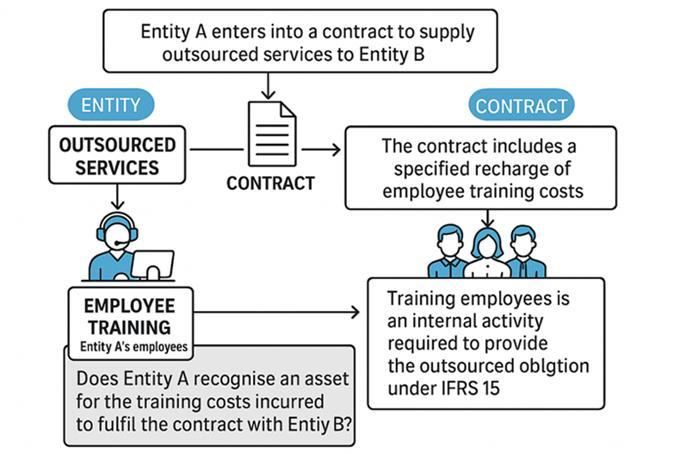
Summary of stakeholder feedback
Underlying economics
A2 Preparers and users broadly agreed that the training costs in the case study are contract‑specific mobilisation or set‑up costs incurred to enable delivery of an outsourced service contract, and recoverable through future contract revenues, rather than general operating training expenditure. Users characterised training as a contract‑enabling investment, without which the entity could not earn the related revenue, and observed that the three‑year reimbursement period reflects the expected economic pattern of benefit.
A3 Users further noted that this pattern is consistent with the way service contracts are commonly structured and performed, with early phases typically loss‑making and later phases highly profitable, reflecting that training and other mobilisation costs are incurred upfront to support delivery and revenues in later periods. As one user observed: “Initial phases [are] loss making and then later phases very highly profitable… that’s just a misallocation of costs”.
A4 Academic participants similarly emphasised the basic cash‑flow economics of the arrangement, noting that the entity incurs cash outflows for employee costs and training upfront to generate cash inflows from contract revenue over time. They viewed this timing pattern as central to understanding the economics of the transaction.
Recognition
A5 Both preparers and users recognised a tension between the economic substance of the training costs and the requirement in IAS 38 to expense all training costs. However, notwithstanding these observations, participants did not reach a common view on capitalisation. Views diverged primarily on whether the entity controls the trained workforce, with concerns about employee attrition reinforcing those differences.
Arguments in favour of capitalisation
A6 Users did not object to the observation that, absent the requirements in IAS 38, the training costs in the case study could potentially meet the criteria for recognition as an asset under IFRS 1512.
A7 Several users, particularly those with an investor background, emphasised that economic viability of a contract is more relevant than the resulting accounting outcome. They argued that recognising training costs entirely at contract inception does not reflect their role in enabling future contract revenues and hinders analysis of contract profitability over time, resulting in a lack of cost–revenue matching.
A8 Users also observed that expensing some mobilisation costs upfront while allocating others over a contract term obscures underlying performance. They noted that this makes it difficult to distinguish margins generated by the ongoing business from those reflecting upfront investment in a new contract13.
A9 Academic participants noted that IAS 38 leads to a conservative accounting outcome by requiring all training costs to be expensed, regardless of the underlying economics. They argued that the entity derives economic value from a workforce trained to serve a specific customer and that such value would be reflected in a transaction price if the customer were to acquire the service provider, due to reduced future recruitment and training costs.
A10 Both academics and users highlighted perceived inconsistencies between acquisition accounting and the treatment of internally generated intangibles. They noted that intangible resources such as a trained workforce or accumulated know‑how would be recognised if acquired in a business combination, but not when developed internally. Academics also questioned why employee‑related costs may be capitalised when incurred as development costs but must be expensed when incurred to train a workforce to deliver a specific service contract.
Unit of account
A11 Where participants considered capitalisation of training costs to be possible in principle, participants discussed the appropriate unit of account for any recognised asset. Two views emerged:
- View A – Separable asset: Training costs recognised as a standalone asset.
- View B – Contract‑level asset: Training costs treated as part of a broader contract‑level fulfilment or set‑up asset, analysed alongside contract revenues and margins.
A12 Users expressed concern that treating training as a standalone asset (View A) would require significant judgement, given that the knowledge created through training resides in employees who may leave the entity. As one participant observed: “When you train an individual… that knowledge is with that individual. If you can’t stop that person from walking out the door, I find it hard to see how you would capitalise that”.
A13 The contract‑level view (View B) was strongly favoured by users, who explained that analysing training costs together with the related contract better reflects how performance is assessed in practice. From an investor perspective, participants emphasised the importance of understanding results at a contract level, noting that they want to “see what’s associated with contracts” and that it is difficult under current accounting to distinguish “what margins are in core business and what is growth in contracts.”
Arguments against capitalisation
A14 Opposition to capitalisation was grounded primarily in concerns about control. Participants emphasised that the knowledge created through training resides in employees, rather than in resources controlled by the entity. As a result, they questioned whether the entity has the ability to direct the use of, and obtain benefits from, the trained capability independently of the employees themselves. More broadly, participants also expressed concern about the implications of capitalising costs associated with “people” or normal operating activities. As one participant explained:
“the asset is kind of the knowledge in those people and a company doesn’t control those people… “they might resign tomorrow.”
A15 Attrition and short notice periods were cited as reinforcing these control concerns. Participants noted that trained employees may leave the entity before the expected benefits of training are realised, resulting in the loss of the knowledge created through training. This uncertainty about how long trained employees remain with the entity was seen as undermining the existence and recoverability of any recognised asset, making it difficult to support recognition of an asset expected to generate benefits over multiple periods when those benefits depend on factors outside the entity’s control.
Measurement (including impairment and amortisation)
A16 Users showed a clear preference for cost‑based measurement, (“just tell me how much you spent”). Some participants were uneasy about using fair‑value‑type or cash‑flow‑based approaches because they rely on assumptions and introduce significant uncertainty. As one participant remarked:
“You might have information about how profitable you expect this contract to be. That doesn’t mean it’s going to come true.”
A17 A small number of participants acknowledged that, in limited circumstances, a measurement approach that considers expected future benefits might better reflect the economics, particularly where training:
- creates capabilities that can be reused (and can support future contracts not just the initial one),
- may result in intellectual property (IP) or systems that retain value even if the original contract ends.
Attrition and impairment
A18 Where recognition was assumed in principle, participants discussed attrition primarily as a measurement issue rather than a recognition issue. They noted that employee turnover affects the period over which training benefits are realised and therefore informs assumptions about expected benefits, useful life, and impairment. Several participants emphasised that higher‑than‑expected attrition increases the risk that anticipated returns will not be achieved, with one noting that “attrition is the key thing.”
A19 Participants explained that changes in attrition expectations would be reflected through impairment, making the effects of revised assumptions visible over time. As one participant observed, “if turnover is bigger than you think… you have an impairment test hanging over it.” However, concerns were also raised about the operational burden of impairment testing and the sensitivity of the judgements required.
Amortisation and useful life
A20 There was no consensus on the appropriate amortisation period, with views divided between amortisation over the full contract term or over the three‑year reimbursement period. Participants noted that determining a useful life would require judgement and should consider contract duration, workforce retention assumptions, and termination risk.
Disclosure
A21 Users consistently called for enhanced disclosures even if recognition requirements do not change. They emphasised the need for information that enables an understanding of contract economics and risk–reward profiles, including contract scope, duration and specificity; whether arrangements are one‑off or repeatable; the scale and nature of training and other mobilisation costs; reimbursement mechanisms; and key assumptions such as attrition. As one participant observed: “…the more information we can get about the terms of the contracts and the assumptions, the better.”
A22 Preparers, however, raised concerns about the practicality of providing such disclosures across large portfolios of service contracts, noting the volume and complexity of information that could be required. As one participant observed: “Sounds like a whole load of information you’re going to have to give across your whole portfolio of revenue contracts.”
Case Study 2: Research and Development
Case study high-level description
A23 This case study considers a large pharmaceutical company with a broad R&D pipeline that is incurring significant development expenditure on a drug that has progressed to Phase III clinical trials. Although the drug remains subject to regulatory approval, the company has sufficient resources to complete development and has obtained an external discounted cash flow valuation indicating expected future economic benefits. Participants were invited to consider whether and when this expenditure gives rise to a recognisable internally generated intangible asset, and how existing requirements address issues of recognition, measurement and disclosure in circumstances where economic potential is evident but outcomes remain uncertain.
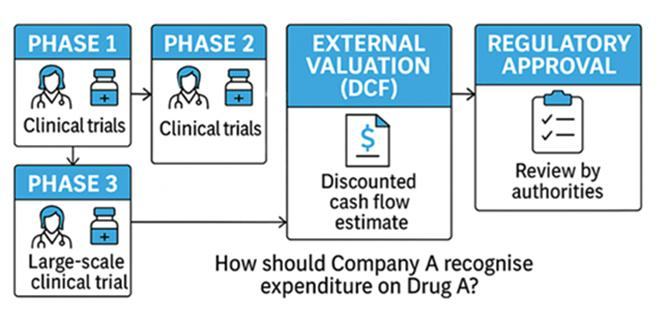
Summary of stakeholder feedback
Underlying economics
A24 Participants described R&D as large upfront expenditure incurred with the expectation, but not assurance, of future economic benefits, particularly in sectors such as pharmaceuticals, technology and aerospace. For example, one participant characterised them as “an example of upfront costs, which are all expensed in the expectation of future potential revenues, uncertainty surrounding and subject to, regulatory approval”.
A25 One participant described early‑stage research in practical terms as “money out the door” and expenditure that “drops on the floor,” reflecting the lack of clearly identifiable outputs at that stage. This participant characterised early research as having “infinite possibility,” while also observing that, at this point, “none of this money will ever come back”.
A26 However, several participants cautioned that describing early research in this way should not be taken to mean that it lacks an economic basis. They stressed that, even at early stages, spending decisions are grounded in judgement and expertise rather than chance. As one preparer observed:
“It is not a company that's just, ‘give me $100, I will throw it up in the air and see where it lands’… They must presumably have some rationale behind this.”
Recognition
Research versus development
A27 Participants questioned whether there is a clear point at which research becomes development, noting that R&D involves progressive stages where “there is a point when something becomes something,” but where identifying that point is “very judgemental” rather than clearly defined.
Expensing versus capitalisation
A28 Participants broadly agreed that R&D expenditure represents economically rational investment. However, the significant uncertainty inherent in R&D, particularly in early stages, made it difficult to reach consensus on whether, and when, such expenditure should meet the criteria for asset recognition.
A29 Participants did not converge on a clear preference between expensing and capitalising R&D expenditure. They noted that both approaches are applied in practice within existing accounting requirements, with outcomes often reflecting the exercise of judgement. Participants cited diversity in practice, ranging from expensing all R&D costs to capitalising development expenditure only after, or shortly before, regulatory approval. For example:
- One user gave examples of a company that expenses all R&D costs, companies that capitalise development expenditure only after regulatory approval, and others that begin capitalising once a product is submitted for regulatory approval.
- One preparer explained that R&D expenditure was largely expensed in a listed environment but capitalised following a move to private‑equity ownership, despite no change in the underlying projects or accounting requirements. As the participant noted, “with the same R&D projects and the same essential fact patterns, I effectively went from a position of not capitalising anything to pretty much anything to capitalise… and the standard allowed me to do that.” This was also cited as raising comparability concerns.
A30 From a lender’s point of view, participants said that credit decisions are mainly based on cash flow, as this shows whether a business can afford to repay its debts. However, some noted that showing R&D spending on the balance sheet could still be helpful for comparisons and encourage better financial discipline, with lenders making their own adjustments to the figures where needed.
A31 Some users argued that expensing R&D reduces accountability, because once costs are recognised in profit or loss, they are no longer revisited or challenged. They contrasted this with capitalisation followed by impairment, which would require ongoing assessment and explanation of outcomes. As one participant put it:
“When you expense it, it’s gone. It’s a sunk cost. No one sees it again. No one questions it again… But if you had to capitalise it, and then you had to explain why you're writing off, there would be a record of that, and then the company would have to explain to the market”.
Internally generated versus acquired R&D
A32 One user noted that similar R&D can appear very different on the balance sheet depending on whether it is bought or developed internally, which may make some companies’ balance sheets appear understated.
Recognition thresholds and timing
A33 Across discussions with preparers, users, and academics, the focus was on when R&D should be recognised on the balance sheet, particularly whether recognition should happen while outcomes are still uncertain.
A34 Many preparers said that recognition is generally accepted only once regulatory approval is obtained, especially in pharmaceuticals. They explained that recognising costs earlier could lead to later write‑downs and create volatility in reported results.
A35 Users described the issue as a choice between two approaches:
- not recognising an asset because uncertainty is too high; or
- recognising the asset but reflecting uncertainty by adjusting its value.
A36 One participant summed this up as:
“Should you not recognise it because it’s uncertain or recognise it and discount it by half in the measurement?”.
Asset existence and the business model
A37 Participants emphasised that recognition depends less on development progress and more on the business model (i.e. if the asset will generate value, for example through sale or commercial use). As two participants explained:
“It depends on your intention. Are you developing it to sell to somebody, or are you taking it to market yourself?”
“That’s the definition of an asset. If you can make money out of it. If somebody will pay me something for it.”
Measurement
Cost vs fair value
A38 Participants highlighted a tension between measuring R&D at cost and at fair value. Cost was seen as objective and cautious, but a poor reflection of what an R&D asset is really worth. As one participant said:
“Cost is the only factual answer you can get to… but it’s also inherently wrong in the sense that that’s not the value of the asset.”
A39 Users said the key issue is understanding potential future value and the likelihood of success, even if it is unclear whether this uncertainty should be reflected directly in accounting numbers.
A40 Users noted that investors usually assess R&D‑intensive businesses by estimating future value across a portfolio of projects and weighting outcomes by their probability of success. One participant observed that this assumes future value before outcomes are certain, which differs from the more cautious practice of expensing R&D.
A41 One participant cautioned against using DCF‑based fair value models on the balance sheet, noting that these can be highly sensitive to assumptions and may end up reflecting expected market values rather than a reliable measure of a specific asset14.
Unit of account
A42 Users stressed that R&D is best assessed at a portfolio level, as uncertainty and outcomes look very different across multiple projects than when considered one by one. They noted that this better reflects how investors view R&D‑intensive businesses. In this context, users suggested that external valuations and a company’s track record could help support measurement where outcomes are uncertain, although views differed on how convincing this would be in practice. Participants also observed that investors are generally more comfortable with uncertainty than auditors.
Disclosure
Lack of disaggregation
A43 Disclosure was the area of strongest agreement across preparers, users, and academics. Participants agreed that a single total R&D expense figure is of limited usefulness. They noted that R&D is often “hidden or merged with other expenses,” and that current disclosures do not meet user needs. Users supported this view by referring to survey evidence showing that most respondents want more information about intangibles.
What users want to know
A44 Users want context and evidence of progress, not just headline numbers. Users want information on how projects move through development stages, past success rates, how concentrated R&D spending is, and management’s view of the likelihood of success. A company’s track record was seen as especially important in assessing credibility and future prospects. As one user said:
“I would look at your previous success rate... How realistic is this company about the product it’s bringing through that process?..”
A45 Participants also noted that simple metrics, such as returns on R&D, and information on how spending is concentrated across projects can help investors assess effectiveness and challenge management’s assumptions. As one participant explained:
“If there’s a spend of 160 on one project and 40 across a lot of small projects, that would encourage you as an investor to focus on the big project and test management on their future assumptions”.
Disclosure versus recognition
A46 Many participants, particularly users and academics, said that disclosure matters more than whether R&D costs are capitalised or expensed. They noted that investors look for similar information under both approaches and focus on understanding the scale, nature, and progress of R&D activity regardless of the accounting treatment. As one participant commented:
“Whether you capitalise it or whether you expense it, the conversations are pretty similar.”
Commercial sensitivity
A47 Participants also recognised the tension between useful disclosure and commercial sensitivity, noting that companies are reluctant to reveal their “secret sauce,” especially where value depends on a small number of projects.
A48 Some participants argued that consistent disclosure is still possible if requirements are clearly defined and applied uniformly. As one participant stressed, disclosure frameworks should be “not open to interpretation” to avoid minimal compliance and ensure disclosures are genuinely comparable across companies.
Case Study 3: Carbon credits
Case study high-level description
A49 The case study considers an environmental project developer that acquires degraded forest and peatland for restoration, with the aim of removing CO₂ from the atmosphere over time. The project is validated and verified annually under the UK Woodland Carbon Code, enabling the developer to issue carbon credits on the UK Land Carbon Registry as sequestration occurs. These credits may be sold or assigned to other market participants, including intermediaries and end users. Participants were asked to explore the accounting implications of these activities from four perspectives:
- the project developer;
- an environmental‑credit broker or trader;
- an investor holding credits for appreciation; and
- an end user purchasing credits to offset emissions.
Business model
A50 The feedback suggests that accounting outcomes were largely driven by how entities use and derive value from carbon credits, with differences across project developers, traders, investors and end users indicating an implicit business‑model perspective in participants’ views, particularly in relation to recognition and measurement.
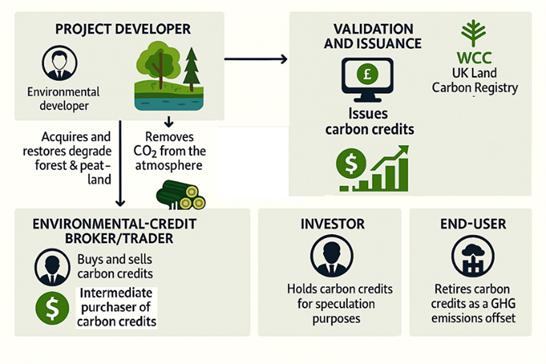
Summary of stakeholder feedback
The project developer (generator of carbon credits)
Underlying economics
A51 Participants viewed the project developer as running a long‑term, capital‑intensive project. The forest, peatland, or engineered asset was seen as the main productive asset, with carbon credits generated later through verification and certification. As one participant put it, “The trees are like a machine… you’re investing in a big machine that’s going to create something that you can sell.”
A52 Participants agreed that at the outset the developer owns land, but no carbon credits yet exist because “nothing is being generated, nothing has been certified.” They highlighted several risks, including certification risk, physical risks such as fire or destruction, and regulatory and market price volatility.
A53 Some users added that returns may not come only from carbon credits, noting that timber income and increases in land value could also contribute to overall returns.
Recognition
A54 Participants discussed which costs should be recognised and how they could be recovered. Views generally supported recognising:
- Costs linked to a single long‑term asset, such as land or restoration assets (for example, restored peatland), which still have value even if carbon credits are never sold; and
- Costs that arise only from taking part in carbon‑credit schemes, which can be recovered only through selling carbon credits, not through the land or restoration asset itself15.
A55 There was significant debate about whether a project developer should recognise a separate carbon‑credit asset once credits are certified, distinct from the land or capitalised project costs.
- Some participants supported recognition, arguing that a carbon credit only exists once it is certified and registered and becomes a separate, tradable unit.
- Others disagreed, arguing that only the underlying land should be recognised, with carbon credits reflected only as revenue when sold: “The underlying asset is recognised as PPE and carbon credits as revenue”.
A56 Participants also discussed when capitalisation should begin during the project lifecycle. Some preparers supported capitalising land acquisition and restoration costs from the outset, on the basis that these activities create long‑term capacity to generate value, even though carbon credit sales occur later.
A57 Some users, however, said that capitalisation depends on the project reaching sufficient maturity, certification, and market credibility, and that early‑stage activities may be too uncertain to recognise as assets.
Measurement
A58 Participants generally preferred using cost to measure project developers’ activities, especially where these create land‑based assets, such as land, forests, or restored peatland, or involve scheme‑specific costs that can only be recovered by selling carbon credits. Fair‑value approaches were mostly rejected in these cases, due to concerns about whether they would be appropriate or reliable16.
A59 Where carbon credits are certified and registered, discussions did not show clear support for either a cost‑based or fair‑value approach.
Disclosure
A60 Users stressed that disclosure is critical given the large upfront costs and the long delay before carbon credit revenues begin. Investors want clear explanations of project progress, including how and when a project moves from development to generating revenue. As one user said: “If I was an investor, I’d want that annual report that says how much you’ve actually done at that stage.”
A61 At the same time, participants warned that disclosure alone is not a substitute for recognising assets, noting that narrative information without recognition can lack consistency and discipline (“There's no rigour behind the disclosure. There's rigour behind the recognition”). Participants also cautioned that disclosure should not become overly detailed or reveal commercially sensitive information.
Environmental‑credit broker / trader
Underlying economics
A62 Brokers were seen as operating only once carbon credits are certified and registered. Their role is to trade and intermediate between buyers and sellers, not to develop projects.
Recognition
A63 There was broad agreement that brokers recognise carbon credits when they acquire certified units.
Measurement
A64 Participants were generally more open to fair‑value measurement for brokers where credits are held for trading. As one participant explained (“So, you either hold them at cost if you intend to use them in your business, or you hold them at fair value if you trade them”).
A65 Some compared carbon credits to shares but cautioned that the comparison is limited, noting that carbon markets are “not quite like shares on the FTSE” and are typically smaller, less liquid and more volatile17.
Disclosure
A66 Participants did not raise specific disclosure issues for brokers.
Investor holding environmental credits for capital appreciation
Underlying economics
A67 Investors were described as holding carbon credits to benefit from price increases rather than for use. Control and marketability were seen as key, with returns highly sensitive to credit quality and regulatory change, including the risk that “a politician comes in and abolishes the whole regime.”
Recognition
A68 Participants generally agreed that certified and registered carbon credits held for capital appreciation meet the definition of an asset, as they are controlled by the investor, transferable, and expected to generate future economic benefits through resale.
Measurement
A69 Participants said measurement should reflect why the credits are held.
- Fair value was seen as more relevant where credits are held for trading or speculation in an active market;
- Cost was viewed as more appropriate where credits are held for longer‑term or strategic purposes.
A70 Participants also noted that fair‑value measurement depends on market maturity and liquidity. While fair value was seen as appropriate where credits can be easily sold, they cautioned that carbon‑credit markets are often immature and volatile, making them unlike deep public markets. In these cases, fair value could add volatility and complexity without clearly improving decision‑making.
A71 Participants added that measurement may need to change if the purpose for holding credits changes, for example if credits initially held for strategic use are later traded or sold.
Disclosure
A72 Users stressed the need for clear explanations of price volatility, uncertainty, and management judgement.
End user (purchaser to offset emissions)
Underlying economics
A73 There was strong agreement that end users are consumers, not investors. From this perspective, carbon credits have a limited economic life tied to emissions, as they are bought to offset emissions and retired once used: “They are purely going to use them, retire them”.
Recognition
A74 Participants noted that a carbon credit is recognised while it is held and available for use by the end user. Derecognition occurs when the credit is used and retired in the registry, after which it can no longer be transferred or reused18. As one participant said: “They are purely going to use them, retire them, they will not exist once they've used them as an offset”.
A75 Users cautioned that requiring companies to expense the full cost of credits immediately when purchased to meet emissions commitments could discourage their use, even where credits support real emissions reductions19.
Measurement
A76 Participants strongly preferred cost‑based measurement for end users, with the cost recognised when the credits are used to offset emissions and are retired.
Disclosure
A77 Participants agreed that, for end users, the impact of buying, using, and retiring carbon credits should be clear from the financial statements, rather than relying only on sustainability reporting.
Case Study 4: Data
Case study high-level description
A78 This case study was developed subsequent to the other three. It has only been run at one event with two separate groups. The original case study, based on a real scenario, focused on medical data and included quite strict controls on the usage of raw data. In hindsight this overly constrained the discussions and limited the exploration of some key issues. The case study has subsequently been amended and will be tested more extensively in workshops in early June.
A79 The case study explored the accounting issues that arise when an entity incurs significant expenditure to build and use a large internal dataset that is central to its business model but not legally owned. It invited consideration of whether such expenditure gives rise to a recognisable intangible asset, and if so, how recognition, measurement and disclosure should reflect the underlying economics, including shared data arrangements, continuous data enhancement, and uncertainty over future benefits.
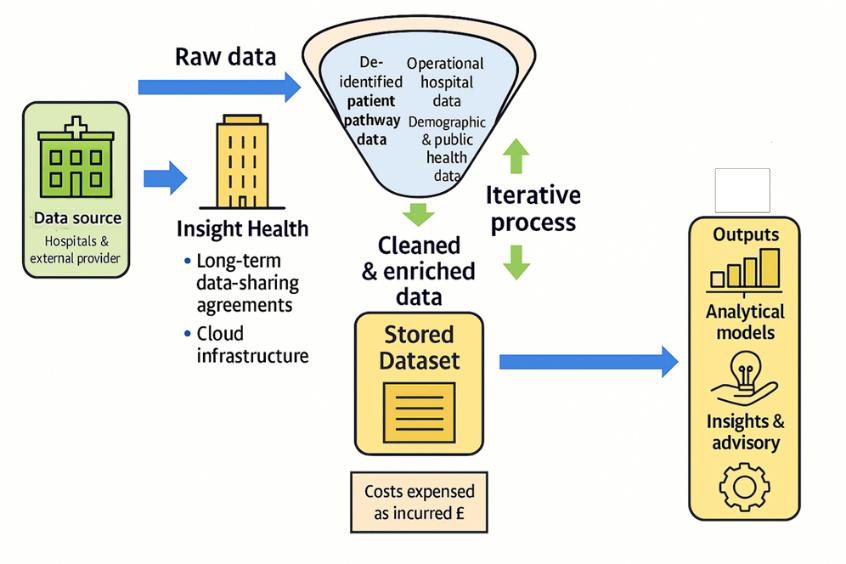
Summary of stakeholder feedback
Underlying economics
A80 Participants agreed that the economics of data depend on the entity’s business model and how data‑related activities generate future benefits.
A81 Participants observed that the fact pattern prohibits the resale of raw data. As a result, participants focused on how the entity in the case study adds value to the raw data, through the systems, models and intellectual property developed through processing and analysis20.
Recognition
Business model and future benefits
A82 Recognition was seen as possible in principle, but highly dependent on control, use within the business model, and a clear link to future economic benefits.
A83 Participants stressed that asset recognition should start with understanding the business model, that is, how the entity uses data and how that use generates future economic benefit. One participant noted:
“First, we’ve got to have a business model… and then maybe I can say that it may be worth something.”
A84 A key concern was the difficulty of applying IAS 38’s restrictive criteria to data‑related activities. However, some participants warned that lowering recognition thresholds could increase the risk of over‑capitalisation and later impairment.
A85 Participants did note that internally generated data‑related items face higher recognition hurdles than acquired intangibles, due to judgement and uncertainty in demonstrating future benefits. As one participant said: “you’ve still got to be able to prove that it’s going to actually make you some money.”21
Control
A86 Control was the most debated issue, particularly in relation to data accessed under shared or non‑owned arrangements but controlled by the entity through contractual or licensing rights. Some participants questioned whether control exists when others can also use the data (“They share the data. They don’t control it. And everyone else can use it as well.”).
A87 Others referred to the Conceptual Framework, suggesting that exclusive control may not be required if contracts give the company the ability to direct the use of data and obtain benefit economic benefits. “Does it actually matter if someone else is using it?… As long as there is an agreement.”
A88 The discussion indicated that the existence of control depends on the specific terms the contractual arrangement, including the extent of the entity’s right to direct use and obtain economic benefits.
Unit of account
A89 Participants observed that value in the case study arises from the combination of raw data with the systems, models and processes used to transform that data into useful outputs (effectively forming a “secret sauce”)22. However, no clear conclusion was reached on whether this creates challenges in identifying the appropriate unit of account, given that the resulting value may not be attributable to a single identifiable asset but instead emerges from a set of interdependent elements.
A90 At the same time, there were no objections to the view that raw data may, in some cases, exist as a standalone item, particularly where it can be sold independently without further value‑adding activities.
Measurement
Cost vs Fair value
A91 The cost model was widely viewed as the most practical and cautious approach, with little support for fair value.
A92 Participants raised concerns about fair value, including reliance on assumptions, cash‑flow forecasts, valuation complexity, and auditability. As one participant put it: “Who’s going to do the valuation? What are the assumptions? Who is going to audit it?”
A93 Participants noted significant judgement in identifying costs that relate directly to an asset. Staff costs were seen as capitalisable only where time can be clearly linked to specific projects. Cloud, server, and storage costs were viewed as particularly difficult to allocate, as they support many activities.
A94 One participant suggested a revenue‑based approach, starting with first‑year revenues from a proprietary model and building value over time. However, they acknowledged this would involve significant judgement and assumptions.
Useful life and amortisation
A95 Useful life and amortisation were seen as particularly challenging due to the evolving and iterative nature of data. Participants highlighted the uncertainty around the useful life of data and whether regular updates represent maintenance or new assets.
A96 There were concerns that capitalisation of updates could cause asset values to grow over time, unless older data is written off or clearly distinguished from new assets.
Impairment
A97 Participants noted that capitalising data may introduce volatility in profit or loss. There were concerns that the carrying amount of data‑related assets could build up over time and, if later assessed to be overstated, be reduced significantly in a single period through impairment, resulting in large, sudden write‑downs (“cliff edge” impairments). This effect could be more pronounced during periods of weaker performance, creating a “double hit” in profit or loss.
A98 Participants also noted that audit scrutiny may act as a constraint on capitalisation. Participants noted that “auditors tend to be balance sheet focused” and may be sceptical of capitalised amounts where there is a risk of subsequent impairment.
A99 Participants observed that changes in underlying assets, including data, may lead to obsolescence and trigger impairment when those assets no longer contribute to future economic benefits23.
Disclosure
A100 There was strong support for enhanced disclosure due to the high level of judgement involved in recognising and measuring data‑related assets. As one participant noted: “You’d need to be consistent and explain what you have done and the reason behind it. Your assumptions would be important so your analysts can make sense of it.”
A101 Participants highlighted the following disclosures as most useful:
- Key assumptions used to determine useful lives;
- Accounting policy choices and reasons for them;
- Descriptions of recognised data‑related asset classes, including aggregation;
- Discount rates used and related sensitivities.
A102 Participants generally did not support disclosure of costs that were not capitalised, noting limited usefulness where no asset is recognised. Instead, disclosures should focus on recognised assets and the key judgements made.
A103 Participants also stressed that disclosures should not compromise commercial sensitivity.
Footnotes
-
This mandate was also mentioned in the 2025-28 Regulatory Strategy (see page 6): “Maintaining and building on the UKEB’s reputation for robust, evidence-based research, designed to feed into the IASB and ISSB's ongoing work and contribute to the international debate on reporting issues”. ↩
-
Intangible Assets Research: Project Initiation Plan, see paragraph A13. ↩
-
This approach grounded on the 2018 Conceptual Framework for Financial Reporting issued by the IASB in 2010 and revised in March 2018 (hereafter, ‘2018 Conceptual Framework’) identifies the key elements that could support the development of a principle-based standard for intangibles. ↩
-
Based on paragraphs A12 and A14–A15 of the Intangibles PIP. ↩
-
The Secretariat met with the Academic Advisory Group (AAG) at its meeting on 19 September 2025; the Preparers Advisory Group (PAG) at its meeting on 20 October 2025; the Investors Advisory Group (IAG) at its meeting on 3 November 2025; and the Accounting Firms and Institutes Advisory Group (AFIAG) at its meeting on 11 November 2025. ↩
-
8 Intangible Assets. ↩
-
Link to meeting summary: 29 January 2026. ↩
-
Key takeaways from this meeting were summarised in paragraphs 9–19 of this Meeting Summary. ↩
-
Key takeaways from this meeting were summarised in this LinkedIn post. ↩
-
Revisions aim to support a better understanding of, for example, how data is used; how data from different sources is combined; and the range of business models associated with data, including how those models are identified and analysed. ↩
-
Note: The original case study, based on a real scenario, focused on medical data and included quite strict controls on the usage of raw data. ↩
-
Absent the requirements in IAS 38, IFRS 15 could result in recognition of the training costs as an asset for costs to fulfil a contract, provided the criteria in paragraph 95 of IFRS 15 are met, namely that the costs relate directly to a specific contract, generate or enhance resources used to satisfy future performance obligations, and are expected to be recovered through contract revenues. ↩
-
The Secretariat interprets this to mean that investors want to understand which margins relate to existing (“core”) business, and which reflect growth activity (new contracts that require upfront investment). Because some mobilisation costs are expensed immediately and others are spread over time, the numbers become hard to interpret. ↩
-
From a Secretariat perspective, these concerns may reflect the fact that DCF‑based measures require extensive forward‑looking assumptions and are highly sensitive to changes in inputs. ↩
-
The Secretariat interprets that these “carbon-scheme specific costs” do not enhance the land or forest itself and are incurred only because the developer wants to issue and sell carbon credits; they are recoverable only through the successful issuance and sale of carbon credits. Examples include certification, validation and verification fees, registry‑related costs, and other carbon‑scheme‑specific monitoring or consultancy expenditures. These costs would be capitalised as a separate cost pool if recovered through the future sale of carbon credits. ↩
-
The Secretariat interprets this as reflecting concerns that fair‑value measurement would require incorporating long‑dated and uncertain assumptions about future carbon‑credit certification and pricing. ↩
-
In the Secretariat’s view these characteristics were seen as introducing greater uncertainty and limiting the reliability of fair‑value measurement in practice. ↩
-
Participants described carbon credits held by end users as being used and then retired, rather than expiring over time. The Secretariat understands this to mean that recognition and derecognition are linked to use and retirement, rather than to the passage of time or amortisation over a defined period. ↩
-
For example, a company might purchase carbon credits for £10 million to support a long‑term emissions‑reduction strategy. If the full amount is recognised as an immediate expense in profit or loss in the year of purchase, this may make reported performance appear worse in that period, even though the environmental benefits are realised over a longer time horizon. Participants noted that this accounting outcome could influence management decisions about whether and when to purchase credits. ↩
-
The Secretariat notes, however, that in other circumstances raw data itself may be sold or otherwise generate economic benefits. ↩
-
The Secretariat interprets these comments as reflecting the additional judgement required where recognition is assessed in the absence of a purchase transaction, compared with externally acquired items where a transaction price may provide initial evidence. ↩
-
The Secretariat plans to explore this point at future workshops. ↩
-
As noted, these challenges are not unique to data and can also arise for other assets, for example inventories or other assets that may become obsolete over time. This highlighted the importance of getting a better understanding at future workshops of the factors that lead to impairment, including patterns of use, technological change and evidence of ongoing economic benefit. ↩