4 Lease Liability in a Sale and Leaseback Narrow-scope Amendments to IFRS 16—Adoption Package
Project Type: Endorsement Project Scope: Narrow-scope
Executive Summary
Purpose of the paper
This paper requests the Board's approval of the individual documents included as part of the 'adoption package' for the project to assess Lease Liability in a Sale and Leaseback—Amendments to IFRS 16 (the Amendments) for adoption.
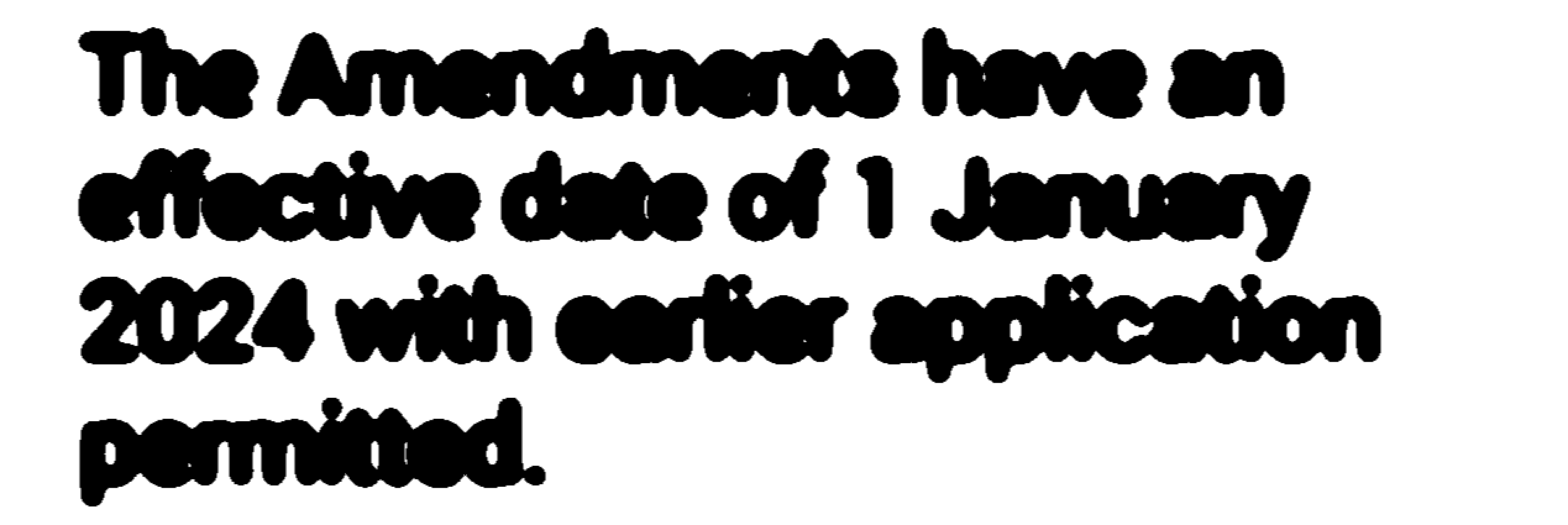
The Amendments have an effective date of 1 January 2024 with earlier application permitted.
The documents included as part of the adoption package are:
- A final Endorsement Criteria Assessment (ECA);
- A Feedback Statement;
- A draft Due Process Compliance Statement;
- A draft Adoption Statement for the Amendments; and
- The text of the UK-adopted international accounting standard (Amendments to IFRS 16).
Summary of the Issue
The UK Endorsement Board (UKEB) was not involved in the work on the development of the Final Comment Letter (FCL) as the UKEB Secretariat submitted its FCL on the ED to the IASB on 26 March 2021, before the Board's statutory functions had been delegated by the Secretary of State. A PIP for the endorsement project was approved at the November 2022 Board meeting. All UKEB work and outreach on the Amendments has now been completed and the results incorporated in the adoption package presented to the Board at this meeting.
Following the tentative vote on the adoption of the Amendments at this meeting, the vote will be formalised by Board members signing the voting form that will be made available to them after this meeting.
Decisions for the Board
- Subject to any changes identified at this meeting, does the Board approve:
- the final amended ECA (Appendix A)?
- the Feedback Statement (Appendix B)?
- the draft Due Process Compliance Statement (Appendix C)?
- Does the Board tentatively approve the adoption of the Amendments to IFRS 16 for use in the UK?
Recommendation
We recommend the Board approves the relevant documents in the adoption package and tentatively approves the adoption of the Amendments to IFRS 16.
Appendices
Appendix A Final Endorsement Criteria Assessment (ECA) Appendix B Feedback Statement Appendix C [Draft] Due Process Compliance Statement Appendix D [Draft] Adoption Statement of Lease Liability in a Sale and Leaseback—Amendments to IFRS 16 Appendix E Annex to the Adoption Statement: Text of the UK-adopted international accounting standard (Amendments to IFRS 16)
Introduction
1The IASB issues narrow-scope amendments to international accounting standards as part of its continuous effort to maintain and improve IFRS and to support its consistent application. Proposals for amendments often arise from questions submitted to the IFRS Interpretations Committee.
2The IASB's proposals were set out in Exposure Draft ED/2020/4 Lease Liability in a Sale and Leaseback (the ED). The UKEB Secretariat submitted its Final Comment Letter (FCL) on the ED to the IASB on 26 March 20211 before the Board's statutory functions had been delegated by the Secretary of State2. The Board was therefore not involved in the work on the development of the FCL. However, the IASB considered the comments in the UKEB Secretariat FCL, and those made by UK respondents directly to the IASB, during its discussion of the stakeholder feedback on the ED3.
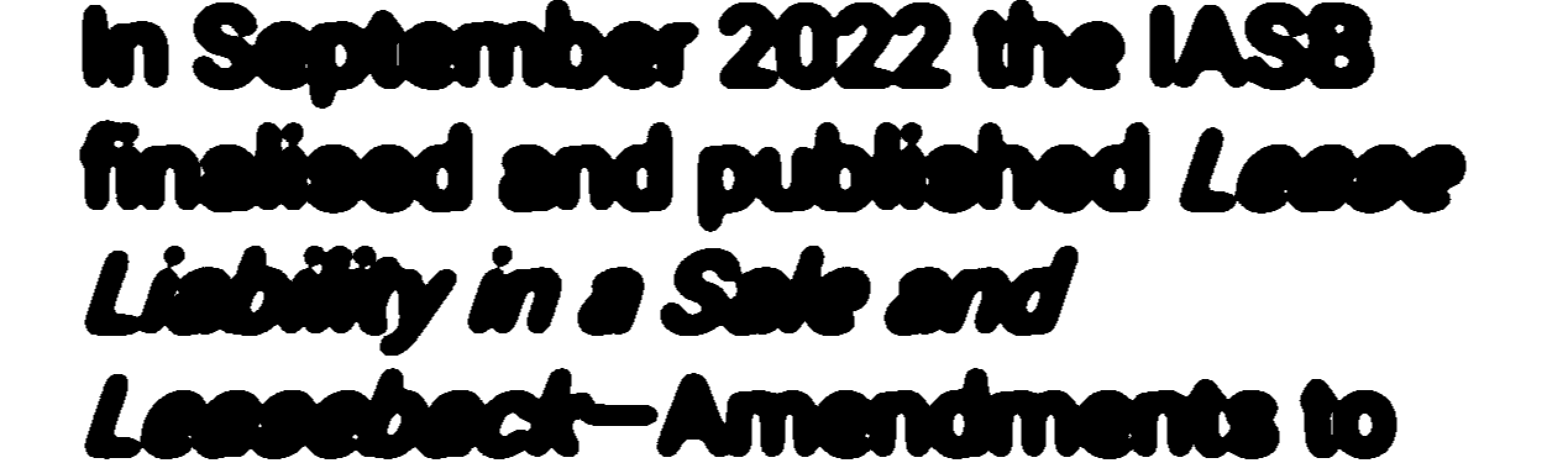
3The IASB published Lease Liability in a Sale and Leaseback—Amendments to IFRS 16 (the Amendments) in September 2022. The Amendments have an effective date of 1 January 2024 with earlier application permitted.
Endorsement of the Amendments
4The Amendments, which are narrow in scope, were issued and exposed for public comment as the IASB considered they merited consultation and outreach.
Exclusions
5The Amendments include a new example (Example 25 of IFRS 16) illustrating the application of the requirements in paragraph 102A and in paragraphs 29-46 of IFRS 16 to a sale and leaseback transaction with variable lease payments that do not depend on an index or rate. The Amendments also amend existing Illustrative Example 24 of IFRS 16.
6These amendments to the IFRS 16 Illustrative Examples have not been included as part of the UKEB's endorsement project as UK-adopted international accounting standards comprise only the mandatory sections of standards. However, we have reviewed Illustrative Examples 24 and 25 and have not identified any inconsistencies with the Amendments4.
UKEB endorsement project work
7The UKEB approved a Project Initiation Plan (PIP) for the endorsement project at its November 2022 Board meeting. At its December 2022 meeting, the Board approved the Draft Endorsement Criteria Assessment (DECA) for the Amendments for stakeholder consultation. The DECA set out the UKEB's provisional assessment of whether the Amendments met the UK's statutory requirements for adoption. The DECA was published on 5 January 2023 and was open for comment until 5 April 2023.
8Six formal responses were received from stakeholders comprising accounting firms, accounting and audit representative organisations and preparers. All respondents were supportive of the adoption of the Amendments.
9Details of the stakeholder comments are included in the Feedback Statement at Appendix B. The Secretariat does not consider that any amendments need to be reflected in the ECA as a result of the stakeholder responses to the DECA. The only changes made to the text of the DECA relate to minor editorial amendments, and are shown as tracked changes in the document presented to the Board today.
10A draft Due Process Compliance Statement (DPCS) is included at Appendix C and sets out the process followed during this endorsement project and its compliance with UKEB due process. A final DPCS will be presented for noting at the May 2023 Board meeting.
11The Secretariat has now completed its assessment of the Amendments for adoption for use in the UK from the effective date of 1 January 2024.
Questions for the Board—ECA, Feedback Statement and DPCS
1Do Board members have any comments on:
- the final amended ECA (Appendix A)?
- the Feedback Statement (Appendix B)?
- the draft Due Process Compliance Statement (Appendix C)?
Project closure
12In accordance with UKEB's Due Process Handbook, the project closure process for endorsement projects comprises the following steps5:
- preparation of an 'adoption package' for the Amendments; and
- voting on the adoption of the amended standard.
Adoption package
13The individual documents included in the adoption package6 for the Amendments are:
- final amended ECA (Appendix A);
- the Feedback Statement (Appendix B);
- the Due Process Compliance Statement (Appendix C);
- Adoption Statement for the Amendment (Appendix D); and
- The text of the UK-adopted international accounting standard (Amendments to IFRS 16) (Appendix E).
Closure documents for approval
14In addition to the documents referred to in paragraphs 7 to 11 above, the Board is asked to approve the following documents intended for publication on the UKEB website:
- Appendix D: draft Adoption Statement for the Amendments.
- Appendix E: Annex to the Adoption Statement: Text of the UK-adopted international accounting standard (Amendments to IFRS 16).
Voting on the adoption of the Amendments
15Decisions on the adoption of a standard or amendment are made at public Board meetings and follow the requirements of paragraphs 5.2–5.5 in Section 5 of the UKEB's Terms of Reference (ToR)7.
16At this public meeting Board members are asked to provide a tentative vote on the adoption of the Amendments based on the discussion of the adoption package. This vote will be indicative only and will be formalised via members signing the formal voting form that will be made available to them after the meeting.
17Voting forms will be sent during the week commencing 1 May and Board members will be requested to submit their voting form within a week. Paragraph 5.3 of the Board's Terms of Reference requires that the outcome will be made public within 3 working days of that formal vote.
Question for the Board – Voting on the adoption of the Amendments
2Does the Board tentatively approve the adoption of the Amendments to IFRS 16 for use in the UK?
Project milestones and next steps
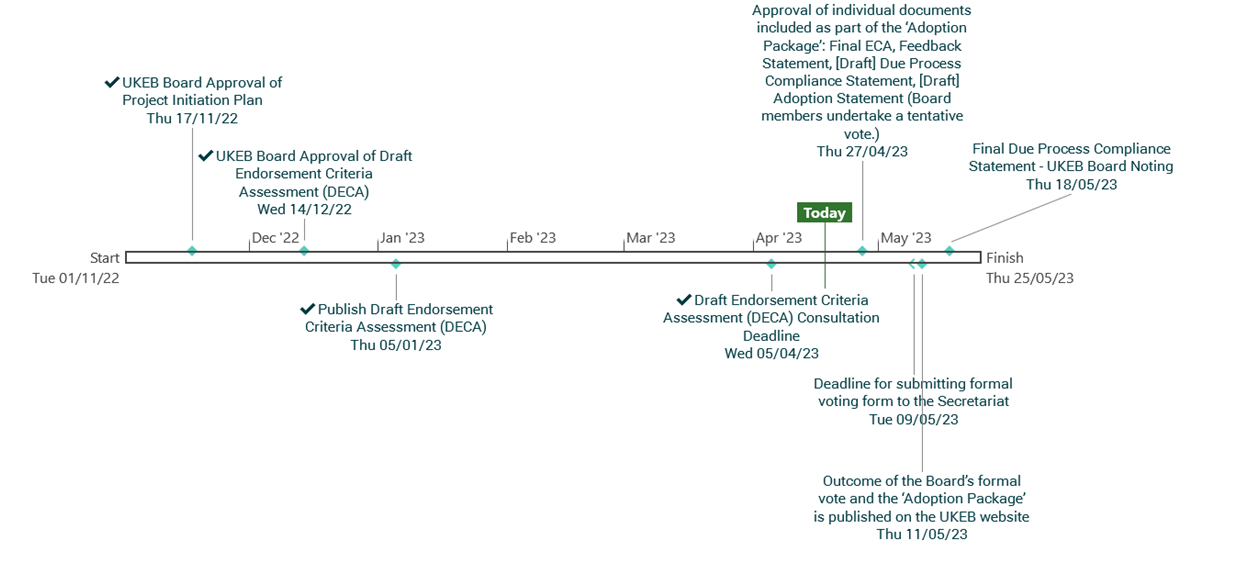
18The project milestones including next steps are set out in the table below and in the diagram on the next page:
DECA Consultation period (90 days): 5 January 2023 – 5 April 2023
| Expected date | Milestones | |
|---|---|---|
| 14 December 2022 | Board approval of Draft Endorsement Criteria Assessment (DECA) | Completed |
| 27 April 2023 | Approval of documents included as part of the adoption package: | This meeting |
| - Final ECA | ||
| - Feedback Statement | ||
| - [Draft] Due Process Compliance Statement | ||
| - [Draft] Adoption Statement for the Amendments | ||
| - The text of the UK-adopted international accounting standard (Amendments to IFRS 16) | ||
| Board members provide a tentative vote. | ||
| 2 May 2023 (expected date) | Voting form is sent to Board members | To be completed |
| 9 May 2023 (expected date) | Deadline for submitting vote | To be completed |
| 11 May 2023 (expected date) | Publication of adoption decision | To be completed |
| 18 May 2023 | Final Due Process Compliance Statement for noting | To be completed |
Narrow-scope Amendments Lease Liability in a Sale and Leaseback—Amendments to IFRS 16—Plan
Draft Endorsement Criteria Assessment of Lease Liability in a Sale and Leaseback—Amendments to IFRS 16
April January 2023
The UKEB does not accept any liability to any party for any loss, damage or costs howsoever arising, whether directly or indirectly, whether in contract, tort or otherwise from an action or decision taken (or not taken) as a result of any person relying on or otherwise using this document or arising from any omission from it.
© 2023 All Rights Reserved
Contents
- Introduction (4)
-
- Section 1: UK statutory requirements for adoption (7)
-
- Section 2: Description and assessment of the Amendments (11)
Introduction
Purpose
1The purpose of this Draft Endorsement Criteria Assessment (DECA) is to determine whether Lease Liability in a Sale and Leaseback—Amendments to IFRS 16 (the Amendments), issued by the International Accounting Standards Board (IASB) in September 2022, meet the UK's statutory requirements for adoption. The Amendments have an effective date of 1 January 2024 with earlier application permitted.
2The IASB's proposals were set out in Exposure Draft ED/2020/4 Lease Liability in a Sale and Leaseback (the ED). The UKEB Secretariat submitted its Final Comment Letter (FCL) on the ED to the IASB on 26 March 20218 before the Board's statutory functions had been delegated by the Secretary of State9. The Board was therefore not involved in the work on the development of the FCL. However, the IASB considered the comments in the UKEB Secretariat FCL, and those made by UK respondents directly to the IASB, during its discussion of the stakeholder feedback on the ED.
Background to the Amendments
3The Amendments add subsequent measurement requirements for sale and leaseback transactions10 to improve the requirements for such transactions in IFRS 16 Leases as part of the IASB's continuous effort to maintain and improve international accounting standards and to support their consistent application.
4The Amendments, which are narrow in scope, and were issued and exposed for public comment as the IASB considered they merited consultation and outreach11.
5Section 2 in this DECA provides a brief description of the Amendments.
Exclusions from the adoption assessment
6The Amendments include a new example (Example 25 of IFRS 16) illustrating the application of the requirements in paragraph 102A and in paragraphs 29-46 of IFRS 16 to a sale and leaseback transaction with variable lease payments that do not depend on an index or rate. The Amendments also amend existing Illustrative Example 24 of IFRS 16.
7These amendments to the IFRS 16 illustrative Examples have not been included as part of the UKEB's assessment as UK-adopted international accounting standards comprise only the mandatory12 sections of standards. However, we have reviewed Illustrative Examples 24 and 25 and have not identified any inconsistencies with the Amendments.
Structure of the assessment
8We have presented our analysis in the following sections:
- Section 1: describes UK statutory requirements for adoption of new or amended international accounting standards; and
- Section 2: discusses how the Amendments meet the criteria in Section 1.
Do the Amendments lead to a significant change in accounting practice?
9A standard adopted by the UKEB under Regulation 6 of The International Accounting Standards and European Public Limited-Liability Company (Amendment etc.) (EU Exit) Regulations 2019 No. 685 (SI 2019/685) that it considers is likely to lead to a 'significant change in accounting practice', is subject to the requirements in paragraph 3 of Regulation 11 of SI 2019/685 that the UKEB:
- "carry out a review of the impact of the adoption of the standard; and
- publish a report setting out the conclusions of the review no later than 5 years after the date on which the standard takes effect (being the first day of the first financial year in respect of which it must be used)".
10Section 2 of this DECA discusses whether the Amendments lead to a significant change in accounting practice and concludes that they do not.
I. Section 1: UK statutory requirements for adoption
UK statutory requirements
1.1Paragraph 1 of Regulation 7 of SI 2019/685 requires that an international accounting standard only be adopted if:
- "the standard is not contrary to either of the following principles–
- an undertaking's accounts must give a true and fair view of the undertaking's assets, liabilities, financial position and profit or loss;
- consolidated accounts must give a true and fair view of the assets, liabilities, financial position and profit or loss of the undertakings included in the accounts taken as a whole, so far as concerns members of the undertaking;
- the use of the standard is likely to be conducive to the long term public good in the United Kingdom; and
- the standard meets the criteria of understandability, relevance, reliability and comparability required of the financial information needed for making economic decisions and assessing the stewardship of management."
1.2The ECA assesses the criteria above in the following order:
- Whether the Amendments meet the criteria of relevance, reliability, understandability and comparability required of the financial information needed for making economic decisions and assessing the stewardship of management (Regulation 7(1)(c)).
- Whether the Amendments are not contrary to the principle that an entity's accounts must give a true and fair view (Regulation 7(1)(a)).
Footnotes
UK statutory requirements
1.1Paragraph 1 of Regulation 7 of SI 2019/685 requires that an international accounting standard only be adopted if:
- "the standard is not contrary to either of the following principles-
- an undertaking's accounts must give a true and fair view of the undertaking's assets, liabilities, financial position and profit or loss;
- consolidated accounts must give a true and fair view of the assets, liabilities, financial position and profit or loss of the undertakings included in the accounts taken as a whole, so far as concerns members of the undertaking;
- the use of the standard is likely to be conducive to the long term public good in the United Kingdom; and
- the standard meets the criteria of understandability, relevance, reliability and comparability required of the financial information needed for making economic decisions and assessing the stewardship of management."[^14]
1.2The ECAis DECA assesses the criteria above in the following order:
- Whether the Amendments meet the criteria of relevance, reliability, understandability and comparability required of the financial information needed for making economic decisions and assessing the stewardship of management (Regulation 7(1)(c)).
- Whether the Amendments are not contrary to the principle that an entity's accounts must give a true and fair view (Regulation 7(1)(a)).
- Whether use of the Amendments is likely to be conducive to the long term public good in the UK (Regulation 7(1)(b)). Regulation 7(2) of SI 2019/685 includes specific areas to consider for this assessment. They are:
- whether the Amendments are likely to improve the quality of financial reporting;
- the costs and benefits that are likely to result from use of the Amendments; and
- whether the Amendments are likely to have an adverse effect on the economy of the UK, including on economic growth.
Relevance, Reliability, Understandability and Comparability
1.3Information is relevant if it is capable of making a difference in the decision-making of users or in their assessment of the stewardship of management. The information may aid predictions of the future, confirm or change evaluations of the past, or both.
1.4Financial information is reliable if, within the bounds of materiality, it:
- can be depended on by users to represent faithfully what it either purports to represent or could reasonably be expected to represent;
- is complete; and
- is free from material error and bias.
1.5Financial information should be readily understandable by users with a reasonable knowledge of business and economic activities and accounting, and a willingness to study the information with reasonable diligence.
1.6Information is comparable if it enables users to identify and understand similarities in, and differences among, items. Information about an entity should be comparable with similar information about other entities and with similar information about the same entity for another period.
1.7In conducting our overall assessment against the technical accounting criteria we are required to adopt an absolute, rather than a relative, approach. This means that this assessment is an absolute one against the criteria (do the Amendments provide information that is understandable, relevant, reliable and comparable?) rather than a relative one (do the Amendments provide information that is more understandable, relevant, reliable and comparable than current, or any other, accounting?). When an assessment of any individual aspect or requirement of the Amendments uses comparative language (e.g. 'enhances comparability'), this does not mean that our objective is to reflect a real comparison in relative terms. Instead, our objective is to explain that any individual aspect or requirement of the Amendments has the potential to “enhance” one or more of the qualitative characteristics. The overall assessment of the Amendments against the technical accounting criteria is an absolute one. Consideration of whether the Amendments are likely to improve the quality of financial reporting is separate from this assessment and is included within the UK long term public good assessment in Section 2.[^15]
True and fair view assessment
1.8As noted above, the first adoption criterion set out in Regulation 7(1) of SI 2019/685 requires that an international accounting standard can be adopted only if:
"the standard is not contrary to either of the following principles-
- an undertaking's accounts must give a true and fair view of the undertaking's assets, liabilities, financial position and profit or loss;
- consolidated accounts must give a true and fair view of the assets, liabilities, financial position and profit or loss of the undertakings included in the accounts taken as a whole, so far as concerns members of the undertaking; [....]”
1.9For the sake of brevity, we refer to our assessment against this endorsement criterion as 'the true and fair view assessment' and to the principles set out in Regulation 7(1)(a) as the ‘true and fair principle'. However, these abbreviated expressions do not imply that our assessment has considered anything other than the full terms of the endorsement criterion set out above.
1.10The duty of the UKEB under Regulation 7(1)(a) is to determine generically, before a standard is applied to a set of accounts, whether that standard is 'not contrary' to the true and fair principle. In other words, it is an ex-ante assessment. We have therefore considered whether the Amendments contain any requirement that would prevent accounts prepared using the Amendments from giving a true and fair view.
1.11Our approach is to determine whether the Amendments are not contrary to the true and fair principle in respect of any of the specific items identified in Regulation 7(1)(a) (namely, the assets, liabilities, financial position and profit or loss) in the context of the preparation of the accounts as a whole. A holistic approach has been taken to this assessment, considering the impact of the Amendments taken as a whole, including their interaction with other UK-adopted international accounting standards.
1.12For the purposes of our assessment, we consider the requirement in IAS 1 for financial statements to 'present fairly the financial position, financial performance and cash flows of an entity's to be equivalent to the Companies Act 2006 requirement for accounts to give a true and fair view.
1.13Our assessment is separate from the duty of directors under section 393(1) of the Companies Act 2006, which requires directors to be satisfied that a specific set of accounts gives a true and fair view of an undertaking's or group's assets, liabilities, financial position and profit or loss.
[Draft Adoption decision]
1.14Section 2 of this DECA discusses how the Amendments meet the statutory endorsement criteria set out in this Section 1.
1.15On the basis of these assessments, the UKEB concludes that the Amendments meet the statutory endorsement criteria. The UKEB is therefore of the view that it will adopt the Amendments for use in the UK.[^16]
2. Section 2: Description and assessment of the Amendments
| Category | Description |
|---|---|
| 14 The term "standard" includes standards (International Accounting Standards (IAS), International Financial Reporting Standards (IFRS)), amendments to those standards and related Interpretations (SIC-IFRIC interpretations) issued or adopted by the International Accounting Standards Board (IASB). This DECA relates to amendments to those standards. | |
| 15 These descriptions are based on the qualitative characteristics of financial statements in the Framework for the Preparation and Presentation of Financial Statements adopted by the IASB in April 2001. These qualitative characteristics became part of the criteria for endorsement and adoption of IFRS in the EU's IAS Regulation (1606/2002), and, subsequently, in SI 2019/685. | |
| 16 Paragraph 15 of IAS 1 Presentation of Financial Statements. | |
| 17 See IAS 1 paragraph 122. | |
| 18 The requirements of IAS 8 paragraph 10 require a seller-lessee to develop and apply an accounting policy that results in information that is relevant and reliable. | |
| 19 It is possible that UK entities might have overseas operations that enter into such transactions. However, the IASB performed a search in June 2021 to obtain further evidence about the volume of material sale and leaseback transactions with variable payments. Their search identified one seller-lessee that disclosed two sale and leaseback transactions for which the leaseback payments are based entirely on a percentage of its revenue generated using the underlying asset. | |
| 20 Estimate based on LSEG and Reuters-Eikon data. | |
| 21 Estimate based on FAME, Companies Watch and proprietary data. | |
| 22 Feedback from UKEB's Accounting Firms & Institutes Advisory Group (AFIAG). | |
| 23 See paragraph BC294A of the Basis for Conclusions to the Amendments. |
- Executive Summary
- Decisions for the Board
- Recommendation
- Appendices
- Introduction
- Endorsement of the Amendments
- Exclusions
- UKEB endorsement project work
- Questions for the Board—ECA, Feedback Statement and DPCS
- Project closure
- Voting on the adoption of the Amendments
- Question for the Board – Voting on the adoption of the Amendments
- Project milestones and next steps
- Narrow-scope Amendments Lease Liability in a Sale and Leaseback—Amendments to IFRS 16—Plan
- 2. Section 2: Description and assessment of the Amendments
- Purpose of this feedback statement
- Description of the Amendments to IFRS 16
- Background to the endorsement project
- UKEB public consultation on the draft ECA
- Overall assessment
- Detailed assessment—Comments from respondents
- Disclaimer
- Contact Us
- 27 April 2023 Agenda Paper 4: Appendix C: Due Process Compliance Statement: Lease Liability in a Sale and Leaseback—Narrow-scope Amendments to IFRS 16
- Adoption Statement
- Approval by the UKEB Board
- UK-adopted international accounting standards
- Lease Liability in a Sale and Leaseback - Amendments to IFRS 16
- Appendix C
Purpose of this feedback statement
This feedback statement presents the views of UK stakeholders received during the UKEB's public consultation on the draft Endorsement Criteria Assessment (ECA) of Lease Liability in a Sale and Leaseback—Amendments to IFRS 16 and where relevant explains how the UKEB has addressed those views in the final ECA.
Description of the Amendments to IFRS 16
A brief description of the Amendments is presented below:
Lease Liability in a Sale and Leaseback—Amendments to IFRS 16
The diagram illustrates a transaction where Entity A (Seller-lessee) Transfers an item of property, plant and equipment (PPE) to Entity B (Buyer-lessor). Subsequently, Entity A leases that PPE back for a number of years.
The Amendments add requirements in IFRS 16 Leases on how to subsequently account for sale and leaseback transactions that include variable leaseback payments that do not depend on an index or rate (i.e. variable lease payments linked to future performance or use of an underlying asset).
Background to the endorsement project



The UKEB Secretariat submitted its Final Comment Letter (FCL) on the IASB's Exposure Draft on 26 March 2021, before the Board's statutory functions had been delegated by the Secretary of State. The Board was therefore not involved in the development of the FCL.
For the project to consider the Amendments for adoption, the UKEB
- Approved the Project Initiation Plan at its November 2022 meeting.
- Approved the Draft Endorsement Criteria Assessment (DECA) at its December 2022 meeting.
However, the IASB considered the comments in our FCL and made by UK respondents directly to the IASB when finalising the Amendments.
Due to the narrow-scope nature of the Amendments, the UKEB's consultation activities were focused on obtaining responses to the DECA.
UKEB public consultation on the draft ECA
- The DECA was published for consultation for 90 days, between 5 January 2023 and 5 April 2023.
- A total of six formal responses was received by the UKEB from stakeholders.
| Stakeholder type | Number of responses |
|---|---|
| Accounting firms | 4 |
| Accounting and audit representative organisations | 1 |
| Preparers of accounts | 1 |
| Total | 6 |
- During the consultation period, the UKEB and its Secretariat promoted awareness of the DECA and encouraged stakeholders to respond through News Alerts and advertising through the usual channels. We also sent the link to the DECA to members of UKEB Advisory Groups for them to share with relevant contacts in their organisation and wider network.
- All stakeholder comments were considered in reaching the UKEB's final assessment of the Amendments. Stakeholder submissions received were made public on the UKEB website.
Overall assessment
Respondents to the DECA concur with the UKEB's assessment based on the adoption criteria in paragraph 1 of Regulation 7 SI 2019/685 and are fully supportive of the adoption of the Amendments.
Detailed assessment—Comments from respondents
| UKEB tentative assessment | Stakeholder views | UKEB final assessment |
|---|---|---|
| Lease Liability in a Sale and Leaseback—Amendments to IFRS 16 | ||
| Technical criteria assessment | ||
| The DECA tentatively concluded that the Amendments met the criteria of relevance, reliability, comparability and understandability required of the financial information needed for making economic decisions and assessing the stewardship of management, as required by Regulation 7(1) of SI 2019/685. | All respondents were supportive of the UKEB's tentative conclusion. | Consistent with tentative assessment. |
| True and fair view assessment | ||
| The DECA tentatively concluded that the Amendments were not contrary to the true and fair view principle set out in Regulation 7(1) of SI 2019/685. | All respondents were supportive of the UKEB's tentative conclusion. | Consistent with tentative assessment. |
| UK long term public good | ||
| The DECA tentatively concluded that, having considered all relevant aspects, including the trade-off between the costs and benefits of implementing the Amendments, the Amendments were likely to be conducive to the long term public good in the UK as required by SI 2019/685. | All respondents were supportive of the UKEB's tentative conclusion. All respondents also agreed with the UKEB's assessment that sale and leaseback transactions affected by the Amendments are rare in the UK. One respondent considered that a reassessment of the existing requirements for sale and leaseback transactions, including the accounting for variable payments as consideration in an asset acquisition, is needed as part of the Post-implementation Review of IFRS 16. | Consistent with tentative assessment. |
Disclaimer
This feedback statement has been produced in order to set out the UKEB's response to stakeholder comments received on the Draft Endorsement Criteria Assessment of Lease Liability in a Sale and Leaseback—Amendments to IFRS 16 and should not be relied upon for any other purpose.
The views expressed in this feedback statement are those of the UK Endorsement Board at the point of publication. Any sentiment or opinion expressed within this feedback statement will not necessarily bind the conclusions, decisions, endorsement or adoption of any new or amended IFRS by the UKEB.
Contact Us
UK Endorsement Board 1 Victoria Street
| London | SW1H 0ET | United Kingdom
27 April 2023 Agenda Paper 4: Appendix C: Due Process Compliance Statement: Lease Liability in a Sale and Leaseback—Narrow-scope Amendments to IFRS 16
General UKEB requirements: The UKEB adopts international accounting standards for use within the UK, in accordance with SI 2019/685, and applies its own processes before it decides whether to adopt a new or amended international accounting standard.
Endorsement process
| Step | Mandatory/ optional1 | Metrics or evidence | UKEB Secretariat comments |
|---|---|---|---|
| Work plan [Handbook 4.30(d)] | |||
| Technical project added to UKEB technical work plan | Mandatory | Project is included in the UKEB published technical work plan. | Complete: The Amendments were included in the UKEB technical work plan published in October 2022. |
| Project preparation [Handbook 6.12-6.16] | |||
| Project Initiation Plan (PIP) | Mandatory | PIP draft with project outline (background, scope, project objective) and approach for endorsement and adoption | Complete: taking a proportionate approach, the Secretariat included mandatory milestones for the project and considered, as appropriate, other milestones and activities. The PIP was approved at the 17 November 2022 Board meeting. |
| Mandatory | (key milestones and timing) proportionate to the project | ||
| Mandatory | Outreach plan for stakeholders and communication approach outlined | Complete: Due to the narrow-scope nature of the Amendments, consultation activities were focused solely on obtaining responses to the Draft Endorsement Criteria Assessment (DECA) (as posted on the UKEB website). | |
| Mandatory | Resources allocated | Complete: One project manager supported and overseen by one senior project director, with communications and economics team support. | |
| Mandatory | Assessment of whether to set up an ad-hoc advisory group | Complete: Assessed. Taking a proportionate approach, an ad-hoc advisory group was not considered necessary due to the narrow-scope nature of the Amendments. | |
| Mandatory | UKEB Board public meeting held to approve PIP | Complete: PIP approved at 17 November 2022 Board meeting. | |
| Optional | UKEB education or initial assessment | Complete: Whilst an education session was not organised, the Board was provided with an update on the project at the September 2022 Board meeting covering background information on the Exposure Draft (ED) proposals and on the UKEB Final Comment Letter (FCL), including an update on the IASB's subsequent redeliberations. | |
| Communications | |||
| Public board meetings [Handbook 4.10] | Mandatory | UKEB Board public meetings held to discuss technical project | Complete: The Secretariat gave an update to the Board at the September 2022 meeting. 17 November 2022: the Board approved the PIP. 14 December 2022: the Board reviewed and approved the DECA for consultation. To take place: 27 April 2023: Approval of the Adoption Package consisting of:
|
| Secretariat papers [Handbook 4.20] | Mandatory | Board meeting papers posted and publicly available on a timely basis. | Complete: The UKEB meeting papers were published on the UKEB website one week before the relevant public meetings and subscribers notified via UKEB News Alerts. Meeting minutes and recordings were made publicly available via the UKEB website. Subscribers were notified via UKEB News Alerts. |
| Project website [Handbook 4.25(b)] | Mandatory | Project website contains a project description | Complete: The project webpage was created in September 2022. It is updated regularly with project status and additional materials. |
| Alerts [Handbook 4.24] | Mandatory | Update UKEB website | Complete: Project webpage updated regularly, and News Alerts issued to subscribers with latest status and documents. |
| Mandatory | Evidence that subscriber alerts have occurred | Complete: Subscribers were alerted via email 5 days before each Board meeting with links to the agenda, papers and the option to dial in to observe the discussion. A News Alert was also issued, alerting subscribers to the DECA publication. | |
| Mandatory | Project email address | Complete: A general UKEB email address was used for outreach and correspondence purposes throughout the duration of the project. | |
| Desk-based research [Handbook 6.17] | |||
| Optional | Identify relevant research sources and documents | Complete: the Secretariat has reviewed:
|
|
| Outreach activities [Handbook 6.18-6.22] | |||
| Consult with a representative range of stakeholders before adoption | Mandatory | Evidence of consultation | Due to the narrow-scope nature of the Amendments, consultation activities were focused on obtaining responses to the Draft Endorsement Criteria Assessment (DECA). The UKEB received six comment letters. Comment letters are available on the UKEB website. |
| Draft Endorsement Criteria Assessment (DECA) [Handbook 6.23-6.29] | |||
| Mandatory | UKEB sets comment period for response on DECA (generally not less than 90 days) | Complete: At 17 November 2022 Board meeting the Board decided that the comment period for public consultation should be 90 days and approved the overall project plan. The DECA was published for consultation on 5 January 2023 (comment period deadline 5 April 2023). | |
| Mandatory | Review and approval at UKEB public meeting | Complete: Approved at 14 December 2022 Board meeting. | |
| Mandatory | DECA posted on website for public consultation | Complete: The Secretariat published the approved DECA and Invitation to Comment on the UKEB website for a 90-day consultation period from 5 January 2023 to 5 April 2022. | |
| Mandatory | News Alert to announce publication | Complete: News Alert posted on 5 January 2023 calling for comments and link to the DECA was sent out to UKEB advisory groups. | |
| Project closure [Handbook 6.30-6.48] | |||
| Final Endorsement Criteria Assessment (ECA) | Mandatory | Public responses on DECA assessed and posted on website | Complete: The UKEB received six comment letters which were published on the UKEB website. All responses were assessed, reflected as appropriate in the ECA and summarised in the feedback statement. |
| Step | Mandatory/optional1 | Metrics or evidence | UKEB Secretariat comments |
|---|---|---|---|
| Feedback statement | Mandatory | Feedback statement approved by UKEB in public meeting | To take place: A feedback statement will be presented for approval to the Board at its April 2023 public meeting. |
| Mandatory | Feedback statement posted on UKEB Website | To take place in May 2023, following finalisation. | |
| Mandatory | News Alert published to announce publication | To take place following posting to website. | |
| Due Process Compliance Statement (DPCS) | Mandatory | Due Process Compliance Statement approved by UKEB in public meeting | To take place: A [draft] DPCS will be presented for approval to the Board at its April 2023 public meeting. A final DPCS will be presented for noting at the Board's May 2023 meeting. |
| Mandatory | Due Process Compliance Statement posted on UKEB Website | To take place subsequent to the May 2023 Board meeting. | |
| Adoption Statement | Mandatory | Adoption statements approved by UKEB in public meeting | To take place: Adoption statement for the Amendments will be presented for approval to the Board at its April 2023 public meeting. |
| Mandatory | Adoption statements posted on UKEB Website | To take place in May 2023, dependent on the UKEB's adoption decision. | |
| Mandatory | News Alert published to announce publication | To take place following posting to website. | |
| Voting on adoption of the Amendments | Mandatory | Tentative vote | To take place at the April Board meeting based on the discussion of the 'adoption package', which includes a final draft ECA, a feedback statement, a DPCS, draft adoption statement for the Amendments; and the text of the UK-adopted international accounting standard (Amendments to IFRS 16). |
| Mandatory | Evidence of written vote (in paper or electronic form). | To take place: Adoption statement and voting forms will be sent to the Board for voting (accompanied by the text of the Amendments to be adopted) on 2/5/23 (written forms due by 9/5/23). Vote will be formalised via Board members signing the formal voting forms for the Amendments. | |
| Mandatory | News Alert published to announce the | To take place once UKEB's voting process is finalised. | |
| outcome of the vote within 3 working days of the formal vote |
Conclusion
This document sets out the main due process activities performed as part of the UKEB's project to endorse the Amendments.
In the Secretariat's opinion, overall, this project complies with the applicable due process steps, as set out in the Handbook at the time of writing.
Adoption Statement
Adoption of Lease Liability in a Sale and Leaseback (Amendments to IFRS 16)
1The UK Endorsement Board is designated under regulation 2(1) of The International Accounting Standards (Delegation of Functions) (EU Exit) Regulations 2021 No. 6092 (“the Delegating Regulations”) for the purpose of enabling it to exercise functions of the Secretary of State under Chapter 3 of Part 2 of The International Accounting Standards and European Public Limited-Liability Company (Amendment etc.) (EU Exit) Regulations 2019 No. 6853 (“the Regulations").
2The UK Endorsement Board, in exercise of the powers conferred by regulation 6(1) of the Regulations, adopts the following amendment to international accounting standards published in September 2022 by the International Accounting Standards Board (IASB), for use within the United Kingdom:
- Lease Liability in a Sale and Leaseback—Amendments to IFRS 16
3In accordance with regulation 7(1) of the Regulations, the UK Endorsement Board is of the view that:
- the standard4 is not contrary to either of the following principles—
- an undertaking's accounts must give a true and fair view of the undertaking's assets, liabilities, financial position and profit or loss;
- consolidated accounts must give a true and fair view of the assets, liabilities, financial position and profit or loss of the undertakings included in the accounts taken as a whole, so far as concerns members of the undertaking;
- the use of the standard is likely to be conducive to the long term public good in the United Kingdom; and
- the standard meets the criteria of understandability, relevance, reliability and comparability required of the financial information needed for making economic decisions and assessing the stewardship of management.
5The adopted amendment to international accounting standards in paragraph 2:
- must be used for financial years beginning on or after 1 January 2024;
- may be used for financial years beginning before 1 January 2024.
6The text of the adopted amendments to international accounting standards is set out in the annex to this statement.
Approval by the UKEB Board
Adoption of Lease Liability in a Sale and Leaseback (Amendments to IFRS 16)
Lease Liability in a Sale and Leaseback (Amendments to IFRS 16) published by the IASB in September 2022 was approved for adoption by [] members of the UK Endorsement Board.
| Chair | |
|---|---|
| Pauline Wallace | |
| Amir Amel-Zadeh | |
| Michael Ashley | |
| Philip Aspin | |
| Kathryn Cearns | |
| Katherine Coates | |
| Robin Cohen | |
| Edward Knapp | |
| Paul Lee | |
| Giles Mullins | |
| Liz Murrall | |
| Sandra Thompson | |
| Michael Wells |
[Date]
UK-adopted international accounting standards
Lease Liability in a Sale and Leaseback Amendments to IFRS 16
UK-adopted international accounting standards contain copyright material of the IFRS® Foundation (Foundation) in respect of which all rights are reserved.
Reproduced and distributed by the UK Endorsement Board (“UKEB”), pursuant to the delegation by the Secretary of State in the International Accounting Standards (Delegation of Functions) (EU Exit) Regulations 2021 No. 609, with the permission of the Foundation within the United Kingdom only. No rights granted to third parties other than as permitted by the Terms of Use (see below) without the prior written permission of the UKEB, and the Foundation.
'UK-adopted international accounting standards' are issued by the UKEB in respect of their application in the United Kingdom and have not been prepared or endorsed by the International Accounting Standards Board.
Terms of Use for Users
1The IFRS Foundation and the UK Endorsement Board (“UKEB”) (pursuant to the delegation by the Secretary of State in the International Accounting Standards (Delegation of Functions) (EU Exit) Regulations 2021 No. 609), grant users of the UK-adopted international accounting standards' (Users) the permission to reproduce the 'UK-adopted international accounting standards' for
- the User's Professional Use, or
- private study and education
Professional Use: means use of ‘UK-adopted international accounting standards' in the User's professional capacity in connection with the business of providing accounting services for the purpose of application of IFRS as adopted by the UK for preparation of financial statements and/or financial statement analysis to the User's clients or to the business in which the User is engaged as an accountant.
For the avoidance of doubt, the abovementioned usage does not include any kind of activities that make (commercial) use of the 'UK-adopted international accounting standards' other than direct or indirect application of the ‘UK-adopted international accounting standards' such as but not limited to commercial seminars, conferences, commercial training or similar events.
2For any application that falls outside Professional Use, Users shall be obliged to contact the UKEB and the IFRS Foundation for a separate individual licence under terms and conditions to be mutually agreed.
3Except as otherwise expressly permitted in this notice, Users shall not, without prior written permission of the UKEB and the Foundation, have the right to license, sublicense, transmit, transfer, sell, rent, or otherwise distribute any portion of the 'UK-adopted international accounting standards' to third parties in any form or by any means, whether electronic, mechanical or otherwise either currently known or yet to be invented.
4Users are not permitted to modify or make alterations, additions or amendments to or create any derivative works from the 'UK-adopted international accounting standards' save as otherwise expressly permitted in this notice.
5For further details about licensing the IFRS Foundation's intellectual property please contact [email protected]
Lease Liability in a Sale and Leaseback - Amendments to IFRS 16
Amendments to IFRS 16 Leases
Paragraphs 102A, C1D and C20E are added and paragraph C2 is amended. A new heading is added before paragraph C20E. New text is underlined, and deleted text is struck through.
Sale and leaseback transactions
Assessing whether the transfer of the asset is a sale
Transfer of the asset is a sale
102AAfter the commencement date, the seller-lessee shall apply paragraphs 29–35 to the right-of-use asset arising from the leaseback and paragraphs 36–46 to the lease liability arising from the leaseback. In applying paragraphs 36–46, the seller-lessee shall determine ‘lease payments’ or ‘revised lease payments’ in a way that the seller-lessee would not recognise any amount of the gain or loss that relates to the right of use retained by the seller-lessee. Applying the requirements in this paragraph does not prevent the seller-lessee from recognising in profit or loss any gain or loss relating to the partial or full termination of a lease as required by paragraph 46(a).
Appendix C
Effective date and transition
Effective date
C1DLease Liability in a Sale and Leaseback, issued in September 2022, amended paragraph C2 and added paragraphs 102A and C20E. A seller-lessee shall apply these amendments for annual reporting periods beginning on or after 1 January 2024. Earlier application is permitted. If a seller-lessee applies these amendments for an earlier period, it shall disclose that fact.
Transition
C2For the purposes of the requirements in paragraphs C1–C20E C19, the date of initial application is the beginning of the annual reporting period in which an entity first applies this Standard.
Lease liability in a sale and leaseback
C20EA seller-lessee shall apply Lease Liability in a Sale and Leaseback (see paragraph C1D) retrospectively in accordance with IAS 8 to sale and leaseback transactions entered into after the date of initial application.
Footnotes
-
In accordance with the Due Process Handbook. ↩↩↩
-
Accessible here: https://www.legislation.gov.uk/uksi/2021/609/contents/made ↩↩
-
Accessible here: https://www.legislation.gov.uk/uksi/2019/685/contents ↩↩
-
The term "standard" includes standards (International Accounting Standards (IAS), International Financial Reporting Standards (IFRS)), amendments to those standards and related Interpretations (SIC-IFRIC interpretations) issued or adopted by the International Accounting Standards Board (IASB). The term 'standard' excludes Practice Statements. This Adoption Statement relates to amendments to those standards. ↩↩
-
Paragraph 6.30 of the Handbook. ↩
-
This in accordance with paragraph 6.31 of the Handbook. ↩
-
Paragraph 5.2 of the ToR requires an affirmative written vote of at least two-thirds of all of the appointed Board members for the adoption of a new or amended standard. The UKEB Terms of Reference can be found here. ↩
-
Final Comment Letter - Lease Liability in a Sale and Leaseback (Proposed amendment to IFRS 16).pdf ↩
-
The Statutory Functions were delegated by the Secretary of State to the UKEB on 22 May 2021. ↩
-
All references to sale and leaseback transactions in this DECA are only to those in which the transfer satisfies the requirements in IFRS 15 Revenue from Contracts with Customers to be accounted for as a sale. ↩
-
The Amendments meet the criteria in paragraph 5.16 of the IASB and IFRS Interpretations Committee Due Process Handbook. ↩
-
Mandatory pronouncements are IFRS Standards, IAS Standards, Interpretations and mandatory application guidance. Non-mandatory guidance includes bases for conclusions, dissenting opinions, implementation guidance and illustrative examples, together with the IFRS practice statements. This categorisation is set out in the Introduction to the IASB yearly Bound Volumes. ↩
-
The term "standard" includes standards (International Accounting Standards (IAS), International Financial Reporting Standards (IFRS)), amendments to those standards and related Interpretations (SIC-IFRIC interpretations) issued or adopted by the International Accounting Standards Board (IASB). This DECA relates to amendments to those standards. ↩