3.0 IFRS 17 CSM Allocation for Annuities
Project Type: Endorsement Project Scope: Significant
Executive Summary
Purpose of the paper
This paper presents an update on issues relating to the allocation of the contractual service margin (CSM) for annuities, following the issue of a Tentative Agenda Decision by the IFRS Interpretations Committee (the IC) and further discussions with stakeholders. The paper asks the Board whether it now has sufficient information to support its overall IFRS 17 endorsement assessment.
Summary of the issue
The IC considered a submission from some UK stakeholders that identified two different ways of interpreting IFRS 17's requirements relating to insurance coverage for annuities. On 23 March 2022, the IC issued a Tentative Agenda Decision that only one of those interpretations was compliant with IFRS 17's requirements.
At its March 2022 meeting the Board gave initial consideration to the outcome of the IC's deliberations. As requested at that meeting, this paper provides further background information on the expected accounting treatment of UK annuities under IFRS 17, and feedback from stakeholders including UK annuity providers on the IC's tentative decision. The draft text for the final ECA included in Appendix 1 to this paper sets out the key changes to the assessment arising as a result of this further analysis and feedback.
Decisions for the Board
Board members are asked to decide (i) whether they now have sufficient information to support their overall IFRS 17 endorsement assessment; and (ii) whether the Board should respond to the IC's request for comments on its Tentative Agenda Decision.
The Board is also asked to approve the draft text for inclusion in the final ECA set out in Appendix 1.
Recommendation
We recommend that the Board proceeds without further delay to consider for approval the final IFRS 17 ECA and Feedback Statement at this meeting (agenda item 4).
We also recommend that the Board approves the draft text in Appendix 1 for inclusion in the final ECA, subject to any drafting amendments identified by the Board.
Appendices
- Appendix 1 Draft text for inclusion in final ECA
Introduction
1At its February 2022 meeting the Board decided to wait for the outcome of the IC's consideration of matters relating to the allocation of CSM for annuities before finalising its IFRS 17 adoption decision.
2At its March 2022 meeting the Board considered:
a) an overview of the question at issue and the Board's previous consideration of the matter; b) a summary of the analysis and conclusions of the IASB staff paper1 provided for the IC meeting held on 15 March 2022, and the outcome of the IC's deliberations2; c) a reminder of the relevant contents of the IFRS 17 DECA and a summary of the consultation and other feedback received by the UKEB on this issue; and d) potential implications for the UKEB's overall IFRS 17 adoption decision.
3This paper provides further background information to support consideration of the implications of the IC's tentative decision for the final IFRS 17 ECA. Since the Board's March meeting we have held discussions with five UK annuity providers, an audit firm, the IASB and the ABI, and this paper includes key points of feedback received. We are grateful for the explanations and information provided by these stakeholders.
4The paper addresses the specific requests for information made by Board members at the March meeting, in particular regarding (i) the investment-return service; (ii) the relative significance and interaction of the components of CSM and the risk adjustment; and (iii) potential wider impacts on the UK annuity business.
Background information
Insurance contract services
5Under IFRS 17, the CSM is the balance sheet item representing the unearned profit the entity will recognise as it provides services in respect of a group of insurance contracts.
6As explained in the July 2021 Board paper, IFRS 17 requires the CSM to be recognised in line with the provision of both insurance coverage and, if any, an investment-return service. The investment-return service was introduced as part of the June 2020 amendments, in response to feedback from stakeholders that IFRS 17 did not appropriately reflect that many contracts combine insurance coverage and service relating to investment activities, and that the timing of provision of service relating to investment activities and insurance coverage might differ.
7The IASB specified conditions that are required to identify, but do not determine, the existence of an investment-return service, thereby allowing an entity to consider the relevant facts and circumstances and apply judgement when performing their assessment (IFRS 17:BC283E). An investment-return service is provided only if an investment component exists3, or the policyholder has a right to withdraw an amount, and the entity expects that amount to include an investment return generated by the entity.4
8The IASB's rationale for the restrictions over the recognition of an investment-return service was that, when the specified conditions are not met, the policyholder does not have a right to benefit from investment returns absent an insured event. This was explained in staff paper 2A for the February 2020 IASB Board meeting as follows:
"In the staff view, contracts that provide a right for the policyholder to benefit from an investment return are economically dissimilar from contracts without such a right. A policyholder holding that right receives an investment-return service as the entity generates investment returns. This is because these returns increase the amount that the policyholder has a right to receive irrespective of whether an insured event occurs (ie the entity continuously transfers an investment-return service to the policyholder).
If the policyholder does not have a right to benefit from investment returns, the receipt of any benefit from an entity's investment activities is contingent upon an insured event occurring (for example, the policyholder surviving the accumulation phase of a deferred annuity). In the staff view, in such cases the policyholder receives an insurance coverage benefit that is enhanced by the investment activities performed by the entity, rather than a separate investment-return service. In this case, the entity transfers any such benefits to the policyholder only during the period that it provides insurance coverage (ie as the policyholder receives the insurance coverage benefit). Therefore, the entity recognises the contractual service margin in profit or loss only during that period. This is consistent with the principle in IFRS 17 and IFRS 15 Revenue from Contracts with Customers of recognising revenue to depict the transfer of promised services to a customer, even when an entity is required to undertake activities to fulfil the contract before such a transfer occurs. Therefore, in the staff view, the requirements in IFRS 17 as originally issued already result in the recognition in profit or loss of the contractual service margin in a way that depicts the transfer of service to the policyholder of such contracts.”
9The IASB concluded that recognising the CSM in line with the provision of both insurance coverage and an investment-return service will provide useful information to users of financial statements. This benefit would be particularly important for contracts that have an insurance coverage period that differs from the period in which the policyholder benefits from an investment-return service (IFRS 17: BC293B).
10Although the IASB acknowledged that additional subjectivity and complexity are introduced by including an investment-return service in addition to insurance coverage in determining coverage units for insurance contracts without direct participation features, they concluded that this risk would be mitigated by the related disclosure required by paragraph 109 of IFRS 17. This disclosure provides users of financial information with useful information about the pattern of service provision (IFRS 17: BC283F).
11It is expected that most UK deferred annuities (including BPAs) will meet the conditions for recognition of an investment-return service in the deferred period. We understand this is because policyholders have a 'right to withdraw an amount', typically through a transfer to another insurance provider. Based on IASB Board papers and discussions with the IASB staff, we understand that in cases when the amounts withdrawn do not include an explicit investment return, for example transfer values based on the policyholder's accrued benefits, the amount may be considered to include an implicit return. That is because the pension contract is predicated on the basis of an investment return generated on the contributions made: accrued benefits would otherwise be lower than they are under the contract. The condition in paragraph B119B (b) requires the amount the policyholder has the right to withdraw to 'include' an investment return, not to be 'dependent on' or 'linked to' or similar.
12Typically, UK annuities in payment do not meet the conditions for recognition of an investment-return service. However, many annuities in payment include guaranteed periods, that is, periods during which a pay-out is guaranteed, irrespective of whether the policyholder survives. For example, the first 5 years of an annuity might be covered by such a guarantee: if the policyholder dies during that period, the annuity payments for 5 years would be paid to the policyholders' estate. The guaranteed payments therefore represent an investment component and the conditions for recognition of an investment-return service are met.
13Following the IC's tentative decision, the position typical for UK annuities might therefore be summarised as follows:
| Phase | Deferred annuity | Immediate annuity |
|---|---|---|
| Deferred phase | Investment-return service | |
| Guaranteed pay-out phase | Investment-return service | Investment-return service |
| Life-contingent pay-out phase | Insurance coverage: longevity | Insurance coverage: longevity |
14This is a simplified picture since some contracts also include death benefits for dependents should the policyholder die during certain phases of the contract. The death benefit could take the form of either a lump sum or annuity-like benefits. During the deferred phase, such benefits would represent insurance coverage in addition to the investment-return service. During the pay-out phase, annuity-like benefits to a dependent might be considered an extension to the main insurance coverage for longevity. We understand that typically such death benefits have a less significant impact on the measurement of liabilities or on revenue recognition.
The unit of account – BPA transactions
15The summary in the table in paragraph 13 above is also simplified because it ignores the potential impact of the unit of account (the group of insurance contracts), in particular for BPA transactions.
16A group of contracts acquired through a BPA transaction is likely to include a mixture of individual contracts in the deferred phase and individual contracts in the pay-out phase. This means that CSM recognition for a single group of contracts might include both insurance coverage and investment-return service concurrently. This adds a degree of judgement and complexity to the determination of coverage units and the split between the two different types of service (see further comments from paragraph 46 below).
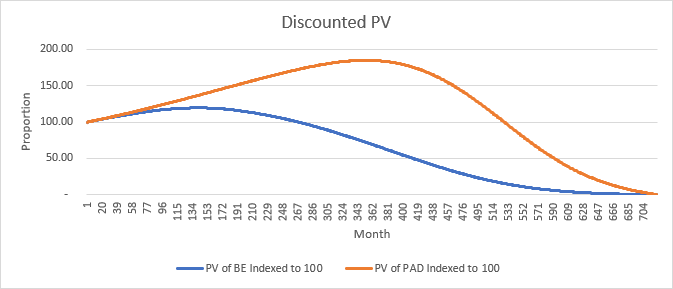
17By contrast, for a group of immediate annuities with similar guaranteed periods issued in a period (an annual cohort), investment-return service and insurance coverage would typically be expected to be recognised broadly sequentially.
The risk adjustment
18As explained in Section 2 and in Appendix B of the draft ECA, the risk adjustment for non-financial risk (risk adjustment) is defined as:
“the compensation an entity requires for bearing the uncertainty about the amount and timing of the cash flows that arises from non-financial risk as the entity fulfils insurance contracts."
19The risk adjustment is applied to the estimate of the present value of future cash flows when measuring a group of insurance contracts. It reflects the degree of diversification benefit the entity includes when determining the compensation it requires for bearing non-financial risk, and both favourable and unfavourable outcomes in a way that reflects the entity's degree of risk aversion (IFRS 17: B88).
20IFRS 17 is principle-based and does not specify the estimation technique(s) to be used to determine the risk adjustment, but states the characteristics that the risk adjustment shall have (IFRS 17: B91). For example:
- risks with low frequency and high severity result in higher risk adjustments;
- for similar risks, contracts with longer duration will result in higher risk adjustments; and
- risks with a wider probability distribution will result in higher risk adjustments.
21The less known about current estimates and trends, the higher the risk adjustment. To the extent that emerging experience reduces uncertainty about the amount and timing of cash flows, the risk adjustment will decrease (IFRS 17 B91).
22An entity applies judgement when determining an appropriate estimation technique for the risk adjustment. When applying that judgement, an entity also considers whether the technique provides concise and informative disclosure so that users of financial statements can benchmark the entity's performance against the performance of other entities (IFRS 17: B92).
23In the case of reinsurance contracts held, an entity determines the risk adjustment so that it represents the amount of risk being transferred by the holder of the group of reinsurance contracts to the issuer of those contracts (IFRS 17: 64 and Illustrative Example 11).
24Unlike the CSM, the risk adjustment is not a historical amount that is allocated to accounting periods. Rather, since it forms a component of the fulfilment cash flows, the risk adjustment is remeasured at each reporting date using current assumptions. Broadly, the risk adjustment is recognised in profit or loss as the entity is released from risk.
Disclosures
25Entities are required to disclose quantitative information about the expected timing of recognition in profit or loss of the CSM remaining at the end of the reporting period, providing time bands (IFRS 17:109).
26IFRS 17 also requires an entity to disclose significant judgements made in applying the standard, including the inputs, assumptions and estimation techniques used. This includes the approach used to determine the risk adjustment and to determine the relative weighting of the benefits provided by insurance coverage and investment-return service (IFRS 17:117(c)(ii) and (v)).
27An entity shall also disclose the confidence level used to determine the RA. If an entity uses a technique other than the confidence level technique for determining the RA, it shall disclose the technique used and the confidence level corresponding to the results of that technique. [IFRS 17: 119]
28Overall, an entity will be required to provide sufficient qualitative and quantitative disclosures about the amounts recognised, the judgements made and the nature and extent of risks to meet IFRS 17's general disclosure objective.5
Question for the Board
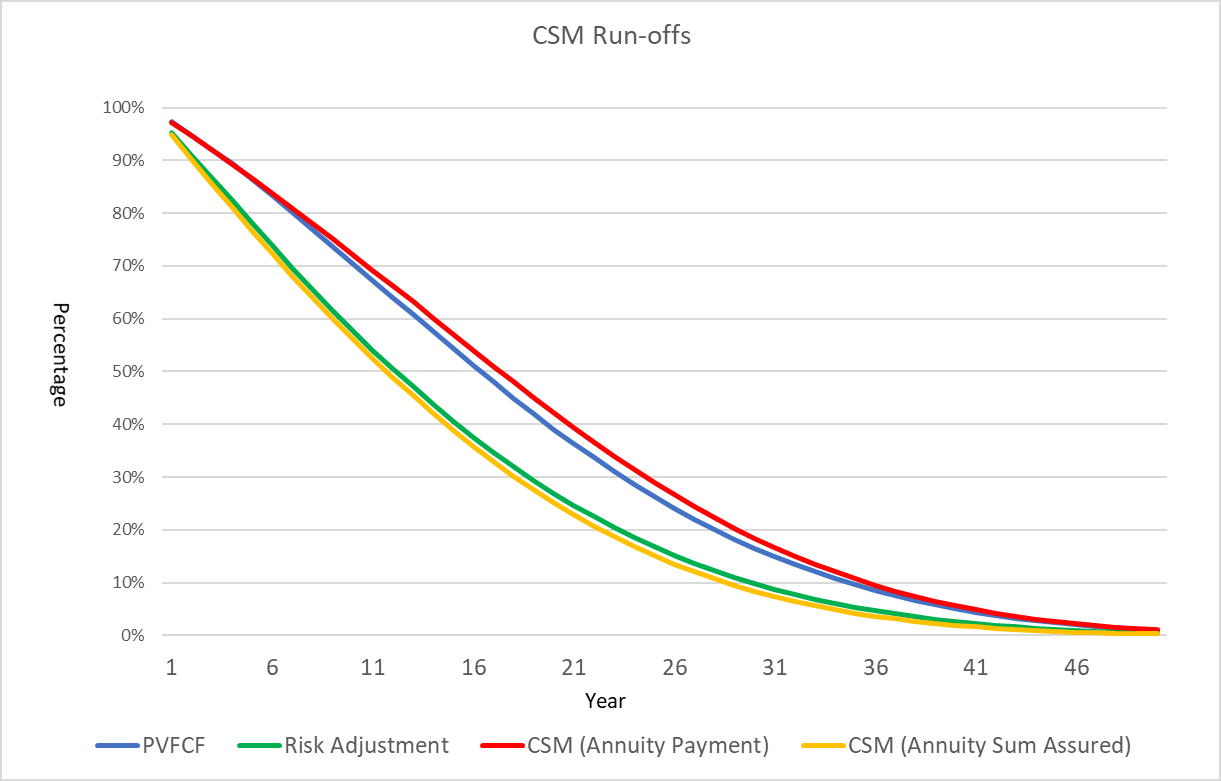
29Does the additional information provided in paragraphs 5 to 28 above address Board members' previous questions concerning the bases for (i) the investment-return service and (ii) the risk adjustment? (NB: further information on the relative significance and interaction of the components of CSM and the risk adjustment is provided below.)
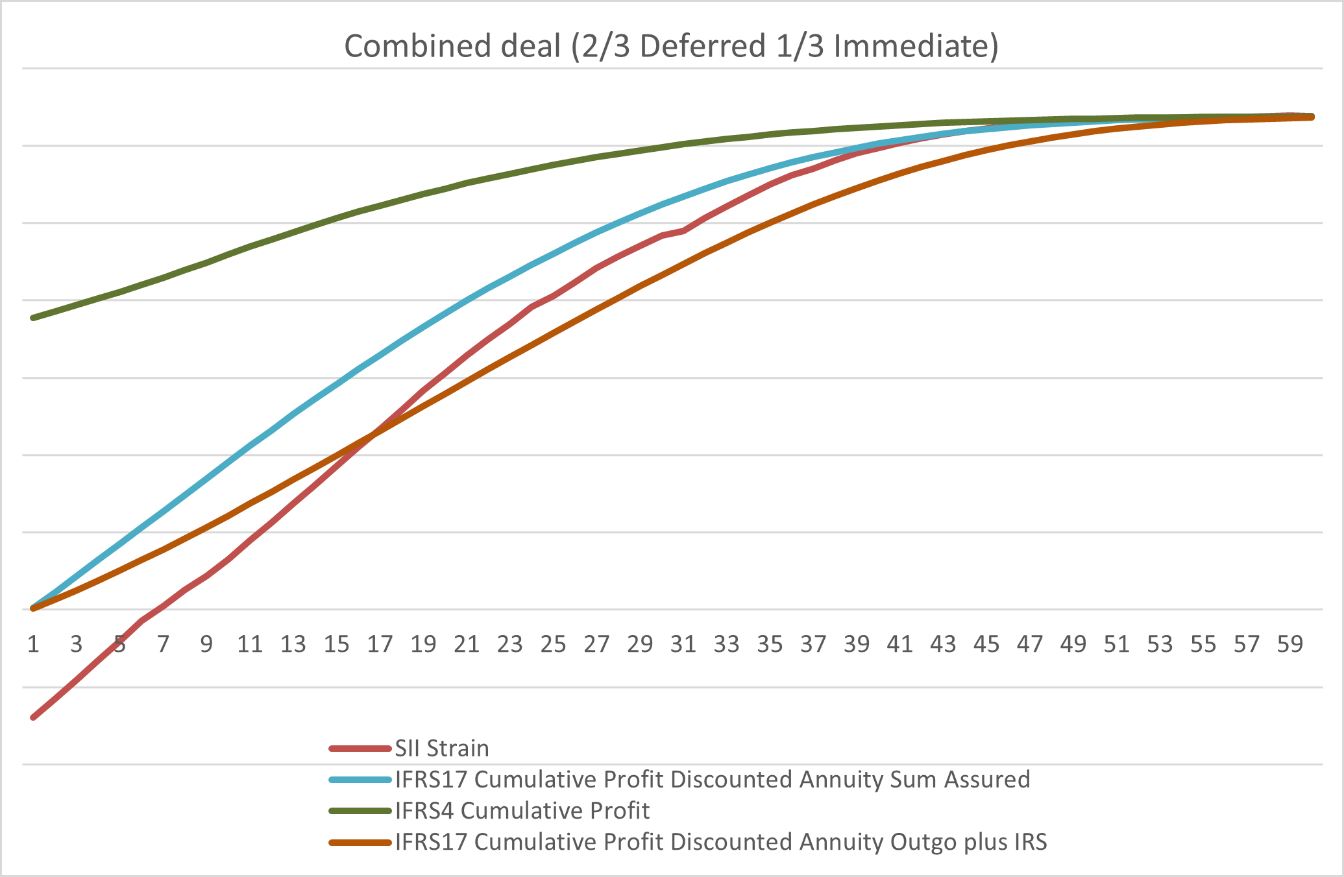
Feedback from stakeholders in the light of the IC's conclusions
30At its March 2022 meeting, the Board noted that there were a number of factors the Board would need to consider, including:
- Whether there was potential for industry to reassess the initial measurement and subsequent release of the risk adjustment.
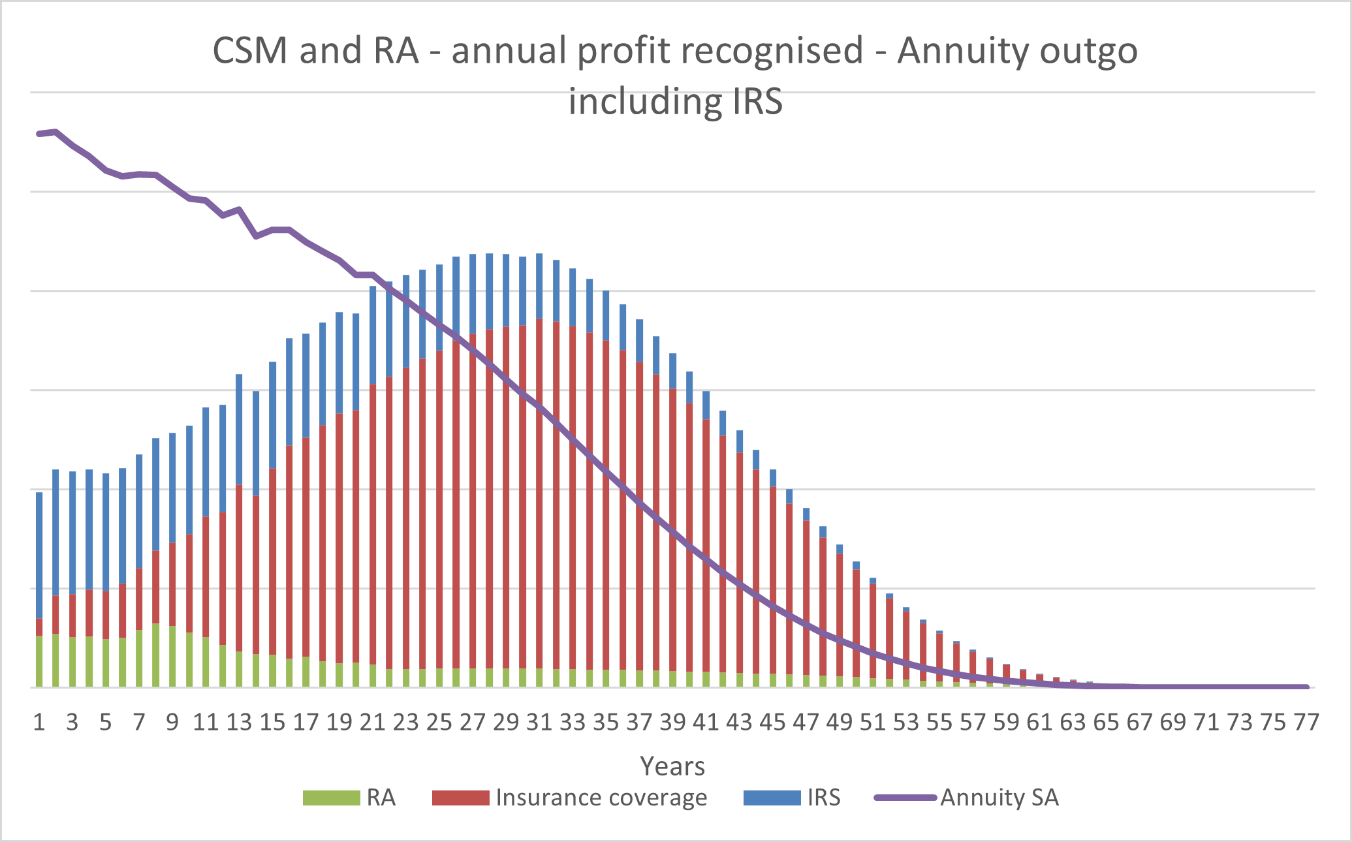
- Any implications for the recognition of the investment-return service.
- The precise nature and significance of insurers' concerns about the potential impact of Approach A6 on the annuity and BPA business in the UK:
- The extent to which the accounting would in practice affect the attractiveness of the life insurance sector for investors (including insurers' ability to explain performance and any impact on dividends);
- The degree to which the accounting would in practice discourage investment into a growing and profitable business, or encourage structuring transactions; and
- Wider economic impacts such as that on tax payments.
31The submission to the IC focused on immediate annuities and the recognition of an investment-return service was touched on only very briefly. As a result, the staff paper for the IC did not address questions related to the recognition of an investment-return service.
32The submission asked only about the recognition of the CSM in profit or loss. For this reason, although the staff analysis has potential implications for the measurement and release of the risk adjustment, these are not specifically addressed in the staff paper or Tentative Agenda Decision.
33Nevertheless, the Board noted the importance of considering the overall impact of the IC's Tentative Agenda Decision on the income statement of UK annuity providers, that is, the combined effect of insurance coverage together with any investment-return service and release of risk adjustment.
34The following paragraphs summarise the feedback provided by stakeholders on the above matters and some illustrations of the potential impact of the IC's conclusions on the reporting of performance under IFRS 17. The amount of detail is constrained due to:
- the variety of potential scenarios (contract terms and policyholder types) combined with the interaction of the different components of the accounting;
- the fact that none of the insurers we have spoken to have finalised the approaches they will take; and
- the fact that actual (as opposed to illustrative) financial information is confidential.
The risk adjustment
35The IASB staff paper for the IC noted the importance of the risk adjustment when considering the recognition of profit from annuities. The implication of the staff paper was that the uncertainty of survival, which under Approach B7 influences CSM allocation, should be recognised through the risk adjustment:
- Paragraph 34 of the staff paper agreed that uncertainty of survival (insurance risk) is a key feature of an annuity contract and that the transfer of this risk to the entity is a benefit to the policyholder for which the entity charges compensation. Under IFRS 17 this is recognised in the RA, which represents the margin the entity charges for bearing risk and is recognised separately from the CSM.
- Paragraph 41 [Argument B] referred to IFRS 17 B87 which explains that the risk adjustment measures the compensation an entity would require to make it indifferent between:
- fulfilling a liability that has a range of possible outcomes arising from non-financial risk; and
- fulfilling a liability that will generate fixed cash flows with the same expected present value as the insurance contracts.
Accordingly, the staff paper stated that IFRS 17 requires an entity to reflect in full – in the risk adjustment – the difference between a fixed term annuity and a life-contingent annuity with an expected duration equal to the fixed term.
36We understand that it is generally agreed that longevity risk is the most significant non-financial risk covered by the annuity risk adjustment. However, while not objecting to the staff's basic analysis of IFRS 17's requirements, stakeholders we have spoken to generally disagreed that the risk adjustment offered a solution to insurers' concerns about the slower profit recognition profile under Approach A.
37First, insurers note that risk adjustment methodologies have generally already been finalised, agreed with auditors and embedded within systems. For insurers with diverse product ranges, key aspects of the approaches are common across the business so affect products other than annuities. Feedback from insurers suggests therefore that it is too late to make changes to risk adjustment methodologies, and that such changes would be complex and risk unintended consequences.
38Even if changes to risk adjustment approaches and systems were practicable, feedback suggests that insurers would not consider such changes appropriate, since they consider their current approaches meet the requirements and principles of the standard. Changes made to achieve an objective related to CSM recognition would be viewed as arbitrary.
39Further, it is not clear how significant the impact could be of any adjustments to risk adjustment methodologies:
- Although we understand there is considerable variability across insurers, in some cases the risk adjustment at initial recognition of a group of contracts may be relatively small compared with the CSM.
- Feedback indicates that UK annuity providers typically reinsure a significant proportion of longevity risk (sometimes over 90%). The risk adjustment on the reinsurance contract therefore offsets the 'gross' risk adjustment on the underlying annuity business to a large extent, so on a net basis the risk adjustment has only a minor effect on profit.
- Changes in the risk adjustment that relate to future service adjust the CSM, so not all changes in the risk adjustment would directly impact profit or loss.
- In some cases the impact of interest accretion might result in a net increase in the risk adjustment balance in the earlier years of a group of contracts.
40It was pointed out to us that a high risk adjustment could increase the risk that contracts become onerous, leading to the immediate recognition of a loss, and that investors are likely to view amounts of CSM more favourably than amounts of risk adjustment, since the CSM represents a clearer signal of future profits.
41From our discussions we understand there may be differing interpretations of the standard's requirements. Some consider the risk adjustment reflects the risk adjustment required by the entity. Others consider the risk adjustment reflects the amount actually charged to policyholders. These amounts may or may not be the same. IFRS 17 BC222 appears perhaps to suggest the latter interpretation: “The expected margin charged for bearing risk is represented by the risk adjustment for non-financial risk." This is also the interpretation that can perhaps be inferred from the staff paper to the IC and might potentially result in a higher risk adjustment (see also the comments on pricing in paragraph 57 below).
42There are several factors that determine the change in the risk adjustment from one year to the next. One is mortality (deaths reduce the numbers of contracts on risk) and another is the increasing average age profile of the policyholders. A third factor is the risk that mortality expectations might change (sometimes called trend risk). The impact of the average age profile is likely to be relatively minor and constant until old ages, so in the earlier years the dominant factors are likely to be the mortality rate and trend risk. Mortality is likely to be low and stable in the earlier years but higher as policyholders become old. Trend risk more typically declines over time.
43Overall, therefore, the pattern of risk adjustment run-off reflects a number of risks and is complex to determine. Expected run-off can vary significantly between insurers, depending on the mix of business and the approaches taken, including the relative significance assigned to different risks: there is no ‘standard' expected risk adjustment release profile.
44We present below an illustration received from an insurer, based on current internal models. The chart shows the run-off of the risk adjustment over time for a group of deferred annuity contracts with a variety of retirement ages. In this case the effect of the discount unwinding is greater than the release of risk in the earlier years (i.e. a net debit (loss) to the income statement in respect of the risk adjustment). The orange line represents the risk adjustment, while the blue line represents the present value of the best estimate liabilities.
45Further illustrations of the impact of the risk adjustment are included in other charts presented in the section below headed ‘Overall outcomes'. All the charts are illustrative only and do not necessarily represent what will happen for real transactions, but they serve to indicate the differences that may arise between scenarios and companies.
Investment-return service
46Feedback indicates that the impact of the investment-return service will vary significantly depending on the mix of deferred and immediate annuities, and on the prevalence of guaranteed periods.
47The impact of investment-return service also depends on the precise methodologies used to split CSM between investment-return service and insurance coverage and to determine coverage units. The complexities and uncertainties in relation to those questions are now primary concerns for stakeholders following the IC's tentative decision.
48IFRS 17 does not provide guidance as to how CSM should be split or how coverage units should be weighted. As explained above (paragraph 9), the IASB acknowledged that this involves subjectivity and complexity. From our discussions we understand that various different methods have been devised and are in the course of being finalised. Methodologies have generally not yet been agreed with auditors.
49Factors leading to complexity and subjectivity include the varied and changing mix of deferred and immediate annuities, with or without guaranteed periods of different lengths, and the fact that in the insurers' view there are no clear economic or external data points against which the methodologies can be benchmarked or 'pegged'. In their view, therefore, the determination of weighting is highly judgemental and there is a risk of arbitrary allocations. Questions include whether insurers' annuity pricing margin can be 'decomposed' and to what extent the pricing methodology can be applied to determine a split between, say, insurance and market risk.
50By way of illustration, possible bases for determining coverage units for the investment-return service might include:
- using the best estimate liability as a proxy for the assets held to back the liability, and assuming a constant rate of return on those assets;
- using the contract transfer value (e.g. the investment return on the transfer value at the start of the period); or
- in the guaranteed period, using the annuity claims made in the same way as for the insurance coverage.
51A method for weighting, or scaling, the coverage units for investment-return service against those for insurance coverage may then also be required, to ensure that they are comparable.
52Given the current lack of consensus, insurers have expressed concerns around comparability and understandability. Some note that, given the complexity, clear and informative disclosures may be difficult to achieve, and note the balance that will be needed between providing sufficient detail and the risk of disclosing commercially sensitive information.
53Some stakeholders have noted that operational complexity exists in any case when insurance contracts provide multiple insurance services and that an allocation of CSM between the two types of service provided by annuities would be required irrespective of whether Approach A or Approach B is applied. However, others consider that operational complexity would be significantly reduced under Approach B because, broadly, a single measure of coverage units could be used across all periods and for both insurance coverage and investment-return service.9
54However, we note that different services are provided to policyholders during different phases of the contract and that these services have different underlying economic and commercial characteristics. Under IFRS 17, different revenue recognition approaches may therefore be appropriate to reflect these characteristics. A single, simple revenue recognition approach might not adequately reflect the underlying economics. Further, our understanding is that by applying a single measure of coverage units across all insurance contract services Approach B in effect makes no distinction between insurance coverage and investment-return service. As set out in the submission to the IC10, Approach B would in effect result in insurance coverage being recognised in the deferred period.
55The degree of complexity is likely to be significantly lower in some scenarios, for example, for a group of immediate annuities with guaranteed periods. In such cases, and depending on the precise methods agreed, we understand the split of CSM and the weighting of coverage units might be relatively straightforward. Further, some stakeholders have noted that there are many highly complex areas of insurance reporting, for both accounting and regulatory purposes, and that from an actuarial perspective this is not the most difficult area.
View of performance
56In our recent discussions some insurers continued to express significant concerns with the IC's tentative decision that Approach B does not meet IFRS 17's principle. In their view Approach A does not result in an appropriate view of performance because it fails to reflect adequately the protection service provided to the policyholder and is not aligned with contract pricing. They consider that contract pricing provides evidence of the underlying 'economics'.
57Stakeholders informed us that the pricing of annuities is driven primarily by Solvency 2 capital requirements: these capital requirements reflect a regulatory view of risk and are based on a need to cover risk up to a 99.5% confidence level. From a commercial perspective, however, annuity providers might require a confidence level of only, say, 70%-90%, and some insurers have informed us that this is what would be reflected in their risk adjustment determined in accordance with IFRS 17 requirements. The difference between the risk adjustment required by the entity and the amounts charged to the policyholder – may be one driver of the emergence of CSM. As described to us by one stakeholder, the pricing reflects "the cost of providing a regulated service”.
58In addition to a potential margin above the required risk adjustment, the CSM includes compensation for several different risks and services, including expense risk, financial risk, operational risk and investment and asset/liability matching.
59However, IFRS 17's requirements in this area are not based on a fair value measurement model. The recognition of CSM represents the allocation of a historical amount, namely the expected profit measured at inception. At subsequent dates, therefore, CSM is not intended to represent the profit margin that would be obtained from a market transaction. The price in a market transaction will also reflect other factors not incorporated in an allocation of the historic expected profit.
60Further, if pricing is driven by a regulatory view of risk to the entity, a CSM allocation method which aimed to reflect that pricing would implicitly also be driven by that regulatory view of risk. Some stakeholders question, therefore, whether this would be relevant as a primary driver of CSM allocation, which seeks to measure service transferred to the policyholder. For example, such a driver might appear to reflect the entity's perspective rather than the policyholder's perspective. Similarly, in supporting Approach B, the submission to the IC describes the benefit to the policyholder as protection against “the risk of their savings pot not lasting during retirement”. However, for others it is not clear that this risk declines over time, as implied by Approach B.
61As evidenced by the long-running debate and in the papers presented to the Board on this topic, determining the most appropriate approach to CSM allocation is not straightforward and there are different views on most aspects of the matter. Determining an appropriate approach is a question of judgement: there is no single approach that will be appropriate in all circumstances and that will meet all stakeholders' expectations. The IFRS 17 DECA expressed the tentative opinion that “The appropriate approach to determining coverage units is essentially a matter of interpretation”. Different methods can be used to determine the quantity of benefits as long as they achieve the objective of reflecting the insurance service provided in each period.
Overall outcomes
62Annuity providers have provided us with preliminary illustrations of the overall impact of Approaches A and B on profit or loss, taking into account both the investment-return service and the risk adjustment. The following charts present in graphical form the expected overall pattern of profit recognition. It is important to stress that these are based on models that have not yet been approved, that they are illustrative and that they represent only two of a variety of possible outcomes. The results are dependent on policy data, assumptions, methodology and economic conditions.
63The first chart shows the pattern of run-off for a block of bulk annuity business, rather than absolute amounts or the composition of profit. It shows that under Approach A (Annuity Payment) CSM is expected to run off more slowly than the risk adjustment but in line with the present value of future cash flows (PVFCF). It is also clear that the CSM runs off more slowly under Approach A than under Approach B (Annuity Sum Assured).
64The next chart is an illustration from a different model and shows the expected cumulative profit from a BPA transaction including a mix of deferred and immediate annuities. In addition to the expected outcome under IFRS 17 using Approach A, the chart shows for comparison the outcome applying both Approach B and current accounting under IFRS 4.
65The chart also shows the entity's view of expected Solvency 2 capital strain. This represents the difference between the increase in Solvency Capital Requirement (SCR) resulting from the contracts entered into and the corresponding increase in 'own funds' (broadly assets less liabilities, measured on a Solvency 2 basis). When the increase in SCR exceeds the increase in own funds, this results in capital 'strain', shown on the chart as negative amounts.
66The overall picture is broadly aligned with that presented in the previous chart, with profits under Approach A growing more slowly than under Approach B. In the entity's view, the fact that in the long term Approach A recognises profit more slowly than capital is released under Solvency 2 indicates that Approach A is too conservative. Current accounting under IFRS 4 is significantly more aggressive than Approaches A or B.
67The following chart is taken from the same model underlying the chart in paragraph 65 and presents the annual amounts recognised in profit or loss. The chart shows separately the three elements risk adjustment, investment-return service and insurance coverage.
68In this model the risk adjustment and investment-return service are relatively small elements of the overall profit over the life of the group of contracts. However, in the earlier years they comprise the bulk of the profit. This is because in the earlier years the majority of policyholders are in the deferred phase. The risk adjustment is presented net of reinsurance so, as explained above, the fact that it plays a relatively minor role is not unexpected. Similarly, since insurance coverage is the defining service provided by such contracts, it is to be expected perhaps that it comprises the majority of the overall profit. Approach A presents the peak contribution to profit at the stage when the majority of policyholders attain retirement age and insurance coverage is recognised for those policyholders.
69The chart shows again that overall profit is recognised more slowly under Approach A than under Approach B. In this particular illustration the inflection point comes at around 22 years, after which approach A delivers more profit each year. In that first 22 year period, the maximum difference in annual profit between Approach A and Approach B is approximately 1.5% of the total CSM expected over the life of the group of contracts (i.e. 1.5% of the total CSM recognised at inception). In absolute terms this is unlikely to be material to the insurer's annual results. However, this illustration represents just one BPA transaction in a business that is growing so the insurer expects the cumulative impact to become more significant over time.
70Overall, we note that:
- The outcomes from both Approach A and Approach B seem much more relevant and understandable than that from current accounting.
- Viewed over the long term, the differences between Approach A and Approach B are not major: the shapes of the graphs are broadly similar.
- In some cases the difference between the two approaches may not be material to the profit or loss of a period.
Question for the Board
71Does the Board have any comments or questions on:
- The stakeholder feedback provided in respect of the risk adjustment, investment-return service or view of performance (paragraphs 30 to 61 above)?
- The overall outcomes as illustrated in the charts (paragraphs 62 to 70 above)?
True and fair view assessment
72As noted above, the determination of the quantity of benefits that depicts the transfer of service to policyholders is a matter of judgement and there is no single 'right answer'. Similarly, if one specific method is considered to meet the true and fair view endorsement criterion then that does not necessarily mean that another method would not.
73In addressing whether the requirements of IFRS 17 in respect of CSM allocation for annuities meet the technical accounting criteria of understandability, relevance, reliability and comparability (see Appendix 1 to this paper), we have addressed the principal factors affecting whether in this particular respect IFRS 17 contains anything that would prevent accounts from giving a true and fair view. As stated in the draft ECA, the standard's objective and principles are clear and appropriate.
74The draft ECA explains that the true and fair view assessment is a holistic assessment, considering the impact of IFRS 17 taken as a whole, and that our approach is to determine whether IFRS 17 is not contrary to the true and fair view principle in respect of the assets, liabilities, financial position and profit or loss in the context of the preparation of the accounts as a whole.
75In this context we note that IFRS 17 requires insurers to provide disclosures that are sufficient to enable users of accounts to assess the effect that insurance contracts have on the entity's financial position, financial performance and cash flows. In some cases, insurers may wish to provide additional disclosures to meet this objective and ensure that their accounts, taken as a whole, give a true and fair view.
76For these reasons, and noting that we do not comment specifically on any other technical issue in the true and fair view assessment, we do not propose to address CSM allocation issues separately in the true and fair view assessment section of the ECA.
77At its February 2022 meeting, the Board considered responses to the public consultation on the IFRS 17 DECA. The Board noted that only one preparer disagreed with the tentative conclusion that IFRS 17 was not contrary to the true and fair view principle on the basis of their concerns in respect of the CSM allocation issue. We therefore propose to address our response to this point in the IFRS 17 Feedback Statement.
Question for the Board
78Does the Board have any comments on the impact of CSM allocation issues on the true and fair view assessment?
79Does the Board agree that CSM allocation issues should not be addressed separately in Section 5 of the ECA (the true and fair view assessment), but that the stakeholder feedback on this point should be addressed in the IFRS 17 Feedback Statement?
Wider impact
80The IFRS 17 DECA contained preliminary comments on the potential impact on the UK annuity business if insurers had to apply an approach that recognised profit more slowly than their preferred approach. In particular, the DECA noted stakeholder concerns that enforcing Approach A may:
- encourage structuring transactions (trading groups of contracts to release profit built up in the CSM), which in turn may result in uneven profit recognition;
- discourage investment in the annuity and BPA business; and
- provide an advantage to companies not required to apply IFRS.
81The tentative assessment concluded, however, that it seems unlikely that financial reporting changes brought about by IFRS 17 will directly result in a significant reduction in this market given the profitable and growing nature of the BPA business and the fact that cash flows from annuity contracts will not change as a direct result of IFRS 17. In addition, from interviews with annuity providers it emerged that they are not planning to change their product offering/pricing as a direct result of IFRS 17. We also note that all major UK annuity providers use IFRS and, for the reasons set out in the draft ECA (paragraphs 4.214 - 4.218), any adverse effect on the competitive position of these insurers from entities not applying IFRS 17 as issued by the IASB is unlikely to be significant.
82Until accounts prepared using IFRS 17 are available and have been assessed by investors and other users, it is difficult to determine with any confidence what the potential impact will be. From our recent discussions we have received no substantive further information or representations concerning the potential wider impact of applying Approach A. We therefore have no specific grounds for amending the overall tentative assessment.
Costs
83Due to the complexity of the required accounting should insurers be required to apply Approach A, costs are expected to be higher than some insurers had otherwise expected (for example, higher than if they had applied Approach B). Insurers have expressed the view that complexity and hence costs will be higher than they needed to be, assuming the IC's tentative decision is finalised without major changes.
84However, the determination of the required methodologies and the establishment of the necessary systems is predominantly, though not exclusively, an implementation challenge, i.e. a one-off expense. It is also unclear to what extent the need to develop procedures and systems to address the implications of Approach A has resulted in incremental cost. As explained in the draft ECA, the focus of the UKEB's assessment of costs and the basis for the adoption decision are the net long term costs from use of IFRS 17.
Other impacts
85Stakeholders have informed us that the application of Approach A will reduce reported profits in the coming years and therefore reduce tax paid to HM Treasury. However, the draft ECA explains that the corporation tax attributable to the life insurance sector is a relatively small part only of the total tax contribution of the insurance industry (less than £1 billion in 2018/19). In addition, as noted in the draft ECA, the UK government proposes to introduce regulations for insurance companies to spread the transitional impact of IFRS 17 for corporation tax purposes. The tentative conclusion that it is unlikely that IFRS 17's impact on tax revenues will have an adverse effect on the UK economy therefore remains valid.
86During our recent discussions, no stakeholder informed us that the application of Approach A would cause immediate or short-term concerns in respect of distributable profits. While in the long term the position was inevitably more uncertain, over the longer term there were also more potential mitigating actions that could be taken.
Insurers' ability to explain performance to users of accounts
87Some stakeholders have expressed the view that it will be more difficult to explain the performance of the business to users of the accounts, if insurers are required to apply Approach A. This is essentially because these stakeholders consider that Approach A does not adequately reflect the protection service provided to policyholders in the earlier years of a contract. In other words, opinions on the impact on communications with users depend on views on whether the approach gives a fair picture of performance.
88One insurer expressed concerns that the IC's decision would not be helpful to generalist investors and analysts, noting that P/E ratios were an important metric and would be negatively impacted by Approach A.
89From our discussions with users of life insurers' accounts we understand that their primary focus is typically on regulatory capital and cash generation, as these factors drive returns to shareholders and the ability to service debt. IFRS 17 will not directly affect regulatory reporting or change cash flows, and these measures are likely to remain important. It has been suggested that total new CSM generated in the period may become a key metric, a figure unaffected by allocation methodologies.
90Users of insurers' accounts are used to considering non-IFRS performance measures and it is possible that this will continue, at least in the short term. It may be disappointing if IFRS 17 does not lead to an increase in the perceived usefulness of the accounts in this specific regard, but there is no indication that this aspect of IFRS 17 will exacerbate the current situation.
Question for the Board
91Does the Board have any questions or comments on the potential wider impact of the IC's decision (paragraphs 80 to 90 above)?
Stakeholders' overall view regarding endorsement
92The overall impression gained from our recent discussions is that stakeholders will be able to manage the impact of a requirement to apply Approach A. While some stakeholders disagree strongly with the IC's Tentative Agenda Decision, none has expressed the opinion that this matter should delay or prevent endorsement of IFRS 17.
93One annuity provider stated that they wanted the certainty that endorsement would provide as soon as possible, since all delay meant further cost. Other stakeholders said they "could live with it [Approach A] for a few years” or that they “could live with it" as long as there was assurance the matter would be reconsidered as part of a post-implementation review.
94Given the remaining significant areas of debate and potential for variety in practice, we support the view that the determination of the risk adjustment and of the quantity of benefits for insurance contracts services should be a key area of focus for the post-implementation review. Once accounts have been prepared using IFRS 17, it will be possible to assess the standard's impact using actual accounting information and with the benefit of users' detailed analyses.
Draft text for inclusion in final ECA
95The draft ECA considered by the Board at its March 2022 meeting excluded updates in respect of the CSM allocation for annuities matter. Appendix 1 to this paper sets out the proposed additions and amendments to both the Technical Accounting Criteria assessment and the UK Long Term Public Good assessment, reflecting the IC's tentative conclusions and the stakeholder feedback recently received.
96Subject to any changes required by the Board, these additions and amendments will be incorporated into the final ECA (and are included in the draft presented as part of agenda item 4 to this meeting).
Question for the Board
97Does the Board have any comments on the draft text presented in Appendix 1?
Decisions for the Board
98The implications of the IC's tentative decision for the Board's overall adoption decision and potential next steps were set out in paper 3.0 for the Board's March 2022 meeting. While indicating that it did not favour delaying an adoption decision or seeking a UK-specific endorsement solution, the Board asked for further information before drawing firm conclusions.
99In respect of the specific matters relating to CSM allocation for annuities, the Board is now asked to decide whether it has sufficient information to support its overall IFRS 17 endorsement assessment.
100During the Board's March 2022 meeting, the question arose as to whether the Board should respond to the IC's request for comments on its Tentative Agenda Decision. The Board is therefore also now asked to make a decision on this question.
Recommendations
101We do not recommend any delay to the Board's final IFRS 17 endorsement assessment. The Secretariat's outreach and analysis work has been completed, and we consider that further investigations and outreach are unlikely to lead to significant new information or insights that would significantly affect the Board's endorsement assessment.
102We recommend that the Board considers the assessments against the endorsement criteria on this topic, revised in the light of the IC's conclusions and the further outreach conducted, in the final IFRS 17 ECA and Feedback Statement at agenda item 4. This will help ensure the final document is made available in time for the indicative adoption decision to be taken at a meeting in early May 2022.
103In view of the continued concerns expressed by some stakeholders and the potential for variety in practice, we recommend continuing to monitor the issue through the IFRS 17 implementation phase as well as post-implementation. Any significant issues remaining at that stage could be addressed as a separate influencing or endorsement project.
104We recommend that the Board responds to the IC's request for comments on its Tentative Agenda Decision (deadline 23 May 2022). Should the Board decide to do so, in the light of the questions and concerns to which its Tentative Agenda Decision has given rise, we recommend that the focus of its response should be to recommend that the IC conducts a more extensive assessment of the matter with a wider scope.
Questions for the Board
105In respect of the specific matters relating to CSM allocation for annuities, does the Board have sufficient information to support its overall IFRS 17 endorsement assessment?
106Does the Board consider that it should respond to the IC's request for comments on the IC's Tentative Agenda Decision?
Priority issues
A: Profit recognition – CSM allocation for annuities
Introduction
3.1The CSM is the balance sheet item representing the unearned profit the entity will recognise as it provides services in respect of a group of insurance contracts. The issues discussed below relate to the recognition of that profit for annuities, including bulk purchase annuities (BPAs), under IFRS 17's general measurement model (GMM).
3.2IFRS 17 sets out, at a high level, how CSM should be recognised in profit or loss in each period but does not provide detailed guidance or detailed requirements for particular product types. Significant judgement is required to apply the standard's requirements in the case of annuities and BPAs, including in respect of determining coverage units that represent the provision of service under a group of insurance contracts.
3.3There has been extensive debate in the UK over the interpretation of the requirements of IFRS 17 for determining coverage units that appropriately reflect the insurance contract services provided for annuities and BPAs. The main questions include how to determine the insurance coverage and the pattern of profit recognition for this service, and how the quantity of benefits should be split between insurance coverage and investment-return service. In particular, two main interpretations of the standard's requirements in respect of insurance coverage emerged and a technical paper seeking advice from the IASB was submitted by a group of insurers and auditors convened by the ICAEW Insurance Committee11. The submission sought guidance regarding the interpretation of IFRS 17 with respect to the service provided by a life contingent annuity and the application of IFRS 17 principles for recognising that service through the release of the CSM.
3.4The IASB's IFRS Interpretations Committee (the IC) considered the matter and issued a Tentative Agenda Decision that only one of the two approaches set out in the submission met the principle in IFRS 17. While the IC's decision is not yet final (the Tentative Agenda Decision is open for public consultation until 23 May 2022), the analysis in this ECA has been written on the basis that the tentative decision is finalised without major changes.
3.5Some stakeholders are concerned that, following the IC's tentative decision, the accounting will not fairly reflect the economic substance of the transactions, will not provide useful or understandable financial information and will therefore not meet the technical accounting criteria. These stakeholders are also concerned that an inappropriate accounting outcome could have a material impact on annuity providers and a detrimental impact on the UK annuity market (see also Section 4 paragraphs 4.155 – 4.165).
3.6Other stakeholders, however, have a different interpretation of the service provided under these contracts and of how IFRS 17 requires that service to be reflected in the allocation of CSM. They are concerned about the wider implications and unforeseen consequences for other insurance products should their view not prevail.
IFRS 17 requirements
Initial recognition
3.7On initial recognition of a group of insurance contracts, IFRS 17 requires an entity to recognise a CSM, a component of the asset or liability for the group of insurance contracts that represents the unearned profit the entity will recognise as it provides insurance contract services in the future. [IFRS 17: 32, 38]
3.8At initial recognition, the CSM is measured at an amount that, unless the group of contracts is onerous, results in no income or expense from:
- the initial recognition of an amount for the fulfilment cash flows;
- any cash flows at initial recognition; and
- the derecognition of any asset or liability from pre-recognition cash flows such as acquisition costs. [IFRS 17:38]
Subsequent measurement
3.9In each period, an entity will recognise as insurance revenue an amount of CSM representing the insurance contract services provided by the group of insurance contracts in that period. [IFRS 17: 44(e)]
3.10An entity that issues insurance contracts without direct participation features recognises profit when it provides insurance coverage or any service relating to investment activities (investment-return service). [IFRS 17: Appendix A – definition of 'insurance contract services']
3.11The recognition of the CSM in profit or loss is determined by identifying coverage units that reflect the quantity of benefits provided under the insurance contracts and their expected coverage period. [IFRS 17: B119]
3.12At the end of the reporting period, the remaining CSM on the balance sheet represents the profit in the group of insurance contracts that has not yet been recognised in profit or loss because it relates to future service. [IFRS 17:43]
Insurance coverage
3.13The IC Tentative Agenda Decision notes that the definitions of the liability for incurred claims and the liability for remaining coverage in Appendix A to IFRS 17 describe insurance coverage as 'an entity's obligation to investigate and pay valid claims for insured events'. In addition, paragraphs BC140 and BC141 of the Basis for Conclusions on IFRS 17 explain that an entity can accept insurance risk before it is obliged to perform the insurance coverage service. Therefore, in determining the quantity of the benefits of insurance coverage provided under a contract, an entity considers (a) the periods in which it has an obligation to pay a valid claim if an insured event occurs; and (b) the amount of the claim if a valid claim is made.
3.14The IC observed that, under the terms of the annuity contracts being considered, an entity is obliged to pay a periodic amount from the start of the annuity period for each year of the policyholder's survival (the insured event). Survival in one year does not oblige the entity to pay amounts that compensate the policyholder for surviving in future years; that is, claim amounts payable to the policyholder in future years are contingent on the policyholder surviving in those future years
3.15The IC therefore concluded that, in determining the quantity of benefits of insurance coverage for survival provided under an annuity contract, a method based on the amount of the annuity payment the policyholder is able to validly claim in the current period meets IFRS 17's principle.
Investment return service
3.16IFRS 17 requires an entity to identify coverage units for insurance contracts considering the quantity of benefits and the expected coverage period of investment-return service, if any, in addition to the insurance coverage. [IFRS 17: BC283A12]
3.17An investment-return service is provided only if:
- an investment component exists, or the policyholder has a right to withdraw an amount;
- the entity expects that amount to include an investment return; and
- the entity expects to perform investment activity to generate that investment return. [IFRS 17: B119B]
3.18IFRS 17 provides no further guidance on determining the relative weighting of investment-return service and insurance coverage, nor on how to determine the amount to recognise in a period in respect of investment-return service. The IC's Tentative Agenda Decision does not address these issues.
Disclosures
3.19Entities are required to disclose quantitative information about when they expect to recognise in profit or loss the CSM remaining at the end of the reporting period, providing time bands. [IFRS 17: 109]
3.20Determining the quantity of benefits provided by an insurance contract considering either investment-return service or investment-related service13 in addition to insurance coverage adds complexity and judgement (IFRS 17: BC366B). IFRS 17 also requires an entity to disclose significant judgements made in applying the Standard. This includes the approach used to determine the relative weighting of the benefits provided by insurance coverage and investment-return service. [IFRS 17: 117(c)(v)]
Determination of CSM amortisation – accounting impact
Initial recognition
3.21At initial recognition, the CSM is equal to the present value of risk-adjusted future cash inflows less the present value of risk-adjusted future cash outflows. For a group of profitable insurance contracts, no amount is recognised in profit or loss on initial recognition. Profit is instead deferred on the balance sheet and recognised in profit or loss over the coverage period.
3.22The CSM represents the margin the entity has charged for the services it provides in addition to bearing risk. The expected margin charged for bearing risk is instead represented by the risk adjustment for non-financial risk. [IFRS 17: BC222]
Subsequent measurement
3.23As noted above, IFRS 17 contains no requirements or guidance specifically for annuities and BPAs. IFRS 17's general requirements, however, mean that profits from annuities will be spread over the coverage period. The coverage period is the probability-weighted average duration of the contracts in the group (based on life expectations). The pattern of CSM release will be a matter of judgement in respect of the and interpretation of the meaning of 'quantity of benefits' provided and the relative weighting applied to the insurance coverage and investment-return service, if any in the context of annuities. [IFRS 17: B119(a)]
3.24The conditions for recognition of an investment-return service (see paragraphs 3.29 – 3.30 above), and in particular the fact that policyholders have no withdrawal rights once the pay-out phase starts, mean that an investment-return service typically cannot be recognised in the annuity pay-out phase.
3.25An exception might arise when guarantee periods apply (i.e. when policyholders or their estate receive payments for the whole of the guaranteed period, irrespective of whether the policyholder dies in that period): in such cases the guaranteed amount is likely tomay represent an investment component and an investment-return service is likely tomay be recognised. No CSM for insurance coverage is expected to be recognised in such guarantee periods as no insurance coverage is provided (amounts payable are not contingent on the occurrence of an insured event). CSM for insurance coverage would be recognised in periods after the guaranteed term.
3.26Similarly, in the case of deferred annuities, it is likely that following the IC's tentative decision no insurance coverage can be recognised in the deferral period except to the extent of any death or disability benefit. This is because there can be no insured event leading to a claim during the deferral period. For deferred annuities, therefore, the expectation is for an investment-return service to be recognised in the deferral phase and any guaranteed period, and for insurance coverage to be recognised in the pay-out phase.
3.27When contracts provide both insurance coverage and investment-return services, entities will need to divide CSM coverage units between the two services (i.e. typically between the deferral and pay-out phases, or between the guaranteed and life-contingent periods of the pay-out phase).
3.28The pattern of expected cash flows and the release of the risk adjustment for non-financial risk are already included in the measurement of the fulfilment cash flows. Therefore, they are not relevant factors in determining the satisfaction of the performance obligation and provision of service. [IFRS 17: BC279(a)]
Recognition of insurance coverage service
3.29Assuming a constant annual benefit under the terms of the annuity contract, the quantity of benefits and hence the amount of CSM recognised in the income statement each period for a group of annuity contracts is expected to decline over the coverage period. This reflects the expectation of policyholder deaths during the coverage period (i.e. the number of contracts in the group).
3.30The pattern of CSM release will also be affected by whether the entity chooses to consider the time value of money in allocating the CSM equally to coverage units provided in the current period and expected to be provided in the future (in other words, whether it discounts the coverage units). Paragraph BC232 of the Basis for Conclusions on IFRS 17 states that this is a matter of judgement by the entity. Where an entity discounts the coverage units, this will increase the degree to which the amount of CSM recognised each period declines.
Assessment against the endorsement criteria
3.31IFRS 17 requires the CSM to be recognised in profit or loss over the coverage period of the group of insurance contracts, and in a pattern that reflects the provision of service. This will result in relevant information because it will enable users to evaluate the performance of an entity in line with the provision of service. This results in faithful representation of an entity's performance obligations and of its financial performance over the coverage period.
3.32Recognising the CSM in line with the provision of both insurance coverage and an investment-return service will provide relevant information to users of financial statements, reflecting the provision of all services under the contract. This benefit will be particularly important for contracts that have an insurance coverage period that differs from the period in which the policyholder benefits from an investment-return service.14 [IFRS 17: BC283B]
3.33Recognition of an investment-return service only when the policyholder benefit is not contingent on an insured event (e.g. policyholder survival) is likely to result in relevant information. In other cases, the investment activity serves to enhance the insurance coverage benefits rather than provide a separate benefit. The fact that the IASB specified conditions that are required to identify, but are not determinative of, the existence of an investment-return service, allows entities to consider their facts and circumstances and apply judgement when determining whether an insurance contract that meets the conditions provides an investment-return service, thereby enhancing relevance. [IFRS 17: BC283E]
3.34The revenue recognition approach in IFRS 17 is broadly consistent with the approach in IFRS 15 Revenue from Contracts with Customers, because revenue is recognised in line with the provision of service. Recognising revenue in this way increases the understandability of insurers' financial statements and the comparability of their accounts with accounts from entities across other industries.
3.35The disclosures required by paragraph 109 of IFRS 17, showing in which future periods an entity expects to recognise the CSM on the balance sheet, will provide users of accounts with useful information about the expected pattern of service provision, increasing the understandability of financial statements. [IFRS 17: BC283F] More generally, the disclosure required by IFRS 17 paragraph 117 of the significant judgements made in applying the standard, including the inputs, assumptions and estimation techniques used, should help users of accounts to assess the specific approach to CSM allocation applied.
Potential challenges to the endorsement criteria and mitigations
3.36IFRS 17 does not prescribe how an entity should determine the quantity of benefits provided under a contract, and thus how to determine the coverage units and their corresponding weighting. Given the possibility that different methods can be used for this calculation, there is a risk that the IFRS 17's requirements in relation to CSM allocation will lead to a divergence in application. This could result in accounts that are not easily comparable or understandable, particularly for annuity products given their long duration.
3.37Determining the quantity of benefits provided under the contract, and hence the amount of CSM to recognise in profit or loss, will require the use of significant judgement. The application of this judgement may lack consistency and/or neutrality and hence introduce a risk to reliability.
3.38In particular, different views have developed for interpreting the requirements of IFRS 17 to determine coverage units that appropriately reflect the insurance coverage service provided for annuities, including bulk purchase annuities, in the pay-out phase:
- Under one view the quantity of benefits reflects solely the payments made to the policyholder for each period;
- An alternative view is that the quantity of benefits incorporates both the regular payment and the extension of insurance coverage to provide a guaranteed income for the rest of the policyholder's life. The latter is sometimes referred to as the 'peace of mind' service. This is noted to be a key feature of an annuity as the policyholder only retains the ability to make a claim in future periods if the insured event (survival) occurs in the current period.
3.39In particular, approaches for the allocation of CSM between insurance coverage and investment-return services, and for the weighting of coverage units, are still developing and may not be entirely consistent between entities. This may increase risks to comparability and reliability.
3.40However, the risks to comparability and reliability are balanced by the objective of relevance. The IASB decided not to prescribe detailed methodologies for specific product groups but instead chose to adopt a principle-based approach, consistent with other IFRS Standards, requiring entities to use judgement to determine an appropriate treatment for each product group. As noted by the IASB's Transition Resource Group for IFRS 17 (TRG) in May 2018,15 the determination of coverage units is not an accounting policy choice but involves judgements and estimates, applied in a systematic and rational way, to best achieve the principle of reflecting the services provided in each period.
3.41In the case of annuities under IFRS 17, the impact of an entity's CSM allocation approach may be significant due to the very long term nature of the contracts and the materiality of the amounts involved. However, the requirement to determine the service provided to policyholders and the coverage units that reflect the quantity of benefits delivered does not impose demands on management or a the level of judgement required that is not inherently greater than, or inconsistent with, that these required under other IFRS Standards. For example, determining an approach to revenue recognition can require complex judgements in other industries involving long term or complex contracts. The required disclosures (see paragraphs 3.31 3.32 above) also mitigate concerns about the degree of judgement required.
3.42The tentative conclusion by the IC in relation to coverage units for insurance coverage potentially removes an element of possible diversity in practice. Over time, and potentially before the first sets of accounts prepared using IFRS 17 are published, it is also possible likely that greater a consensus to determining coverage units and the weighting between types of service, and hence to CSM allocation for typical UK annuity products, will develop. This should reduce the principal concerns over diversity in application and therefore over enhance comparability and reliability of financial information.
3.43Further, once entities have made their initial determination of coverage units, subsequent accounting will not require significant judgement. The application of an entity's approach to determining coverage units will be in essence a mechanistic process and will need to be applied consistently. This will help ensure comparability between periods.
3.44Although additional subjectivity and complexity may be introduced by including an investment-return service in addition to insurance coverage in determining coverage units for insurance contracts without direct participation features, this is balanced by the objective of relevance (see paragraphs 3.40-3.42 above). Further, any resulting challenges this risk will be mitigated by the disclosure required by IFRS 17: 117(c)(v) of the approach used to determine the relative weighting of insurance coverage and investment-return service.
3.45Some stakeholders are concerned that, following the IC's decision, the required approach to determining the quantity of benefits of insurance coverage for survival in the annuity pay-out period will not appropriately reflect the protection service provided. Such stakeholders consider that an approach based solely on the amount of the annuity payment the policyholder is able to validly claim in the period fails adequately to reflect the 'stand-ready' service, that is, the value the policyholder obtains from continued access to insurance coverage until death. Further, CSM allocation will not reflect pricing which in their view is evidence of underlying economics. These stakeholders consider the IC's decision will result in a CSM recognition profile that is too slow, creating risks to both relevance and reliability.
3.46The assessment of the service provided to policyholders in the pay-out phase is a matter of judgement and different views as to an appropriate basis for CSM allocation have been expressed. The IC Tentative Agenda Decision states that a method that would "(i) assign a quantity of benefits to periods for which the entity has no obligation to investigate and pay valid claims for the insured event (for example, to the deferral period of a deferred annuity contract); and (ii) misrepresent the quantity of benefits provided in a period by considering amounts the policyholder is able to claim and benefit from only in future periods"would not meet the principle in IFRS 17: B119.
3.47The staff paper for the IC meeting emphasises that annuity payments for future periods are contingent on policyholder survival in those periods, and that survival in the current period does not provide the policyholder with rights to those future payments. Based on the IC Tentative Agenda Decision, therefore, the value of such future payments is not valid as a primary driver for CSM allocation in the current period. In the IC's view, the 'stand-ready' service is reflected in the risk adjustment (see paragraph 3.21 above).
3.48The staff paper for the IC meeting also states that alignment with pricing is not a valid argument to support an approach to CSM allocation. While agreeing that a younger policyholder would pay more for a life-contingent annuity than an older policyholder, the staff paper notes that this is partly due to the greater uncertainty about how long the policyholder will live and that this is reflected in full in the risk adjustment.
3.49IFRS 17's requirements in this area are not based on a fair value measurement model. The recognition of CSM represents the allocation of a historical amount, namely the expected profit measured at inception. At subsequent dates, therefore, CSM is not intended to represent the profit margin that would be obtained from a market transaction. The price in a market transaction will also reflect other factors not reflected in an allocation of the historic expected profit. One particular such factor is the cost of capital (as determined by solvency requirements) associated with the insurance contracts that are the subject of the transaction.
3.50For the reasons set out in paragraphs 3.40 to 3.47, an approach based on the amount the policyholder is able to claim in the current period, found by the IC to meet the principle in IFRS 17, is one approach that would satisfy the technical accounting criteria.
3.51Some stakeholders also have concerns that IFRS 17's requirements will make it difficult to reflect in the accounts the continuous service that they believe an annuity provides to a policyholder. In particular, the need to recognise different types of service based on different coverage units may make revenue more volatile (for example, on switching between investment-return service and insurance coverage). In addition, some consider that the restriction of investment-return service to only certain periods is artificial. They also note that in the case of some (mainly non-UK) contracts there may be no CSM recognition at all in the deferred period as the relevant criteria for an investment-return service are not met. These stakeholders consider these factors pose challenges to relevance, understandability and, potentially, reliability.
3.52However, the standard's requirements are intended to result in the recognition of performance that reflects the nature of the service being provided. For example, the service provided in a guaranteed period has different economic characteristics from that provided in a life-contingent period, and the related cash payments are therefore different in nature. Further, in pay-out periods, when only insurance coverage is recognised, the inability to recognise investment-return service reflects the fact that the policyholder benefits only on the occurrence of the insured event (survival) and that the policyholder receives the agreed annuity regardless of investment performance. In addition, contracts with no CSM recognition in the deferral period will recognise profit from the risk adjustment to the extent the entity is released from risk. This would reflect the staff paper position that the insurer has taken on risk but is otherwise not transferring services to the policyholder. This also maintains consistency with the treatment of other types of insurance contract. The standard's requirements should therefore support relevance, reliability and, ultimately, understandability.
3.53Whilst the IC's tentative decision resolves one potential source of diversity, there remains the need to use judgement when determining an appropriate approach to allocating CSM. The appropriate approach to determining coverage units, for example whether that described in paragraph 3.47(a) or that in 3.47(b) above, is essentially a matter of interpretation. As noted by the IASB's TRG in May 2018, different methods can be used to determine the quantity of benefits as long as they achieve the objective of reflecting the insurance service provided in each period. The standard's objective and principles are clear on this question, and the need for judgement and estimates when applying these principles to current difficulties in finding a consensus in the case of annuities does not necessarily indicate that the technical accounting criteria as a whole are not met.
Text for Section 4 – Long term public good in the UK
CSM allocation
4.63IFRS 17 will require an insurance company to recognise the contractual service margin (CSM) (the unearned profit that the company expects to recognise) as it provides services over the insurance coverage period. For some products this will represent a significant change from current accounting practice in the UK under IFRS 4 (see paragraphs 4.49 – 4.52 above).
4.64The Economic Report (page 23) noted that “while the underlying economics (of the insurance business) is unchanged, the way that profits are reported annually will change. It is possible that this will prompt some changes in insurers' product mix and pricing, either because they think this is necessary to secure investor confidence and a low cost of capital ... or because the financial incentives of individual senior managers depend on reported profits".
4.65This view is widespread amongst users of financial statements. A majority of respondents to the User survey believe that IFRS 17 is likely or very likely to have an impact on product offering and pricing. They largely anticipated changes to take place in the life insurance sector, with one respondent stating that “life insurance products will require redesign to maximise performance under IFRS 17", and another commenting that “life insurance products [will] become more attractive due to the ability to identify profit emergence in audited accounts". One user noted that annuity contracts could lose their attractiveness as less profit will be recognised at inception, while another considered that fewer products with guarantees may be offered.
4.66Insurance companies also appear to share this view. For example, one noted that IFRS 17 was particularly likely to affect annuities, as the majority of profit will no longer be recognised at inception.
CSM allocation for annuities
4.67As explained in Section 3, some UK stakeholders are concerned that certain interpretations of IFRS 17's requirements may result in accounting outcomes that have a material and potentially detrimental impact on the UK annuity market16.
4.68Annuity business is long term business, with average policy duration of around 15 years for individual annuities. Average duration in the bulk purchase annuities (BPA) market is longer, as a significant proportion of contracts is are still in the investment phase (deferred annuities). In both cases, however, groups of contracts generally have a very long tail: that is, a relatively small minority of contracts in a cohort may be in force for many decades (for example where contract benefits pass to a much younger individual).
4.69The UK annuity market includes a mix of both individual and BPA but these businesses differ in levels of maturity:
Individual annuities
- The individual annuity market is mature and declining, due largely to pensions freedoms introduced by the 2014 Pensions Reform Act17. For example, in a 2018 report,18 PwC noted that new individual annuities sold in the UK declined by 78% between 2013 and 2016.
- Nevertheless, the size of the back book means this remains a major business. ABI data from 2019 indicates there were 6.1m pension annuities in the UK19. FCA information shows that new business was provided by roughly 20 entities, though business is now concentrated in only five main groups20. Assets under management backing annuity liabilities amount to approximately £300 billion21.
Bulk purchase annuities
- By contrast, the BPA business is increasing in significance and is the main growth area within the UK insurance market. BPA transactions amounted to £31.6bn in 2020, as reported by PensionAge22, and Hymans Robertson report that almost £150bn BPA business has been written by eight active market participants in the period 2009 to 202023.
- Hymans Robertson forecast BPA transactions to average around £40bn per year up to 2030. Although declining after 2030, their forecast shows continued high levels of BPA transactions up to 2040 (average over £20bn p.a.). The level of transactions is driven by pension schemes' de-risking strategies and buy-outs.
Assets under management backing annuity liabilities amount to more than approximately £3500 billion24.
4.70Current accounting under IFRS 4 is heavily based on accounting under old (pre-2005) UK GAAP, as set out in the ABI SORP. At inception, conservative reserves are established for expected future cash outflows. However, the premiums received (typically single upfront premiums) generally exceed the reserves and the difference is recognised immediately as profit (sometimes referred to as 'day 1 gains'). In addition to any gains or losses from experience variances and changes in assumptions, further future margins generally arise from the unwinding of the reserves. The typical profit profile includes a large day 1 gain followed by smaller and declining gains spread over the contract life.
4.71IFRS 17 by contrast stipulates that profit is recognised in line with the provision of service over the coverage period. Under IFRS 17 the profit profile for a group of contracts is expected to be smoother, though also declining25. However, the absence of day 1 gains means that profit recognition will be significantly slower than under current practice.
4.72It is not possible to assess accurately the impact of different annuity profit recognition approaches as data is not publicly available. The graph below illustrates the cumulative profit that might expected to be recognised for a hypothetical BPA transaction assuming a mix of deferred and immediate annuities and reflecting an insurer's actuarial estimates+. The graph shows the difference between (i) the profit recognition profile under current accounting practice; and (ii) the expected IFRS 17 profit recognition profiles under the two principal approaches considered by the IFRS Interpretations Committee26. The difference between current practice and IFRS 17 arises mainly at inception. However, differences between the two different BPA CSM allocation methods persist for a long period. As evident from the graph, however, cumulative profits eventually converge in the long run for all three approaches, demonstrating that, over the life of the contracts, profits earned are not affected by IFRS 17.
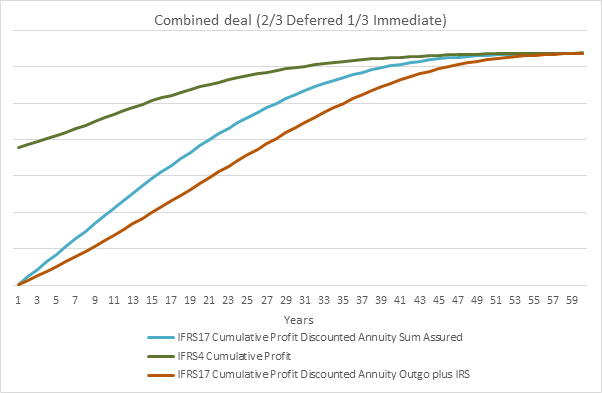
Source: hypothetical illustrative example provided by an insurance company
4.73No data is available on the likely transitional impact from this change across the industry, but stakeholders expect material reductions in equity. The scale of the impact will further depend on the approach adopted on transition to IFRS 17: a retrospective approach is expected to result in greater transitional impacts than a fair value approach. A fair value approach is expected to be adopted for a large proportion of individual annuity business reflecting the maturity of the market and the impracticality of retrospective application. By contrast, retrospective approaches are expected to be applied to a large proportion of BPA business since the recent expansion in this market lends itself to easier y access to inception data and application of the retrospective approaches.
4.74Some insurance companies have suggested that a potential consequence of enforcing a slower method of CSM allocation (such as the annuity outgo method illustrated in the graph above) is that it may encourage structuring transactions. This could enable groups of contracts to be traded to release profit that has built up in the CSM, which in turn may result in uneven profit recognition.
4.75Overall, it is clear that IFRS 17 will have an impact on the reported profits of annuity providers, with profits from annuity contracts expected to be recognised significantly more slowly under IFRS 17 compared with current practice. The nature and extent of the impact will depend on the precise transition and CSM allocation methodologies applied, which are still under discussion.
4.76Some insurance companies have suggested that a potential consequence of enforcing a slower method of CSM allocation is that it may encourage structuring transactions. This could enable groups of contracts to be traded to release profit that has built up in the CSM. Although the impact of such transactions is likely to need disclosure in the accounts, the transactions may result in uneven profit recognition.
4.77Further, in the view of some companies IFRS 17 could discourage investment in the annuity and BPA business and provide an advantage to companies not required to apply IFRS 17.
Feedback from annuity providers indicates that, if they can use a method with similar profit recognition outcomes to the annuity sum assured (ASA) approach illustrated in the graph above, then accounting for annuities under IFRS 17 should not lead to a significant adverse impact on the industry. However, if annuity providers are required under IFRS 17 to apply a CSM allocation method that results in much slower profit recognition than under the ASA, then in the view of some companies IFRS 17 could:
- encourage structuring transactions aimed at crystallising profits earlier; and
- discourage investment in the annuity and BPA business and provide an advantage to companies not required to apply IFRS 17.
4.78However, given the profitable and growing nature of the BPA business and that cash flows from annuity contracts will not change as a direct result of IFRS 17, it seems unlikely that financial reporting changes brought about by implementation of IFRS 17 will directly result in a significant reduction in this market. In addition, from interviews with annuity providers it emerged that they are not planning to change their product offering/pricing as a direct result of IFRS 17. Further, all major UK annuity providers report using IFRS and any adverse effect on the competitive position of these insurers from entities not applying IFRS as issued by the IASB is unlikely to be significant (for further details, see paragraphs 4.187 – 4.191 below).
4.79This view was supported by feedback from users of accounts that metrics based on Solvency 2 are currently prevalent since regulatory reporting typically drives the generation of surplus capital and distributable profits. IFRS 17 will not change Solvency 2 reporting and it is likely that companies will continue to rely on regulatory and other alternative performance measures as they try to explain business performance to investors. In the short term at least, feedback from insurers indicates that the IFRS accounts are unlikely to act as the biting constraint on distributable profits. Users who also noted that profit recognition for annuities under IFRS 17 might have a positive benefit on insurance company governance, as it would enforce a longer-term perspective.
4.80It is possible, however, that IFRS 17 implementation could lead to greater use of alternative performance measures as insurance companies try to explain the changes in profit recognition to their investors. Although for annuity providers the transitional impact of applying IFRS 17 is expected to be significant, the impact on these insurers' accounts of accounting for annuities under IFRS 17 will not necessarily be material for individual periods immediately post-implementation. However, because insurers expect this business to continue to grow, through the acquisition of portfolios of contacts under BPA transactions, the cumulative impact on balance sheets is likely to grow over time. In addition, insurers are currently still finalising their detailed approaches to CSM recognition for annuities. For these reasons, it will be important to consider the effect of IFRS 17 on annuity providers' accounts as part of the IFRS 17 post-implementation review. It will then be possible to assess the standard's impact on the basis of actual accounting information and with the benefit of users' detailed analyses.
Footnotes
Footnotes
-
Tentative Agenda Decision available on the IASB website here ↩
-
An investment component is defined in IFRS 17 Appendix A as “ The amounts that an insurance contract requires the entity to repay to a policyholder in all circumstances, regardless of whether an insured event occurs." ↩
-
IFRS 17 BC 283C notes that, in this context, a ‘right to withdraw an amount from the entity' includes a policyholder's right to receive a surrender value or refund of premiums on cancellation of a policy; or transfer an amount to another insurance provider. ↩
-
IFRS 17: 93 - "The objective of the disclosure requirements is for an entity to disclose information in the notes that, together with the information provided in the statement of financial position, statement(s) of financial performance and statement of cash flows, gives a basis for users of financial statements to assess the effect that contracts within the scope of IFRS 17 have on the entity's financial position, financial performance and cash flows." ↩
-
The approach based on the annuity payment in the period found by the IC to be compliant with IFRS 17's principle. ↩
-
The approach based on the present value of total expected future annuity payments, found by the IC not to be compliant with IFRS 17's principle. ↩
-
This point also arose in a paper discussed by a Transition Resource Group convened by the Australian National Standard Setter in December 2021. ↩
-
As far as we are aware, Approach B methodologies had not been finalised or agreed with auditors. ↩
-
See page 15 of the submission ↩
-
Information presented in the format [IFRS 17: BCXX] refers to IASB® IFRS 17 Basis for Conclusions. ↩
-
For insurance contracts with direct participation features, an entity provides an investment-related service by managing the underlying items on the behalf of the policyholder. ↩
-
In June 2020, in response to feedback that IFRS 17 did not appropriately reflect that many contracts combine insurance coverage and service relating to investment activities, and that the timing of provision of service relating to investment activities and insurance coverage might differ, the IASB amended IFRS 17 to permit entities to recognise CSM in profit or loss for the provision of investment-return services, in addition to insurance coverage service. ↩
-
https://www.ifrs.org/content/dam/ifrs/meetings/2018/may/trg-for-ifrs-17/ap05-quantity-of-benefits-for-identifying-coverage-units.pdf https://www.ifrs.org/content/dam/ifrs/meetings/2018/may/iasb/ap02a-ic.pdf ↩
-
This view has emerged explicitly in interviews with several annuity providers. ↩
-
The Act makes the purchase of an annuity with pension savings optional, whereas before it was compulsory. ↩
-
PwC (2018), "Navigating the future: UK Life & Pensions: A roadmap to succeed in a fast-changing sector", https://www.pwc.co.uk/insurance/documents/life-insurance.pdf ↩
-
ABI (2020), “UK Insurance & Long-Term Savings - Key Facts", https://www.abi.org.uk/globalassets/files/publications/public/key-facts/abi_key_facts_2021.pdf ↩
-
See https://www.ftadviser.com/pensions/2020/03/04/provider-deals-push-annuity-sales-at-l-g/. Hodge transferred its annuities business to the US insurer RGA in February 2021: https://uk.news.yahoo.com/reinsurance-group-america-agrees-purchase-140000343.html ↩
-
UKEB Secretariat estimate based on company financial statements and feedback from stakeholders. ↩
-
See https://www.pensionsage.com/pa/Longevity-risk-transfers-reach-record-breaking-558bn-2020.php. Other estimates are provided by Willis Tower Watson: https://www.willistowerswatson.com/en-GB/Insights/2021/01/looking-back-at-2020-de-risking-report-2021 and FITCH: https://www.fitchratings.com/research/insurance/uk-annuity-market-is-growing-quickly-31-03-2021. ↩
-
Hymans Robertson (2021), "Risk Transfer Report" and LCP (2020), "Pensions de-risking report: Buy-ins, buy-outs and longevity swaps". ↩
-
UKEB Secretariat estimate based on company financial statements and feedback from stakeholders. ↩
-
In broad terms, for a group of contracts more CSM is recognised in the earlier years due to factors including the accretion of interest on the CSM and expectations of policyholder deaths. The release of the risk adjustment also contributes to profit over the duration of the group of contracts. However, but, as in many cases the risk adjustment is expected to be relatively small compared with the CSM (especially when considered net of the effect of reinsurance), it is unlikely to materially affect the overall profit or loss recognised for groups of annuity contracts in individual periods. ↩
-
The IFRS 17 profile Annuity Outgo plus IRS was found by the IFRS Interpretations Committee Tentative Agenda Decision to be compliant with IFRS 17's principle. The IFRS 17 profile Annuity Sum Assured is preferred by some insurers but was found by the IFRS Interpretations Committee Tentative Agenda Decision not to be compliant with IFRS 17's principle (see Section 3 above) BPA CSM allocation approaches under IFRS 17 being considered by the industry are: discounted annuity sum assured and discounted annuity outgo. ↩