7.0 Business Combinations Under Common Control - Work plan and Draft comment letter
Executive Summary
Project Type: Influencing Project Scope: Limited
Purpose of the paper
- Obtain Board feedback on a Draft Comment Letter on the IASB's DP Business Combinations Under Common Control (BCUCC);
- Obtain feedback on the proposed Invitation to Comment questions which will accompany the comment letter; and
- Request the Board's approval to publish the Draft Comment Letter and Invitation to Comment on the website for stakeholder consultation.
Decisions for the Board
- Do Board members agree with the position taken in the Draft Comment Letter?
- Do Board members agree with the proposed questions to be included in the Invitation to Comment? Are there any further questions you would add?
- Do Board members approve the Draft Comment Letter and Invitation to Comment questions for release for stakeholder consultation?
Summary of the Issue
IFRS 3 Business Combinations currently does not include requirements for business combinations under common control (BCUCC). IASB Discussion Paper Business Combinations Under Common Control (the DP) proposes to amend IFRS 3 to incorporate accounting for BCUCC transactions. The DP proposals aim to reduce existing diversity in practice when accounting for BCUCC, thus improving the comparability of financial statements. The accompanying disclosure requirements will provide greater transparency when reporting BCUCC transactions.
The UKEB Secretariat's work so far has indicated that UK stakeholders broadly agree with the proposals in the DP. However, some further refinements to the DP proposals were identified during our work and have been incorporated in the UKEB's Draft Comment Letter.
Recommendation
We recommend the publication of the UKEB Draft Comment Paper for stakeholder consultation for a minimum of one month.
Appendices
- Draft Comment Letter - Business Combinations Under Common Control
- Proposed Invitation to Comment questions
- Results of selected survey questions
Background
1The IASB Discussion Paper DP/2020/2 Business Combinations Under Common Control was published during Q4 2020. It sets out proposals that address accounting for the so-called Business Combinations Under Common Control (BCUCC) which are combinations in which all the combining businesses are ultimately controlled by the same party, both before and after the transaction. The IASB's comment deadline is 1 September 2021.
2IFRS 3 Business Combinations does not apply to BCUCC. As a result, the company acquiring the business (the "receiving company”) must determine its own accounting policy for these transactions. The IASB is undertaking this project to explore possible reporting requirements for receiving companies to reduce existing diversity of practice and create greater transparency when reporting BCUCC transactions.
3The IASB proposals suggest that business combinations are not all the same, and therefore the accounting method should vary depending on the circumstances of the transaction. They propose two accounting methods:
- The acquisition method
- Where the receiving company has non-controlling shareholders or publicly traded equity the acquisition method and disclosures described in IFRS 3 must be used.
- Private companies have two potential exemptions from using this approach – the non-controlling shareholder exemption and the related party exemption. If either of these apply then the book value method is used instead of the acquisition method.
- When using the acquisition method any excess of consideration paid over the fair value of the assets and liabilities acquired is treated as goodwill, and any shortfall is treated as an adjustment to equity.
- The book value method.
- In all cases other than that identified in 3 a) i) above, a book value method should be used. IASB specify that the book values recorded by the receiving company should be those of the “transferring company”. i.e. the company which has been acquired.
- A specified subset of the IFRS 3 disclosures is required.
- When using the book value method any difference (either excess or shortfall) between consideration paid and the fair value of the assets and liabilities acquired is treated as an adjustment to equity.
4The UKEB Secretariat's work on this project commenced during December 2020. The project approach and a workplan were approved under the governance arrangements in place at the time.
5The following table sets out the previously agreed workplan and the work undertaken to date:
| Previously agreed workplan | Work undertaken to-date |
|---|---|
| Undertake desk based research to form preliminary views of the proposals. | Desk based research completed. This included review of the proposals, review of other literature and discussion with the FRC Corporate Reporting Review team as to whether the issues addressed in the Discussion Paper had previously caused concerns in UK corporate reporting. |
| Publish a pre-recorded educational webinar. | A joint IASB / UKEB educational video1 has been recorded and can be accessed via the UKEB website. At the time of writing it had been viewed over 400 times |
| Undertake a survey of the UK IFRS community to provide evidence of stakeholder views to help inform the Draft Comment Letter. | The stakeholder survey has been completed. It was open from 1 April to 6 May 2021. The survey received 3 responses, all from preparers of financial statements. Respondents represented 2 FTSE100 companies and 1 AIM company. |
| UKEB Draft Comment Letter and associated Invitation to Comment published on website for stakeholder consultation | The Draft Comment Letter and Invitation to Comment questions will be presented to the 18 May 2021 board for discussion and approval. |
| Outreach with users of financial statements | The UKEB Secretariat will co-ordinate with the IASB project team to attend interviews with UK users of financial statements during the coming weeks |
| Final Comment Letter submitted to IASB | Deadline: 1 September 2021 |
Analysis of Key Issues
6We used our desk-based research and the results of the stakeholder survey to inform the Draft Comment Letter, where appropriate. Survey results provided the following background information on BCUCC. More detail on survey responses is included at Appendix 3.
- Respondents undertook BCUCC regularly (in 2 instances) and from time to time (1 instance).
- Most often the companies undertaking the BCUCC used IFRS or local GAAP based on IFRS.
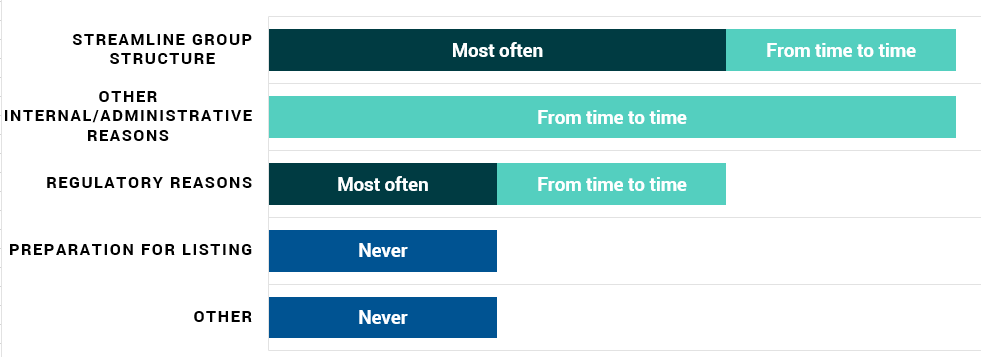
- Most commonly BCUCC are undertaken to streamline group structures or for regulatory reasons. From time to time they are performed for other administrative reasons.
- Companies involved in BCUCC rarely have listed equity, but may have listed debt or other external borrowings.
- A book value method was most commonly used to account for BCUCC, though a fair value approach was used from time to time by one respondent.
7The Draft Comment Letter broadly agrees with IASB's proposals but indicates the following areas of concern:
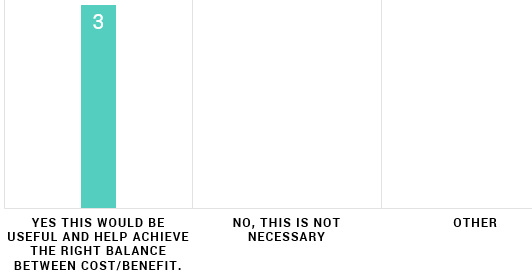
- We believe further development of the book value disclosure proposals will lead to a more proportionate solution in some circumstances. Where the entity qualifies for the book value method and has listed debt or external borrowings, we agree with the DP that the book value proposals should be used. However, for cases where the receiving entity qualifies for the book value method and has no external debt (therefore likely has few users reliant on general purpose financial statements), we suggest that a reduced disclosure regime be required. All survey respondents agreed that introducing a reduced disclosure alternative for the book value method in those circumstances would be useful and help achieve the right balance between cost and benefit. This is discussed in the draft comment letter paragraph A22.
- IASB propose a non-controlling shareholder exemption for private companies where the book value method of accounting for BCUCC can be followed if non-controlling shareholders do not object. There is precedent for such an approach in IFRS 10 Consolidated Financial Statements, however this addresses the question as to whether the company is required to prepare consolidated financial statements, rather than a question of accounting policy choice. During initial outreach stakeholders have questioned both the conceptual underpinning for the IASB's proposed exemption, and whether a more consistent outcome could be achieved by instead creating an accounting policy choice. The concern and proposed solutions are addressed in the draft comment letter paragraph A6.
- IASB propose that under the acquisition method any excess consideration above the fair value of the assets and liabilities is treated as goodwill rather than as an adjustment to equity. The survey response identified some concern about the creation of goodwill in a BCUCC as it created a long term asset with characteristics of an internally generated intangible asset, created structuring opportunities, and may be confusing to users. We have agreed with the IASB position on the proviso that the issues associated with goodwill, raised in our January 2021 letter to IASB on its Discussion Paper DP/2020/1 Business Combination Disclosures, Goodwill and Impairment in are satisfactorily addressed. This is discussed in the draft comment letter, paragraph A11.
8We have included questions on the above issues in the Invitation to Comment (ITC) to encourage further stakeholder feedback on these matters. The ITC is included at Appendix 2 to this paper.
Next Steps
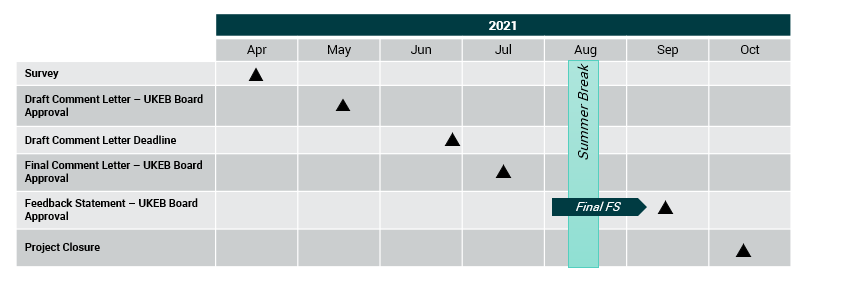
9We intend to publish the Draft Comment Letter on the website for consultation for a minimum of one month, from approximately late May to 30 June 2021.
Question for the Board
- Do Board members agree with the position taken in the Draft Comment Letter (appendix 1)
- Do Board members agree with the proposed questions to be included in the Invitation to Comment (appendix 2)? Are there any further questions you would add?
- Do Board members approve the Draft Comment Letter and Invitation to Comment questions for release for stakeholder consultation?
13The UKEB Secretariat plan to coordinate with the IASB project team so we can jointly attend interviews with UK users of financial statements during the coming weeks.
14We intend to bring a Final Comment Letter to the late July meeting for board approval.
Further information on the project timeline is shown below.
Appendix 1: Draft Comment Letter - Business Combinations Under Common Control
Draft Comment Letter.
Mr. Hans Hoogervorst Chairman International Accounting Standards Board 7 Westferry Circus Canary Wharf London E14 4HD
[Date]
Dear Mr Hoogervorst
Invitation to Comment: Discussion Paper DP/2020/2 Business Combinations Under Common Control.
Following the UK's exit from the European Union, the Department for Business, Energy and Industrial Strategy (BEIS) has set up the UK Endorsement Board (UKEB) to fulfil statutory functions of influencing the development and subsequent adoption of International Accounting Standards for use in the UK. This letter forms part of those influencing activities and is intended to contribute to the International Accounting Standards Board's (IASB) due process. The views expressed by the UKEB in this letter are separate from, and will not necessarily affect the conclusions in, any endorsement and adoption assessment on new or amended International Accounting Standards undertaken by the UKEB.
We welcome the opportunity to contribute to the debate on accounting for Business Combinations Under Common Control (BCUCC). Our main points on the IASB's Discussion Paper (DP) are outlined below. For detailed responses to the questions in the DP please see appendix 1.
Overall, we support the proposals in the DP. They provide users of financial statements with information on BCUCC, a significant step forward from the minimal information required today. In particular, the proposals in the DP will lead to improvements over current financial reporting as follows:
1Measurement and disclosure requirements in the DP will reduce diversity in accounting practice, improve transparency and lead to greater comparability between financial statements.
2The proportionate approach, whereby the book value method is required in situations where non-controlling shareholders are not affected, will reduce complexity and cost for preparers.
Whilst we agree with the IASB's proposed disclosure regime for the book value method, we recommend a further modification to ensure it remains proportionate. We recommend splitting the book value method into two streams. Where the entity that qualifies for the book value method has listed debt or external borrowings, we agree that the book value proposals in the DP should be followed. However, in cases where the receiving entity qualifies for the book value method and has no external debt, and therefore likely few users reliant on general purpose financial statements, we feel a reduced disclosure regime can be followed. This acknowledges that some activities, such as group restructurings, may require multiple BCUCC transactions among group entities, and the disclosure requirements should meet the needs of users without creating unnecessary burden on preparers. Our suggestion for this is discussed further at paragraph A22 and appendix 2.
If you have any questions about this response please contact the project team at [email protected]
Yours sincerely
Pauline Wallace Chair UK Endorsement Board
Appendix 1: Questions on DP/2020/2 Business Combinations Under Common Control
Question 1: Project Scope
Paragraphs 1.10-1.23 discuss the Board's preliminary view that it should develop proposals that cover reporting by the receiving company for all transfers of a business under common control (in the Discussion Paper, collectively called business combinations under common control) even if the transfer:
- is preceded by an acquisition from an external party or followed by a sale of one or more of the combining companies to an external party (that is, a party outside the group); or
- is conditional on a sale of the combining companies to an external party, such as in an initial public offering.
Do you agree with the Board's preliminary view on the scope of the proposals it should develop? Why or why not? If you disagree, what transactions do you suggest that the Board consider and why?
A1We support the scope suggested in the DP including in the situations noted above. We note the scope is slightly wider than that currently captured by IFRS 3 Business Combinations due to the inclusion of items such as "group restructurings”. However, this is appropriate as (i) it fits the spirit of the proposals to provide users with information on intra-group company transactions and (ii) a Business Combination and a BCUCC is unlikely to happen simultaneously so the slight difference in scope is likely to have little practical effect.
Question 2: Selecting the Measurement Method
Paragraphs 2.15-2.34 discuss the Board's preliminary views that:
- neither the acquisition method nor a book-value method should be applied to all business combinations under common control. Do you agree? Why or why not? If you disagree, which method do you think should be applied to all such combinations and why?
- in principle, the acquisition method should be applied if the business combination under common control affects non-controlling shareholders of the receiving company, subject to the cost-benefit trade-off and other practical considerations discussed in paragraphs 2.35-2.47 (see Question 3). Do you agree? Why or why not? If you disagree, in your view, when should the acquisition method be applied and why?
- a book-value method should be applied to all other business combinations under common control, including all combinations between wholly owned companies.
Do you agree? Why or why not? If you disagree, in your view, when should a book-value method be applied and why?
A2We agree that not all BCUCC have the same characteristics, and therefore will not require the same accounting solution. However, our initial outreach to stakeholders resulted in mixed feedback on the question of the best way to reflect this in accounting standards. From that feedback it is clear that the book value method is the most commonly used for BCUCC. Some have used fair values and agree with the proposals to do so where non-controlling shareholders are affected. Others prefer to continue to use book value in all instances. Stakeholders reported a wide range of drivers associated with BCUCC including legal, regulatory and tax drivers and are concerned that an overly rigid approach may compromise the ability to faithfully reflect the circumstances of the BCUCC.
A3On balance, recognising the need to provide consistent information on BCUCC, we agree with the proposals in the DP. We agree that where BCUCC transactions have characteristics similar to those captured by IFRS 3 Business Combinations and affect non-controlling shareholders it is reasonable that the requirements of IFRS 3 be used. We welcome the DP proposal to use book value method, which is appropriate and proportionate for transactions which are genuinely internal to the group and where users do not need to rely solely on general purpose financial statements for information on the transaction.
Question 3: Selecting the Measurement Method
Paragraphs 2.35-2.47 discuss the cost-benefit trade-off and other practical considerations for business combinations under common control that affect non-controlling shareholders of the receiving company.
- In the Board's preliminary view, the acquisition method should be required if the receiving company's shares are traded in a public market. Do you agree? Why or why not?
- In the Board's preliminary view, if the receiving company's shares are privately held: (i) the receiving company should be permitted to use a book-value method if it has informed all of its non-controlling shareholders that it proposes to use a book-value method and they have not objected (the optional exemption from the acquisition method). Do you agree with this exemption? Why or why not? Do you believe that the exemption will be workable in practice? If not, in your view, how should such an exemption be designed so that it is workable in practice? (ii) the receiving company should be required to use a book-value method if all of its non-controlling shareholders are related parties of the company (the related-party exception to the acquisition method). Do you agree with this exception? Why or why not?
- If you disagree with the optional exemption (Question 3(b)(i)) or the related-party exception (Question 3(b)(ii)), in your view, how should the benefits of applying the acquisition method be balanced against the costs of applying that method for privately held companies?
A4At a principles level, more information should be provided when there are external users who will rely on that information for decision making, whereas a reduced disclosure approach is likely to be more appropriate on cost-benefit grounds in instances where the users are less likely to be dependent on general purpose financial statements, such as those internal to the company or Group, related parties, or users who can command their own information.
A5Where a company's shares are traded in a public market there are likely to be a large number of non-controlling shareholders who rely heavily on general purpose financial statements for decision making. In those instances, we support the use of the acquisition method, which requires more disclosure.
A6We have concerns regarding the optional non-controlling shareholder exemption from using the acquisition method. We support IASB in trying to find a pragmatic approach to allow use of the book value method for private companies in circumstances where the non-controlling shareholders may be fewer in number, close to the activities of the company, and may not be reliant on general purpose financial statements. However, during initial outreach, stakeholders highlighted three potential issues with this approach.
- Concern was expressed as to whether there was adequate conceptual underpinning for the non-controlling shareholder exemption from using the acquisition method. This exemption effectively empowers non-controlling shareholders to select the measurement method in these circumstances, which appears inconsistent with the expectation in IAS 1 Presentation of Financial Statements and IFRS 8 Accounting Policies, Changes in Accounting Estimates and Errors that such matters are the responsibility of management;
- It was noted that when the negative consent requirement was trialled in the UK for certain companies using the reduced disclosure framework under UK GAAP, it proved unworkable due to the cost and logistics of obtaining shareholder consent and providing an opportunity for them to object; and.
- Stakeholders suggest that, where BCUCC demonstrate these characteristics, the IASB objective of improving consistency in reporting BCUCC could be better achieved by permitting an accounting policy choice, supported by appropriate disclosure. In addition this resolves the concerns identified in paragraph (a) above by providing better alignment to the conceptual framework as this forms part of management's existing responsibility to choose accounting policies that ensure financial statements faithfully represent the activities of the company.
A7Accordingly, while we support the use of the book value method in the circumstances described in the DP, we recommend this be achieved via an accounting policy choice rather than a shareholder exemption.
A8We agree with the proposed related party exemption as related parties are unlikely to rely on general purpose financial statements to meet their information needs, making the use of the book value method appropriate.
Question 4: Selecting the Measurement Method
Paragraphs 2.48-2.54 discuss suggestions from some stakeholders that the optional exemption from and the related-party exception to the acquisition method should also apply to publicly traded companies. However, in the Board's preliminary view, publicly traded receiving companies should always apply the acquisition method.
- Do you agree that the optional exemption from the acquisition method should not be available for publicly traded receiving companies? Why or why not? If you disagree, in your view, how should such an exemption be designed so that it is workable in practice?
- Do you agree that the related-party exception to the acquisition method should not apply to publicly traded receiving companies? Why or why not?
A9We agree that the optional exemption, or equivalent accounting policy choice, should not be available to publicly traded companies. We consider this exemption to be a pragmatic approach, in circumstances where the non-controlling shareholders are fewer in number, close to the activities of the company and not dependent on general purpose financial statements to meet their information needs. As publicly traded companies are likely to have a large number of shareholders who rely on general purpose financial statements for decision making the optional exemption is not appropriate for these circumstances. There would also be practical barriers to this approach, such as the large number of shareholders to contact, and the frequency with which shareholders change.
A10We feel that the related party exemption could be made available to publicly traded companies as related parties are unlikely to rely on general purpose financial statements for their information needs. However this is unlikely to be significant to the UK market as publicly traded companies where the non-controlling shareholders are all related parties are uncommon, so in practice such an exemption may seldom be used.
Question 5: Applying the Acquisition Method
Paragraphs 3.11-3.20 discuss how to apply the acquisition method to business combinations under common control.
- In the Board's preliminary view, it should not develop a requirement for the receiving company to identify, measure and recognise a distribution from equity when applying the acquisition method to a business combination under common control. Do you agree? Why or why not? If you disagree, what approach for identifying and measuring a distribution from equity do you recommend and why? In particular, do you recommend either of the two approaches discussed in Appendix C or do you have a different recommendation?
- In the Board's preliminary view, it should develop a requirement for the receiving company to recognise any excess fair value of the identifiable acquired assets and liabilities over the consideration paid as a contribution to equity, not as a bargain purchase gain in the statement of profit or loss, when applying the acquisition method to a business combination under common control. Do you agree? Why or why not? If you disagree, what approach do you recommend and why?
- Do you recommend that the Board develop any other special requirements for the receiving company on how to apply the acquisition method to business combinations under common control? If so, what requirements should be developed and why are any such requirements needed?
A11We agree with the IASB that if consideration paid is greater than the fair value of the assets and liabilities acquired, goodwill, rather than a distribution from equity, is created. We acknowledge the arguments for considering this a distribution from equity, but prefer the goodwill approach, which is consistent with IFRS 3 and less likely to provide structuring opportunities. The acquisition method is only applied in cases where non-controlling shareholders are affected, so recognising goodwill will likely reflect the economic substance of the transaction in such cases.
A12We agree with IASB's position that, if consideration is less than the fair value of the assets and liabilities acquired, the resulting gain should be treated as a contribution to equity rather than recorded in profit and loss. We acknowledge the difference in treatment to that applied to arm's length transactions under IFRS 3. However, in a transaction under common control, the parent company is likely to have been involved in a setting the purchase price, making the equity solution the appropriate reflection of that control. By ensuring that the statement of profit and loss remains unaffected by shortfalls in the purchase price this treatment further reduces the likelihood of structuring opportunities within the Group.
Question 6: Applying a Book Value Method
Paragraphs 4.10-4.19 discuss the Board's preliminary view that, when applying a book-value method to a business combination under common control, the receiving company should measure the assets and liabilities received using the transferred company's book values.
Do you agree with the Board's preliminary view? Why or why not? If you disagree, what approach do you suggest and why?
A13We agree in principle that, when the book value method is used, the receiving company should measure the assets and liabilities received using the transferring company book values. This is the least complex and most cost-effective approach to accounting for such transactions. It also ensures that trend analysis of the assets and liabilities is not interrupted by the transaction for users who track this information. The alternative to this approach, using the valuations used by a parent or other group company, would be difficult to justify as that company is unconnected to the transaction.
A14However we have already heard from, and concur with, stakeholders who recommend that further consideration should be given to the practical implications of this approach. For example, would the receiving company treat such transactions at a point of initial recognition under the conceptual framework? How would reserves of the transferring company such as FVOCI or hedging reserves be treated? We recommend that the IASB develops further guidance and examples to assist in developing a greater understanding as to how the book value method would be applied.
Question 7: Applying a Book Value Method
Paragraphs 4.20-4.43 discuss the Board's preliminary views that:
- the Board should not prescribe how the receiving company should measure the consideration paid in its own shares when applying a book-value method to a business combination under common control; and
- when applying that method, the receiving company should measure the consideration paid as follows:
- consideration paid in assets—at the receiving company's book values of those assets at the combination date; and
- consideration paid by incurring or assuming liabilities—at the amount determined on initial recognition of the liability at the combination date applying IFRS Standards.
Do you agree with the Board's preliminary views? Why or why not? If you disagree, what approach do you suggest and why?
A15We agree that IASB should not prescribe how the receiving company should measure the consideration paid in its own shares when applying a book value method. This approach is consistent with other IFRS standards. Measurement of issued shares and the reporting of components of equity are more likely to be determined by national requirements and regulations, and so are generally not prescribed in IFRS standards.
A16We agree with IASB's recommended approach for measuring consideration paid in assets and liabilities. The book value method approach of using the receiving company book values at the combination date is consistent with its aims to provide a cost-effective approach to accounting for BCUCC transactions. In the case of liabilities being created or assumed by the transaction a number of accounting standards already deal with the recognition and measurement of liabilities. There is no reason to create further requirements that are specific for BCUCC.
Question 8 Applying a Book Value Method
Paragraphs 4.44-4.50 discuss the Board's preliminary views that:
- when applying a book-value method to a business combination under common control, the receiving company should recognise within equity any difference between the consideration paid and the book value of the assets and liabilities received; and
- the Board should not prescribe in which component, or components, of equity the receiving company should present that difference.
Do you agree with the Board's preliminary views? Why or why not? If you disagree, what approach do you suggest and why?
A17We agree that when applying the book value method any difference between consideration and the book value of the assets and liabilities acquired should be recognised in equity. Our stakeholders tell us that this is a common method used in practice today. The simplicity of this approach and the use of readily available information makes it a cost-effective solution to accounting for BCUCC. The most significant benefit of the proposals in the DP is to develop consistency of practice. A simple and low cost approach, that can be easily applied by all companies adopting the book value method, is consistent with that goal.
A18For the reasons described in A14 above, we agree that IASB should not prescribe the components of equity where any difference between the consideration paid and the book value of the assets and liabilities received should be presented.
Question 9: Applying a Book Value Method
Paragraphs 4.51-4.56 discuss the Board's preliminary view that, when applying a book-value method to a business combination under common control, the receiving company should recognise transaction costs as an expense in the period in which they are incurred, except that the costs of issuing shares or debt instruments should be accounted for in accordance with the applicable IFRS Standards.
Do you agree with the Board's preliminary view? Why or why not? If you disagree, what approach do you suggest and why?
A19We agree that when applying the book value method, the receiving company should recognise the transaction costs in the period in which they are incurred. This is consistent with the requirements of IFRS3. We agree that costs of issuing shares and debt instruments should be an exception to this and should be accounted for in accordance with existing IFRS standards.
Question 10: Applying a Book Value Method
Paragraphs 4.57-4.65 discuss the Board's preliminary view that, when applying a book-value method to a business combination under common control, the receiving company should include in its financial statements the assets, liabilities, income and expenses of the transferred company prospectively from the combination date, without restating pre-combination information.
Do you agree with the Board's preliminary view? Why or why not? If you disagree, what approach do you suggest and why?
A20We agree with the prospective approach to application. Retrospective application would be more complex and costly, which is not necessary for transactions that qualify for the book value approach.
Question 11: Disclosure Requirements
Paragraphs 5.5-5.12 discuss the Board's preliminary views that for business combinations under common control to which the acquisition method applies: (a) the receiving company should be required to comply with the disclosure requirements in IFRS 3 Business Combinations, including any improvements to those requirements resulting from the Discussion Paper Business Combinations-Disclosures, Goodwill and Impairment; and (b) the Board should provide application guidance on how to apply those disclosure requirements together with the disclosure requirements in IAS 24 Related Party Disclosures when providing information about these combinations, particularly information about the terms of the combination.
Do you agree with the Board's preliminary views? Why or why not? If you disagree, what approach do you suggest and why?
A21We agree that the disclosure requirements of IFRS 3 Business Combinations should apply when the acquisition method is used. Where BCUCC have similar characteristics to a business combination under IFRS3 it is reasonable that users would have similar information needs, and would expect disclosures consistent with those of IFRS 3. We agree with IASB that application guidance will be useful to ensure consistency of application, which supports the objective of BCUCC being reported in a more consistent manner than today.
Question 12: Disclosure Requirements
Paragraphs 5.13-5.28 discuss the Board's preliminary views that for business combinations under common control to which a book-value method applies: (a) some, but not all, of the disclosure requirements in IFRS 3 Business Combinations, including any improvements to those requirements resulting from the Discussion Paper Business Combinations-Disclosures, Goodwill and Impairment, are appropriate (as summarised in paragraphs 5.17 and 5.19); (b) the Board should not require the disclosure of pre-combination information; and (c) the receiving company should disclose: (i) the amount recognised in equity for any difference between the consideration paid and the book value of the assets and liabilities received; and (ii) the component, or components, of equity that includes this difference.
Do you agree with the Board's preliminary views? Why or why not? If you disagree, what approach do you suggest and why?
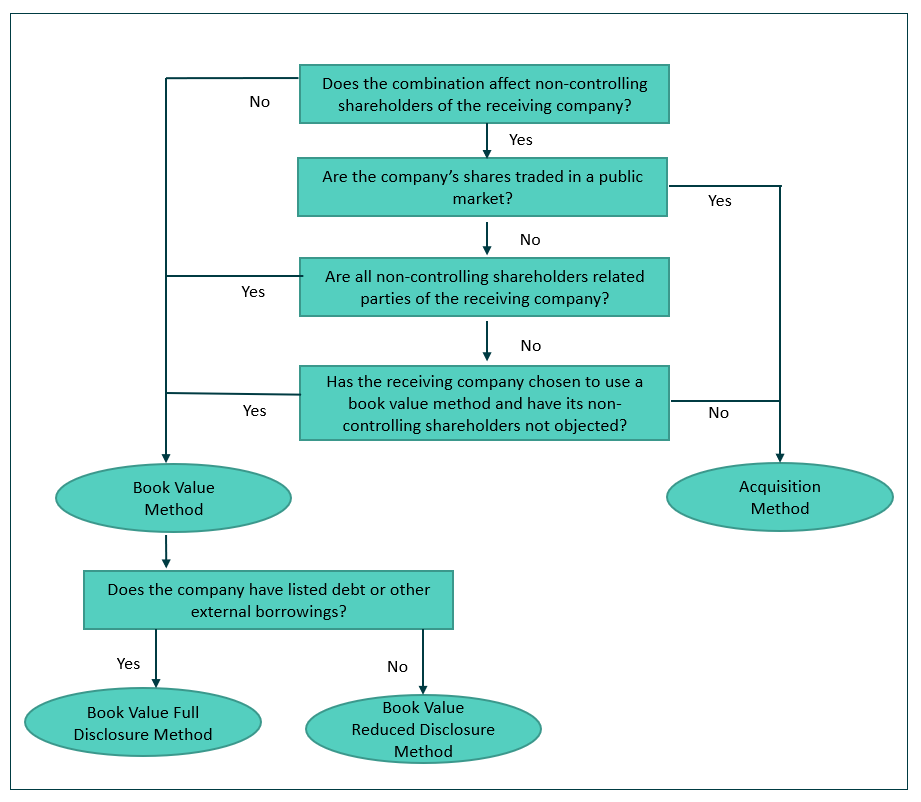
A22We believe further development of the book value disclosure proposals will lead to a more proportionate solution in some circumstances. Where the entity qualifies for the book value method and has listed debt or external borrowings, we agree with the DP that the book value proposals should be used. However, in cases where the receiving entity qualifies for the book value method and has no external debt, and therefore likely has few users reliant on general purpose financial statements, we feel a reduced disclosure regime can be followed. This acknowledges that some activities, such as group restructurings, may require multiple BCUCC transactions among group entities, and the disclosure requirements should meet the needs of users without creating unnecessary burden on preparers. Our suggestion for this is illustrated at appendix 2.
A23We agree that the disclosure of pre-combination information should not be required. Pre-combination values are likely the same as the transferred values under the book value method, so further disclosure is unlikely to provide benefit to users which outweighs the cost to preparers.
Proposed book value disclosure approach
A24We see further opportunity to balance the cost-benefit trade off by splitting the book value method into two streams. This acknowledges that some activities such as group restructurings may require multiple BCUCC transactions among group entities. The disclosure requirements should meet the needs of users without creating unnecessary burden on preparers. We suggest that in cases where the receiving entity qualifies for the book value method and has no external debt, it is likely to have few users reliant on general purpose financial statements. In these instances, we feel a reduced disclosure regime can be followed. The impact to the DP's proposed decision tree diagram and recommended disclosures are as follows:
| IASB disclosure proposal (Discussion Paper paragraph 5.19) | BV Full Disclosure method | BV Reduced Disclosure method |
|---|---|---|
|
✓ | |
|
✓ | This could be simplified, possibly just noting the total assets and liabilities acquired. |
|
✓ | |
|
✓ | |
|
✓ | |
|
✓ | Not required. This information may be time consuming to track, and if significant will likely be captured by other reporting standards or the Directors Report requirements. If not significant it is unlikely to be decision useful to the relatively few general purpose financial statement users associated with the Reduced Disclosure method. |
|
✓ | This allows entities to provide further disclosure if relevant to their circumstances, rather than requiring every company to undertake every step where it may not be necessary. |
Appendix 2: Proposed Invitation to Comment questions
Proposed Invitation to Comment questions. Business Combinations Under Common Control
| Question | Draft Comment Letter paragraphs reference |
|---|---|
| 1 Do you agree with the proposed non-controlling shareholder exemption for private companies? If not what alternative would you recommend? | A6 |
| 2 The acquisition method applies where non-controlling shareholders are affected by the BCUCC. In these circumstances do you agree that where consideration paid is greater than the fair value of the assets and liabilities acquired the difference should be treated as goodwill, and not as a distribution from equity? Please explain why or why not. | A11 |
| 3 Do you agree with the reduced disclosure approach and suggested amendments to the IASB disclosures described in paragraph A22 and appendix 2 of the Draft Comment Letter? Please explain why or why not. | A 22, Appendix 2 |
| 4 Do you have any other comments you would like to make on the IASB proposals or the UKEB Draft Comment Letter? |
Appendix 3: Results of selected survey questions
Background information
Based on your previous experience of BCUCC what was the rationale for the transaction?
Based on your previous experience of BCUCC which GAAP did the receiving company use?
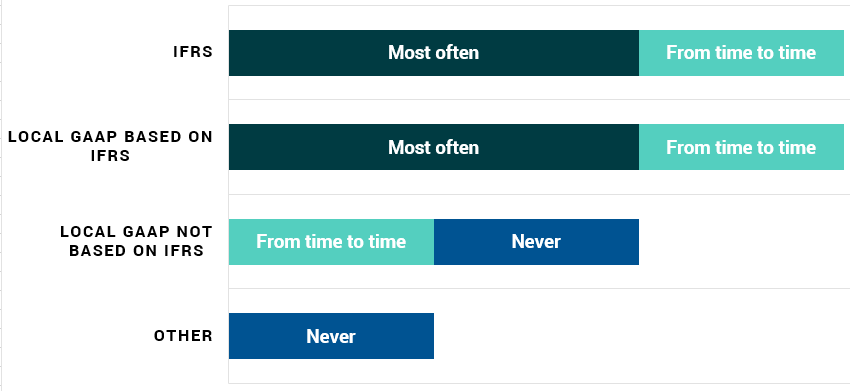
Based on your previous experience of BCUCC, how did the receiving company account for the acquired assets and liabilities?

Based on your previous experience of BCUCC did the receiving company have:
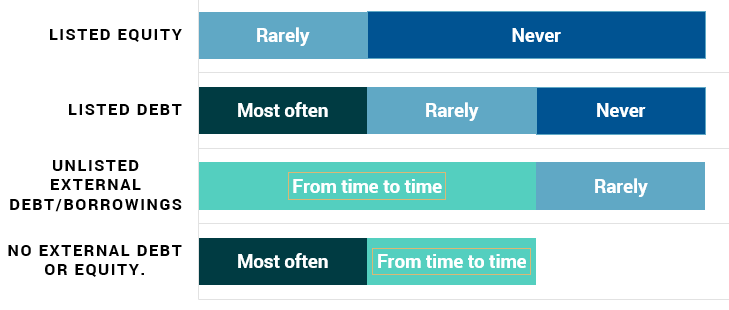
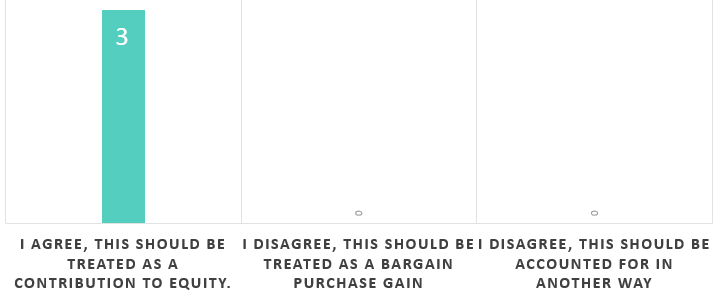
Accounting method
Acquisition method: Do you agree that when applying the acquisition method the receiving company should recognise any excess fair value of the identifiable assets and liabilities over the consideration paid as a contribution to equity and not as a bargain purchase gain in profit & loss?
Book value method: Do you agree that when applying the book value method the receiving company should recognise the difference between consideration paid and the book value of the assets and liabilities received in equity?
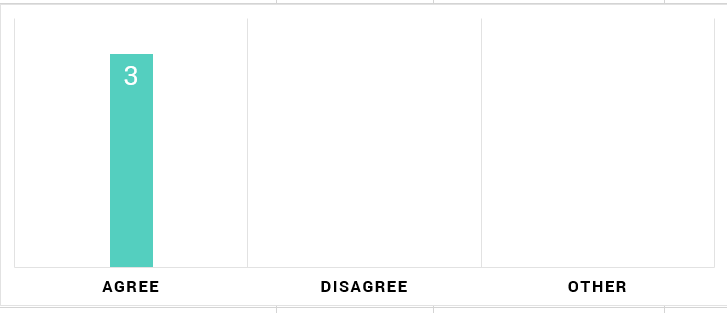
Disclosure
Do you agree that when using the acquisition method the receiving company should be required to comply with the disclosure requirements of IFRS 3?

Do you agree that the specified book value disclosure requirements are useful to users of financial statements?
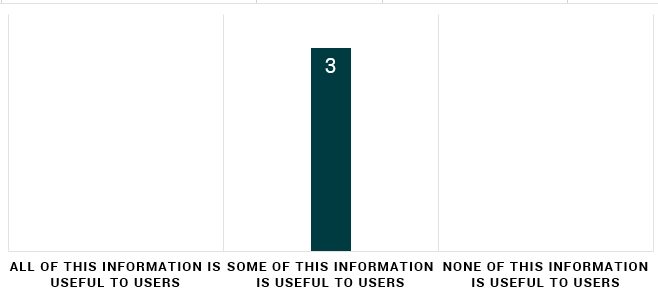
Do you feel that preparation of the specified book value disclosure requirements is unnecessarily burdensome to preparers/ auditors?
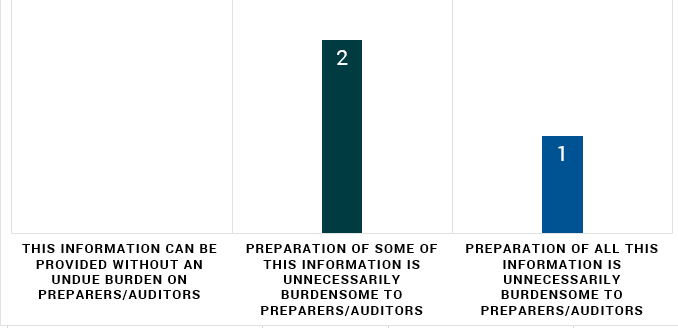
The discussion paper describes two sets of disclosure requirements, one for those using the acquisition method and one for those using the book value method. For those using the book value method would it be useful to have a further option for lighter disclosure requirements in cases where the Receiving Company has no external debt or equity?