Educational and Outreach Webinar on IFRS 18 Slide Deck
The views expressed in this presentation are those of the presenter and not necessarily those of the Endorsement Board, nor are they necessarily reflective of any official policy or position.
The content of this presentation contains copyright © material and trademarks of the IFRS Foundation®. All rights reserved. Reproduced by the UKEB with the permission of the IFRS Foundation for non-commercial use only. Reproduction and use rights are strictly limited. For more information about the IFRS Foundation and rights to use its material please visit https://www.ifrs.org/legal/terms-and-conditions/.
Today's speakers
The views expressed in this presentation are those of the speakers.
-
Seema Jamil-O'Neill Technical Director UK Endorsement Board

-
Nick Anderson Member International Accounting Standards Board (IASB)

-
Steve Cooper Independent Analyst

-
Stephen Morris Group Financial Controller Ultra Electronics

-
Renata Padilla VP Global Financial Reporting InterContinental Hotels Group PLC

-
Matthew Merrick Head of Upstream Technical Accounting BP
UKEB/IASB joint webinar IFRS 18 Presentation and Disclosure in Financial Statements
- Today's speakers
- UKEB project timeline
- Familiarity with IFRS 18–Polling question for the audience
- Primary Financial Statements
- Categories and subtotals in the statement of profit or loss
- Investors' concerns
- IFRS 18 introduces
- New required subtotals
- Requirements for specific companies
- Statement of profit or loss - financing and investing as main business activities
- Statement of profit of loss - insurance as a main business activity
- Categories and subtotals – What the UKEB has heard so far
- Categories and subtotals—Polling question for the audience
- Management-defined Performance Measures (MPMs)
- Grouping – aggregation and disaggregation – of information
- Investors' concerns
- IFRS 18 introduces
- Roles of the primary financial statements and the notes
- Aggregation, disaggregation and meaningful labels
- Disclosure of specified expenses by nature
- Specified expenses by nature note
- Aggregation/disaggregation– What the UKEB has heard so far
- Aggregation and disaggregation—Polling question for the audience
- IFRS 18 implementation costs—Polling question for the audience
- IFRS 18 main challenges—Polling question for the audience
- Q&A session
- Implementation support
- Published materials
- Follow us online
- UKEB Endorsement of IFRS 18
- Preparer and user surveys
UKEB project timeline
IFRS 18 endorsement work
The diagram illustrates the UKEB project timeline for IFRS 18 endorsement work, showing key phases and expected dates. 'We are here' is indicated at the Q2-Q3 2024 phase.
The timeline spans from Sep 2020 to 1 Jan 2027:
- Sep 2020: UKEB Secretariat response to IASB ED. This includes a Feedback statement summarizing outreach, stakeholder views, and final UKEB position.
- Q4 2022 and Q4 2023: UKEB advisory groups feedback.
- Q1 2024: IFRS 18 UKEB project initiation plan (PIP).
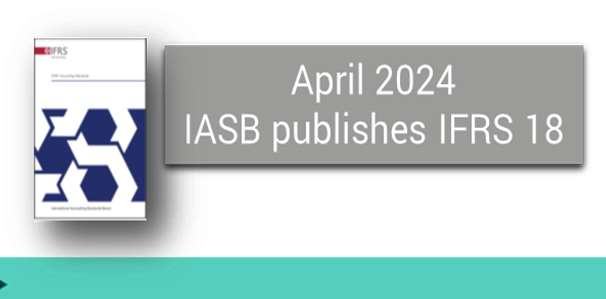
- April 2024: IASB publishes IFRS 18.
- Q2-Q3 2024 (We are here): Gathering evidence through surveys & meetings with advisory groups, and Educational webinars.
- Late Q4 2024: DECA drafting (Draft Endorsement Criteria Assessment).
- 2025: DECA drafting and DECA consultation.
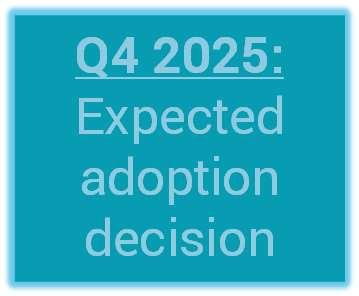
- Q4 2025: Expected adoption decision.
- 1 Jan 2027: IFRS 18: Effective date, early application permitted.
Visit the UKEB IFRS 18 project webpage: https://www.endorsement-board.uk/IFRS-18-Presentation-Disclosure-Financial-Statements
Familiarity with IFRS 18–Polling question for the audience
How familiar are you with the requirements of IFRS 18? (73 responses)
Bar chart showing audience familiarity with IFRS 18: * No knowledge at all, this was the first time I have thought about the topic: Approximately 13% * I have seen some updates but I have not started to think about implementation of this standard: Approximately 43% * I have followed the project closely and I have started thinking about implementation: Approximately 44%
Source: UKEB webinar (29 July 2024) on IFRS 18 Presentation and Disclosure in Financial Statements – polling questions responses (using Slido).
Primary Financial Statements
Nick Anderson, IASB Member
The views expressed in this presentation are those of the presenter, not necessarily those of the IFRS Foundation, International Accounting Standards Board or the International Sustainability Standards Board. Copyright © 2024 IFRS Foundation. All rights reserved.
Helicopter view
New IFRS Accounting Standard to improve reporting of financial performance
- Responds to investors' demand for better information about companies' financial performance
- Improves how information is communicated in the financial statements
- Gives investors a better basis for analysing and comparing companies' performance
IFRS 18 – the new requirements
- New required subtotals in statement of profit or loss, including 'operating profit'
- Disclosures about management-defined performance measures (MPMs)
- Enhanced requirements on grouping of information (aggregation and disaggregation)
Better information for better decisions – increases comparability, transparency and usefulness of information
Effective date: 1 January 2027
Categories and subtotals in the statement of profit or loss
Investors' concerns
- Difficulty comparing financial performance because companies' statement of profit or loss vary in content and structure
IFRS 18 introduces
- Three new defined categories to provide a consistent structure of the statement of profit or loss:
- operating
- investing
- financing
- Two new required subtotals to enable analysis:
- operating profit
- profit before financing and taxes
New required subtotals
Operating profit
Gives a complete picture of a company's operations
Profit before financing and income tax
Gives a picture of a company's performance before the effects of its financing
| Statement of profit or loss | Category |
|---|---|
| Revenue | Operating |
| Cost of sales | |
| Gross profit | |
| Other operating income | |
| Selling expense | |
| Research and development expenses | |
| General and administrative expenses | |
| Goodwill impairment loss | |
| Other operating expenses | |
| Operating profit | |
| Share of profit or loss of associates and joint ventures | Investing |
| Other investment income | |
| Profit before financing and income tax | |
| Interest expense on borrowings and lease liabilities | Financing |
| Interest expense on pension liabilities and provisions | |
| Profit before tax | |
| Income tax expense | |
| PROFIT |
Requirements for specific companies
- For some companies, financing and investing activities are their main business activities – for example banks and insurers
- These companies include income and expenses in their operating profit that for other companies would be included in the investing or financing categories
Diagram illustrating categories for specific companies: * Operating category * Investing category -> Specific income and expenses * Financing category -> Specific income and expenses
Statement of profit or loss - financing and investing as main business activities
| Category | |
|---|---|
| Interest revenue | Operating |
| Interest expense | |
| Net interest income | |
| Fee and commission income | |
| Fee and commission expenses | |
| Net fee and commission income | |
| Net trading income | |
| Net investment income | |
| Credit impairment losses | |
| Employee benefits | |
| Depreciation and amortisation | |
| Other operating expenses | |
| Operating profit | |
| Share of profit of associates and joint ventures | Non-main Investing and financing |
| Interest expenses on pension and lease liabilities | |
| Profit before income taxes | |
| Income tax expense | |
| PROFIT |
Statement of profit of loss - insurance as a main business activity
| Category | |
|---|---|
| Insurance revenue | Operating |
| Insurance service expenses | |
| Insurance service result | |
| Investment income | |
| Credit impairment losses | |
| Insurance finance expenses | |
| Net financial result | |
| Other operating expenses | |
| Operating profit | |
| Share of profit or loss of associates and joint ventures | Investing |
| Profit before financing and income tax | |
| Interest expense on borrowings and pension liabilities | Financing |
| Profit before income taxes | |
| Income tax expense | |
| PROFIT |
Categories and subtotals – What the UKEB has heard so far
Views Some areas that stakeholders have highlighted as requiring further assessment:
- Requiring the classification of foreign exchange differences in the same category as the income and expenses from the items that gave rise to these differences could be challenging due to constraints in accounting systems.
- Permitting an accounting policy choice for entities that provide financing to customers could reduce comparability.
- In certain industries income and expenses from investments in subsidiaries, associates and joint ventures accounted for using the equity method are considered part of an entity's main business activities and should therefore be presented in the operating category.
Categories and subtotals—Polling question for the audience
To what extent do you agree that the requirements on categories and subtotals will improve the structure of the income statement? (66 responses)
Bar chart showing agreement levels: * Strongly agree: Approximately 12% * Agree: Approximately 50% * Neither agree nor disagree: Approximately 20% * Disagree: Approximately 10% * Strongly disagree: Approximately 5%
Source: UKEB webinar (29 July 2024) on IFRS 18 Presentation and Disclosure in Financial Statements – polling questions responses (using Slido).
Management-defined Performance Measures (MPMs)
Investors' concerns
- Investors find MPMs useful but they have concerns about lack of transparency of how these measures are calculated
Examples of alternative performance measures (APMs) or non-GAAP measures used today
- Adjusted operating profit
- Adjusted profit or loss
- Adjusted EBITDA
- Free cash flow
- Return on equity
Subtotals of income and expenses not required or specifically exempted by IFRS Accounting Standards
Included in public communications outside financial statements
Measures that communicate management's view of a company's financial performance
Disclosures for MPMs
IFRS 18 introduces requirements to disclose in a single note
- Reconciliation back to IFRS-defined subtotal
- Explanation of why the MPM is reported
- Explanation of how the MPM is calculated
- Explanation of any changes to the MPM
What might a reconciliation look like?
| IFRS | Impairment losses | Restructuring expenses | Gains on disposal of PP&E | MPM | |
|---|---|---|---|---|---|
| Other operating income | (1,800) | ||||
| Research and development expenses | 1,600 | ||||
| General and administrative expenses | 3,800 | ||||
| Goodwill impairment loss | 4,500 | ||||
| Operating profit / Adjusted operating profit | 57,000 | 6,100 | 3,800 | (1,800) | 65,100 |
| Income tax expense | (589) | 297 | |||
| Profit from continuing operations / Adjusted profit from continuing operations | 32,100 | 6,100 | 3,211 | (1,503) | 39,908 |
| Profit attributable to non-controlling interests | 305 | 161 |
MPMs— What the UKEB has heard so far
Views Areas that stakeholders have highlighted as requiring further assessment:
- Disclosing the effects of income taxes and non-controlling interest (NCI) in the MPM reconciliations could lead to additional costs
- Having two sets of performance measure in the annual report (Management-defined performance measures or 'MPMs' and Alternative Performance Measures or 'APMs') may lead to user confusion
MPMs—Polling question for the audience
To what extent do you agree that the requirements on the disclosure of management-defined performance measures would represent an improvement over current practices for communicating performance measures? (61 responses)
Bar chart showing agreement levels: * Strongly agree: Approximately 10% * Agree: Approximately 35% * Neither agree not disagree: Approximately 26% * Disagree: Approximately 24% * Strongly disagree: Approximately 5%
Source: UKEB webinar (29 July 2024) on IFRS 18 Presentation and Disclosure in Financial Statements – polling questions responses (using Slido).
Grouping – aggregation and disaggregation – of information
Investors' concerns
- some companies don't provide enough detailed information
- important information is obscured
IFRS 18 introduces
- enhanced requirements for grouping of information, including requirements for presenting and disclosing operating expenses
- guidance on whether information should be in the primary financial statements or the notes
- disclosures about items labelled as 'other'
Roles of the primary financial statements and the notes
Primary financial statements (PFS)
The diagram illustrates the components of primary financial statements (PFS) and their relationship with notes to the financial statements. The PFS include: * Statement of financial position (balance sheet) * Statement of profit or loss (income statement) * Statement presenting comprehensive income (OCI) * Statement of changes in equity * Statement of cash flows
The role of PFS is to provide structured summaries of a company's assets, liabilities, equity, income, expenses and cash flows.
Notes to the financial statements The role of notes is to provide further information and supplement PFS.
Aggregation, disaggregation and meaningful labels
- Aggregate based on shared characteristics
- Single dissimilar characteristic can be enough to disaggregate if resulting information is material
- Use meaningful labels
- use the label 'other' only when unable to find a more informative label
- label as precisely as possible (eg 'other operating expenses')
Disclosure of specified expenses by nature
Disclose the amounts included in each line item in the operating category of the statement of profit or loss for
A flow diagram shows five categories of specified expenses: * Depreciation * Amortisation * Employee benefits * Specified impairments * Write-down of inventories
Qualitative explanation is required to be disclosed if part of the amount disclosed has been included in the carrying amount of assets
Specified expenses by nature note
| (in currency units) | 20X2 | 20X1 |
|---|---|---|
| Cost of sales | 23,710 | 21,990 |
| Research and development expenses | 2,515 | 2,590 |
| General and administrative expenses | 4,975 | 4,750 |
| Total depreciation | 31,200 | 29,330 |
| Research and development expenses | 13,840 | 12,690 |
| Total amortisation | 13,840 | 12,690 |
| Cost of sales | 61,640 | 57,175 |
| Selling expenses | 7,515 | 7,110 |
| Research and development expenses | 6,545 | 6,750 |
| General and administrative expenses | 8,920 | 5,825 |
| Total employee benefits | 84,620 | 76,860 |
| Research and development expenses | 1,600 | 1,500 |
| Goodwill impairment loss | 4,500 | – |
| Total impairment loss | 6,100 | 1,500 |
| Cost of sales | 2,775 | 2,625 |
| Total write-down of inventories | 2,775 | 2,625 |
The amounts disclosed are those recognised as expenses in the statement of profit or loss for the year, except for depreciation and employee benefits.
The amounts disclosed for depreciation are the charge for the year, calculated in accordance with IAS 16 Property, Plant and Equipment. The amounts include amounts that have been capitalised by including them in the carrying amount of inventory at the end of the reporting period.
The amounts disclosed for employee benefits are the costs incurred for the year, including pension costs, for employee services, calculated in accordance with IAS 19 Employee Benefits. The amounts include amounts that have been capitalised by including them in the carrying amount of inventory at the end of the reporting period.
Aggregation/disaggregation– What the UKEB has heard so far
Views An area that stakeholders highlighted as requiring further assessment:
- The disclosure of specified expenses by nature (i.e., amortisation, depreciation, employee benefits, impairment losses, write-down of inventories) could be difficult to prepare and could be costly because this information may not be tracked by current systems.
Aggregation and disaggregation—Polling question for the audience
To what extent do you agree that the enhanced requirements on grouping of information (aggregation and disaggregation) would provide more detailed and useful information? (51 responses)
Bar chart showing agreement levels: * Strongly agree: Approximately 10% * Agree: Approximately 48% * Neither agree not disagree: Approximately 15% * Disagree: Approximately 22% * Strongly disagree: Approximately 5%
Source: UKEB webinar (29 July 2024) on IFRS 18 Presentation and Disclosure in Financial Statements – polling questions responses (using Slido).
IFRS 18 implementation costs—Polling question for the audience
Tell us about the costs you expect to incur to implement IFRS 18 on transition and in the first year of adoption (43 responses)
Pie chart illustrating expected implementation costs for IFRS 18: * It will involve significant and costly changes to systems, procedures and/or current practices: 23% * It will involve some changes to systems, procedures and/or current practices: 12% * It will involve low implementation costs as our practices are mostly aligned with the requirements in IFRS 18: 53% * I do not know: 12%
Source: UKEB webinar (29 July 2024) on IFRS 18 Presentation and Disclosure in Financial Statements – polling questions responses (using Slido).
IFRS 18 main challenges—Polling question for the audience
What are the main challenges expected in the implementation of IFRS 18? (46 responses)
Bar chart showing main challenges expected in IFRS 18 implementation: * Familiarisation with IFRS 18 requirements: Approximately 22% * Changes to data handling processes and controls: Approximately 47% * Accounts preparation: Approximately 30% * Accounting system changes: Approximately 50% * All of the above: Approximately 33% * No expected challenge: Approximately 0%
Source: UKEB webinar (29 July 2024) on IFRS 18 Presentation and Disclosure in Financial Statements – polling questions responses (using Slido).
Q&A session
A magnifying glass icon with a bar chart inside. Please submit your questions through the chat function
A speech bubble icon with a checkmark inside. This event is recorded and will be published on our website
Implementation support
Published materials
The page displays various IFRS-related publications and materials. Several document covers are shown with "IFRS Accounting" branding and "April 2024" dates, including: * IFRS 18 Presentation and Disclosure in Financial Statements * IFRS 18 Basis for Conclusions on Presentation and Disclosure in Financial Statements * IFRS 18 Illustrative Examples on Presentation and Disclosure in Financial Statements * IFRS 18 Reference Material for Presentation and Disclosure in Financial Statements * IFRS 18 Effects Analysis for Presentation and Disclosure in Financial Statements * IFRS 18 Project Summary for Presentation and Disclosure in Financial Statements * IFRS 18 Feedback Statement for Presentation and Disclosure in Financial Statements
On the right side of the page, there is a large diagram titled "IFRS 18 will improve communication in financial statements" which outlines improvements in primary financial statements and notes to financial statements.
- IFRS 18 Presentation and Disclosure in Financial Statements
- Basis for Conclusions
- Illustrative Examples and supporting materials
- Effects analysis
- Project summary
- Feedback statement
- Reference material
- IFRS 18 on one page
Follow us online
- ifrs.org
- @IFRSFoundation
- IFRS Foundation (YouTube)
- International Accounting Standards Board (LinkedIn)
UKEB Endorsement of IFRS 18
Upcoming activities
The views expressed in this presentation are those of the presenter and not necessarily those of the Endorsement Board, nor are they necessarily reflective of any official policy or position.
Preparer and user surveys
Respond to our surveys
 Preparer Survey
 User Survey
We welcome your views
Contact us
Follow us
- UKEB LinkedIn: https://www.linkedin.com/company/uk-endorsement-board/mycompany/
- UKEB IFRS 18 project webpage: https://www.endorsement-board.uk/IFRS-18-Presentation-Disclosure-Financial-Statements